Dutch trade minister's China visit signals push to maintain economic ties, with more efforts needed to address differences: expert
By Yin Yeping and Published: Jul 07, 2026 10:38 PM

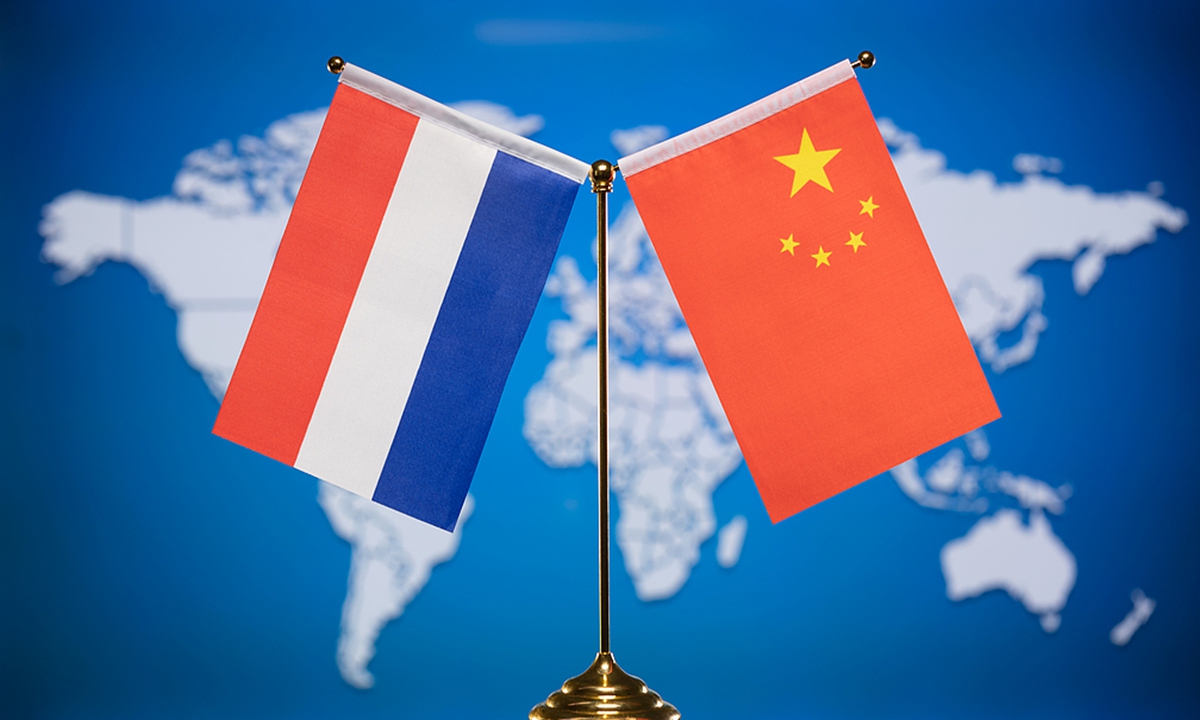
China, Netherlands Photo: VCG
Dutch Minister for Foreign Trade and Development Cooperation Sjoerd Sjoerdsma began a three-day visit to China on Tuesday, with business representatives expecting the trip to send a positive signal of continued engagement and dialogue between the two countries at a time when China-Netherlands and China-EU economic relations are facing growing geopolitical and economic headwinds.
It is the first time since April 2018 that a Dutch minister is leading a trade mission to China in person. During the visit, Sjoerdsma will travel to Beijing and Shanghai, according to the Dutch Ministry of Foreign Affairs. The minister is accompanied by a business delegation comprising representatives from 17 Dutch companies, active in sectors including logistics, agriculture and high-tech.
The Dutch trade minister's visit to China sends a positive signal that both sides are seeking to maintain communication and advance economic and trade cooperation, Zhou Mi, a senior research fellow at the Chinese Academy of International Trade and Economic Cooperation, told the Global Times on Tuesday. Zhou noted that China-Netherlands economic and trade relations currently face differences in areas such as semiconductors, although they also rest on a broad foundation of industrial cooperation.
"China's comprehensive industrial chain, expanding market size and growing innovation capabilities are important factors that have long attracted foreign companies, including Dutch enterprises," the expert said.
China and the Netherlands have faced rising geopolitical and economic tensions following the Dutch side's ban on exports of chipmaking equipment to China under US pressure and its restrictive measures against Nexperia, moves that have drawn strong opposition and concerns from the Chinese side and business groups.
Commenting on the minister's visit, ASML said in a statement provided to the Global Times on Tuesday that Sjoerdsma is visiting China with representatives from Dutch companies, including ASML. "As a global company, ASML always values opportunities to enhance mutual understanding and supports open and pragmatic cooperation," the company said.
Responding to media inquiries for comment on China's expectations for Sjoerdsma's arrival in China and his meeting with Chinese Commerce Minister Wang Wentao, Chinese Foreign Ministry spokesperson Mao Ning referred to competent authorities for specifics about the visit.
"China and the Netherlands are important cooperation partners. Advancing dialogue and cooperation in an open and practical spirit serves the common interests of both countries," Mao said at the regular press conference on Monday. "We welcome closer dialogue and communication and deeper cooperation between the commerce departments of the two countries on the basis of mutual respect," Mao said.
In an exclusive response to the Global Times regarding the Dutch official's visit on Tuesday, the China Chamber of Commerce to the EU (CCCEU) said they welcome the visit at a time when China-Netherlands and China-EU economic relations are facing increasing geopolitical and economic headwinds.
As Minister Sjoerdsma's first visit to China since taking office, it sends a positive signal of continued engagement and dialogue, the CCCEU said, noting that the Netherlands is one of China's most important trading partners within the EU and a major destination for Chinese investment in Europe.
The chamber believes that closer communication between the two sides will help strengthen mutual trust, address trade and investment concerns through dialogue and consultation and create a more predictable and stable business environment for companies operating in both markets.
The Netherlands is China's second-largest trading partner within the EU. In 2025, bilateral trade between China and the Netherlands reached $114.3 billion, up 3.9 percent year-on-year, according to China's Ministry of Foreign Affairs. Both China's exports to and imports from the Netherlands registered growth last year.
The CCCEU hopes that Sjoerdsma's visit will help reinforce constructive engagement between the two governments. "We hope that the Dutch government will continue to uphold the principles of openness, fairness and non-discrimination, and provide a stable, transparent and predictable policy environment for Chinese enterprises investing and operating in the Netherlands," the Chinese chamber noted.
Meanwhile, regarding Nexperia, the CCCEU hopes that "the legitimate concerns of the Chinese investor in question will be duly taken into account and that regulatory decisions are made in a fair, transparent and non-discriminatory manner, based on objective market principles rather than geopolitical considerations."
Regarding semiconductor trade, we believe that maintaining stable and resilient global semiconductor supply chains is in the common interest of both China and the Netherlands, as well as China and the EU, said CCCEU said.
Chinese authorities have repeatedly made their position clear on the Nexperia case through multiple official channels.
China's Ministry of Commerce previously reiterated that the root cause of the Nexperia issue lies in the Dutch side's improper administrative intervention in business operations, urging the Netherlands to act accordingly and, from the perspective of safeguarding the overall stability of the global semiconductor industry and supply chain, create favorable conditions for companies on both sides to resolve internal disputes in a constructive manner. The ministry stressed its continued support for Chinese companies in safeguarding their legitimate rights and interests.
The visit shows that amid a complex global economic and trade environment, the Netherlands still attaches importance to maintaining and strengthening economic and trade ties with China, one of its major trading partners, Zhou said.
"Properly handling specific differences through communication, especially by the Dutch side, will help boost business confidence, maintain stable industrial and supply chains, and create a more predictable environment for companies on both sides," Zhou said.
RELATED ARTICLES