World Bank’s reference to ‘tech-related imports’ reveals a new dimension of China’s development

Illustration: Xia Qing/GT
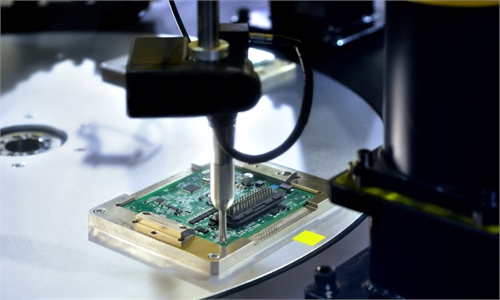
The World Bank's latest China Economic Update, released on Tuesday, contains a phrase that captures an emerging trend in China's economy: "tech-related imports." The term points to the interaction between technological development and import demand. According to the report, the expansion in tech-related imports reflects accelerating AI-related capital expenditure and demand for components that feed into tech-intensive export production.In recent months, much of the international discussion about China's rising capabilities in technology-intensive industries has focused on their impact on exports, particularly in sectors such as electric vehicles and solar panels. Comparatively less attention has been paid to the import side of this development. Yet imports are an important part of the picture, showing how China's industrial upgrading is generating demand for overseas suppliers and deepening connections across global supply chains.
The World Bank's China Economic Update identified "strong tech-related demand" as one of the factors behind China's import growth. The report said China's imports increased 24.5 percent year-on-year in US dollar terms from January to May, with industrial intermediate inputs and capital- and technology-intensive equipment together accounting for more than 56 percent of the increase.
China's General Administration of Customs (GAC) does not use "tech-related imports" as a separate category in its monthly preliminary trade data. But the broader figures point to a similar trend. Imports of mechanical and electrical products rose 29.5 percent year-on-year in the first five months, according to customs data. Within this category, imports of automatic data processing equipment and related parts increased 65.1 percent, while integrated circuit imports rose 52.1 percent from a year earlier. These figures suggest that technology-intensive industries are becoming a more visible source of import demand in China.
Leaving aside the other sections of the World Bank's China Economic Update, the discussion of "tech-related imports" points to an emerging opportunity on the import side of China's economy. More importantly, it reflects deeper changes taking place across industrial supply chains.
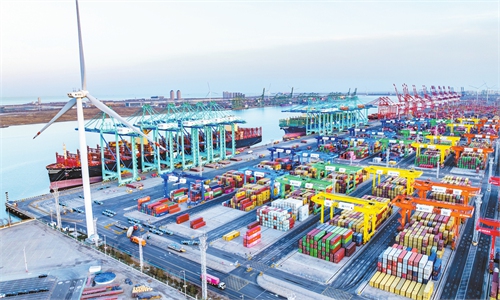
These changes are visible in China's trade with other economies in the region. Data from the GAC shows that China's imports from ASEAN rose 21 percent year-on-year in the first five months, while imports from South Korea and Australia increased 56.5 percent and 40.3 percent, respectively. These increases are not limited to "tech-related imports," but they point to a broader trend: closer links in Asia-Pacific supply chains. Supported by trade arrangements such as the Regional Comprehensive Economic Partnership (RCEP), these supply chains are continuing to evolve, creating opportunities for economies involved in them to expand exports to China.
The expansion of tech-related import demand associated with China's economic upgrading is opening up new market opportunities for overseas suppliers. As China's technology-intensive industries continue to develop, demand for advanced components, equipment and related services is becoming an increasingly important part of the market landscape for global suppliers. In a broader sense, this can be seen as a technological dividend from China's development - one that is increasingly shared across global supply chains.
Bloomberg reported in April that economists are rethinking Chinese forecasts as artificial intelligence (AI) fires up import surge. As Chinese companies hoover up high-end chips needed for AI, imports are set to jump to a five-year high of 5 percent in 2026, based on the median estimate of 17 economists polled by Bloomberg in April.
In fact, China's imports rose more than 20 percent in the first five months, according to data from the GAC, a pace that may have surpassed the expectations of many foreign economists. This may help explain why a growing number of international observers, including economists at the World Bank, have turned their attention to China's import performance, particularly in areas such as "tech-related imports." This interest reflects a broader recognition that China's technological development is generating new sources of demand across global supply chains.
However, the debate over China's technological progress remains multifaceted. On one side, evidence is mounting that China's advances are generating opportunities. On the other, some continue to promote the so-called "China shock 2.0," using it as a pretext for trade protectionism, even though the narrative has repeatedly proved unfounded.
Efforts to contain China's technological development through trade protectionism are unlikely to change the economic trends. As China's technological capabilities continue to advance, the opportunities created through rising demand and deeper supply-chain links are likely to gain wider recognition among businesses and economists.
The author is a reporter with the Global Times. bizopinion@globaltimes.com.cn
RELATED ARTICLES