BRI financial cooperation between China and Latin America to focus on boosting local currency usage: Brazilian scholar
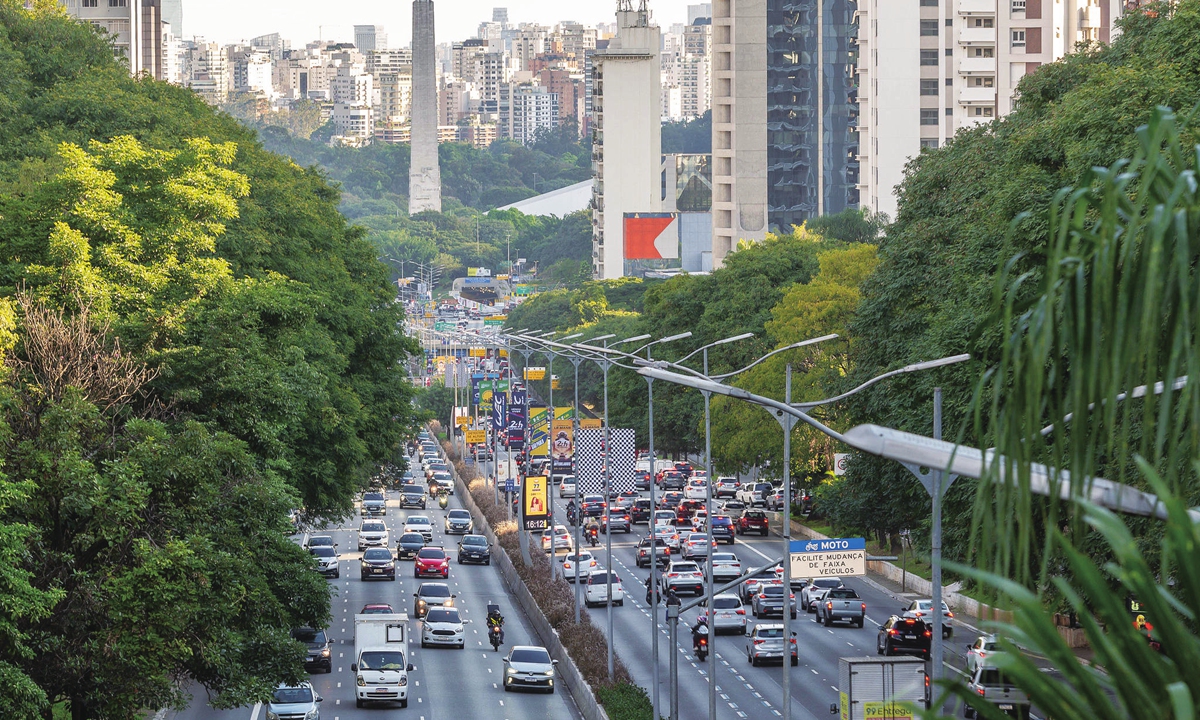
A street view in Sao Paulo, Brazil, on July 6, 2026 Photo: VCG
To date, a total of 24 Latin American countries have joined the China-proposed Belt and Road Initiative (BRI). And BRI should be seen as a platform that enhances ties between Latin America and the Caribbean (LAC) and China in a number of aspects.
Take financing as an example. Financing is fundamental to development, as it provides additional resources without subjecting the countries of the region to conditionalities that go beyond the economic sphere, such as changes in the political and regulatory systems, imposed by the US and Washington-controlled institutions such as the IMF, the World Bank, and the Inter-American Development Bank.
In this context, it is crucial to expand options for balance-of-payments support, as demonstrated by the renewed currency swap arrangements between the governments of Argentina and China. In fact, Argentina's difficult situation would have been far more severe without China's support. From a monetary perspective, the growing use of the Chinese yuan in commercial contracts is noteworthy, as it reduces transaction costs and shortens settlement times - a trend already evident in Brazil-China trade.
Recently, the Brazilian government negotiated with China the issuance of public debt bonds denominated in yuan, known as "Panda Bonds." This move aims to diversify Brazil's debt financing sources and reduce its vulnerability to US political and economic volatility. Finally, developments within BRICS+ group deserve close attention, as discussions advance on establishing monetary arrangements using local currencies and payment systems that can circumvent Western hegemony and the SWIFT system.
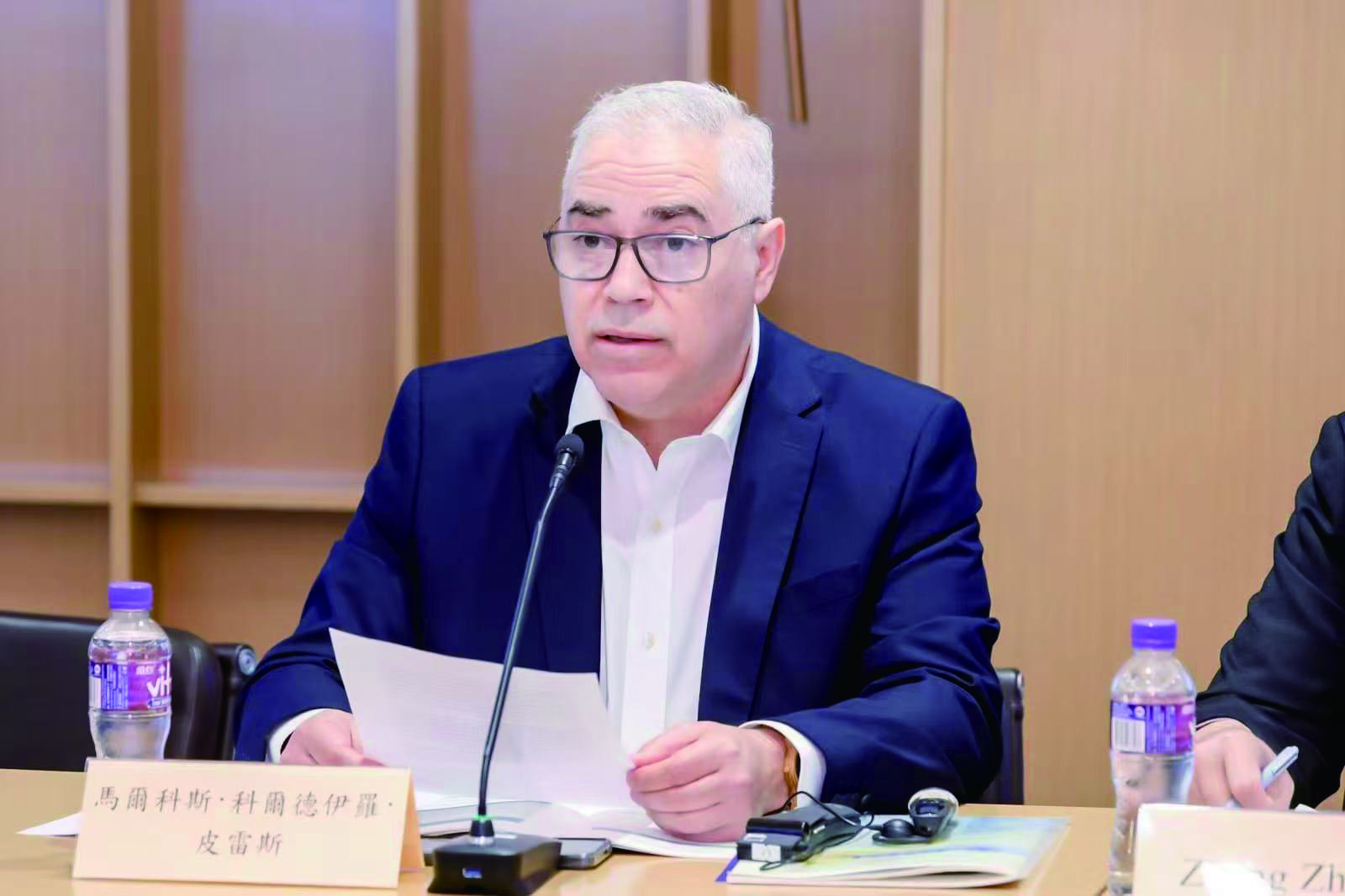
Marcos Cordeiro Pires Photo: Courtesy of Marcos Cordeiro Pires
Another focal point of BRI cooperation is the energy transition, which has become a cornerstone of cooperation between China and Latin American countries.
On the one hand, there is the battery production chain, which includes critical minerals such as lithium, niobium, rare earths, nickel, and copper, abundant resources in Latin America and the Caribbean. There is a huge opportunity to add value in this field, which could help the region move beyond being just an exporter of commodities and advance in global value chains.
On the other hand, it is necessary to consider the territory and the geographical and climatic conditions for the production of clean energy. In this sense, China's supply of solar panels and wind turbines is essential to local clean energy production. The Northeast of Brazil, for example, is a region with abundant sunlight and consistent wind flows, making it a major center for solar and wind energy generation, with a strong presence of Chinese companies.
In addition, the supply of cheap and clean energy in this region, but also in the Atacama Desert or Patagonia, creates opportunities for investments in the construction of energy-intensive industries, as well as for the installation of data centers, such as the one ByteDance is building in the Brazilian state of Ceará, with an investment of R$200 billion ($38.9 billion), which will be the company's largest facility outside China.
However, we must note that cooperation between LAC and China is currently subject to the conservative political cycle, largely supported by the US government. The US government is pressuring Latin American governments to limit cooperation with China. The case of Panama, where the US pressured the government to cancel the concession of two ports linked to a Hong Kong company, show the aggressive approach of Washington. Latin American countries should not succumb to external pressure. They should firmly safeguard their sovereignty, independence, and development autonomy, resist external interference, and deepen practical cooperation with China in an open and inclusive spirit.
The author is a professor at the Department of Political and Economic Sciences, São Paulo State University, Brazil.
RELATED ARTICLES