India’s power import-reduction mindset struggles to keep pace with manufacturing growth
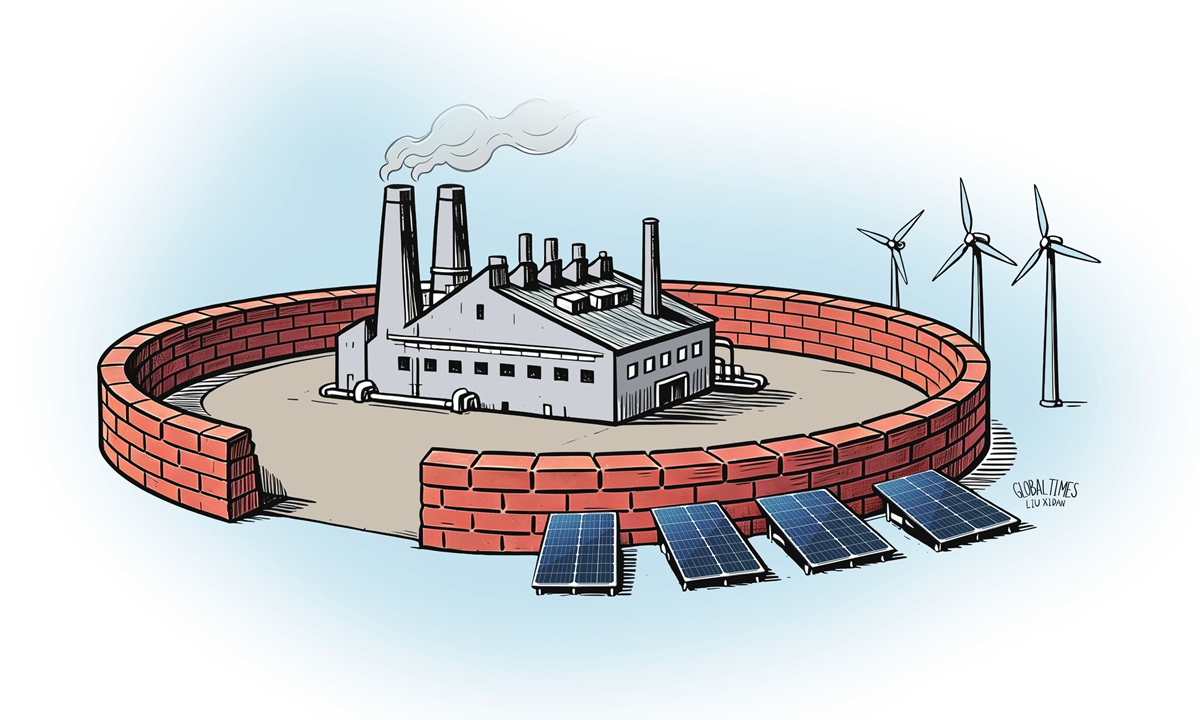
Illustration: Liu Xidan/GT
India's power sector is facing a period of rapidly rising demand, with Reuters reporting that Power Minister Manohar Lal warned the country may need to prepare for peak power demand of about 300 gigawatts next year. The challenge for New Delhi is not only how to add capacity, but how to do so efficiently and at a reasonable cost. The minister reportedly called for faster adoption of local equipment used in clean-energy projects. But in a sector where the pace of expansion and affordability of electricity are both closely tied to economic growth, an excessive focus on localization could make the transition more difficult than necessary.Reliable electricity is the foundation of economic growth, supporting both household welfare and industrial development. This is particularly true for India, where economic growth is lifting living standards and driving demand for a more reliable electricity supply. Electricity consumption is rising across the economy, from increased household use of air conditioning to growing demand from artificial intelligence, data centers and electric vehicles. The IEA's Electricity 2026 report projects that electricity demand is likely to grow by an average of 6.4 percent per year through 2030, underscoring the urgency of expanding supply to support the country's next stage of development.
For India, expanding power supply is not only an energy challenge but also an industrial one. As the country seeks to develop its manufacturing sector, reliable electricity will be increasingly important for maintaining production and attracting investment. A report by The Times of India in May noted that rising electricity demand during summer peak months is triggering frequent power disruptions, and voltage fluctuations in India's industrial clusters have affected manufacturing operations, with sectors such as engineering, plastics, food processing and pharmaceuticals facing production delays due to outages and voltage fluctuations.
For India's manufacturing sector, the lesson is straightforward: improving the reliability of power supply would help remove a constraint on expansion while creating the conditions for broader industrial growth.
The question, then, is how India should expand its power supply. Faster adoption of locally made equipment and efforts to reduce import dependence are unlikely to be the right approach for India at this stage of development, as such an approach would be less efficient and could slow the expansion of power capacity.
Reuters reported that India has introduced a series of measures in recent years to encourage domestic manufacturing and expand renewable energy capacity. Yet the country still imports a range of components used in solar and energy-storage projects, including cells and batteries.
Manohar Lal was quoted by Reuters as saying that India should reduce import dependence even if domestic manufacturing initially raised costs. The remark highlights a broader reality: replacing imported components with locally produced alternatives is not cost-neutral. For some parts of the renewable energy supply chain that India currently imports, local production may not yet have achieved the scale, efficiency or cost competitiveness needed to support the country's rapid expansion of clean-energy capacity.
Delaying the expansion of electricity supply while waiting for domestic supply chains to mature could prove costly for India. If unreliable power continues to constrain industrial activity, the country risks losing valuable momentum in its manufacturing development. The drive to use more locally made equipment should not come at the expense of meeting the immediate need for reliable and affordable electricity. For India, greater integration with global supply chains can help accelerate power-sector development today, while creating more room for a broader manufacturing base to grow over time.
The power sector is one area where China and India's supply chains can complement each other. Reuters reported on July 3 that India has allowed four Chinese power equipment manufacturers with factories in the country to participate in government tenders for critical power projects. The move reflects a pragmatic response to the need to expand power capacity, but further opening-up in both investment and trade is needed.
India's renewable energy development will benefit from making effective use of global supply chains. Some measures supporting solar energy products that are tied to the use of domestic rather than imported goods create an uneven playing field between domestic and foreign suppliers. A more open approach would allow greater participation from international partners and help the sector expand more efficiently, while creating better conditions for manufacturing growth and more reliable energy access for households and businesses.
The author is a reporter with the Global Times. bizopinion@globaltimes.com.cn
RELATED ARTICLES