Photo: Courtesy of DJI
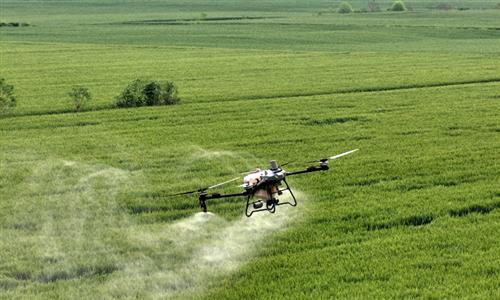
Following the severe flooding brought by Typhoon Maysak in South China's Guangxi Zhuang Autonomous Region, rescue teams have been operating non-stop across the affected region. Technological tools, such as drones, have been used to strengthen relief efforts and deliver aid to stranded residents, playing an important role in rescue and relief operations.
A Chinese expert said that the technologies deployed in the flood-fighting efforts have done more than just demonstrate their effectiveness — they have also delivered a powerful message about the benevolent potential of technology, embodying the very essence of "technology for good."
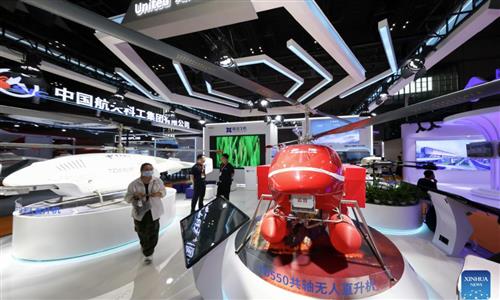
Chinese eVTOL manufacturer Vertaxi has deployed E40H drone crews from several cities in neighboring Guangdong Province to the flood-hit frontlines in Qinzhou, Guigang, and Nanning in Guangxi after receiving an emergency rescue request, the Global Times learned from the company.
By using drones to carry high-altitude mobile base stations into the air, the company established emergency communication links for isolated areas where ground networks had been severed. Carrying an airborne public base station, the drone delivers signal coverage within a 50‑kilometer radius upon takeoff, quickly restoring mobile connectivity for residents to report their status and issue distress calls, according to the company.
It also establishes emergency communication channels to facilitate voice and video dispatch among rescue teams. Concurrently, the E40H conducts high-altitude reconnaissance, streaming real-time imagery back to local headquarters. This enables commanders to accurately evaluate the situation and allocate rescue forces efficiently.
A major emergency unfolded at the Liulan Reservoir in Hengzhou of Nanning on Monday, after a breach appeared in the dam. More than 10 DJI's drones have been deployed at rescue scenes characterized by fast-flowing water and obstructed road access, the Global Times learned from DJI.
Liang Weilei, the Hengzhou distributor of DJI agricultural drones, said he has been answering roughly 200 phone calls per day. He has been mobilizing pilots through WeChat groups and meticulously coordinating supply drop zones. An estimated 100 drones, predominantly the DJI FC series, have now been deployed on site, with an operating radius covering 4 to 5 kilometers.
While the local association has been leading the charge, the rescue mission has also drawn drone pilots from across the country. The farthest volunteer, from Heilongjiang, has made it to the scene, while pilots from Sichuan, Guizhou, and Hunan provinces are traveling nonstop with their equipment. It is estimated that hundreds of tons of emergency supplies have been airdropped cumulatively, according to DJI.
In response to the severe flooding in some villages and towns, SF Express in Guangxi deployed two emergency drones and two intelligent unmanned vehicles to the disaster relief efforts. Since Tuesday, the two drones have each averaged 30 flights per day.
On Wednesday, satellite-relay drones continued to patrol the skies above Yunbiao town in Hengzhou, providing stable communication coverage over large parts of the flood zone. Concurrently, heavy-duty drones equipped with tri-network chipsets have been operating on parallel tracks — relaying real-time high-definition imagery of inundated roads, landslide sites, and reservoir levels, while also dropping drinking water and first-aid supplies to cut-off communities, Global Times learned from China Mobile on Thursday.
China Mobile said the moment a warning flashes on the command center display, the four-tier chain of command — from the group level down through provincial, municipal, and county authorities — is instantly activated. Alongside this vertical response, four key operational units — network operations, engineering construction, government-enterprise services, and comprehensive support — collaborate horizontally. The entire emergency response can be activated in as little as 10 minutes, enabling one-click command transmission and swift equipment mobilization.
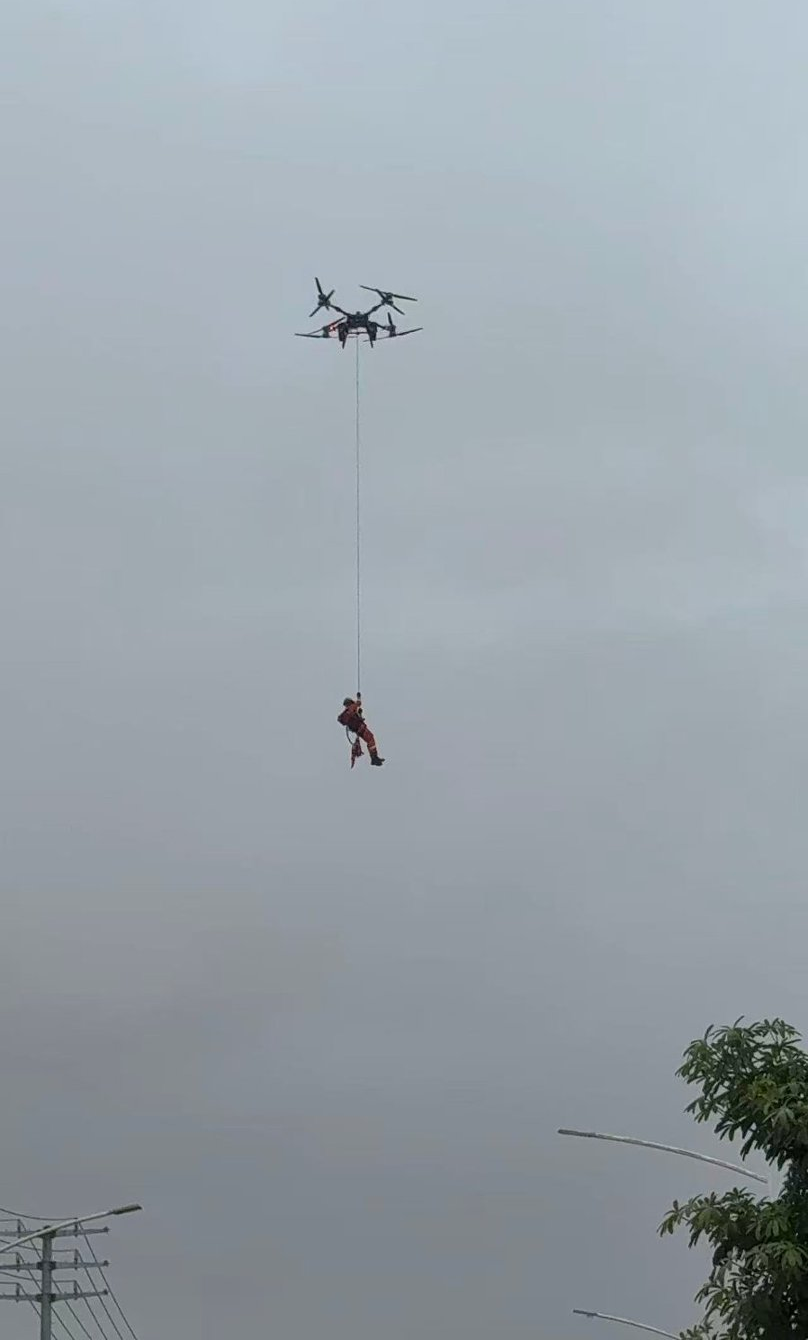
The drone efforts have been widely welcomed by netizens. In a widely circulated video online, a drone helped rescue a trapped man by flying over the floodwaters on Monday, winning applause online. "When technology is used for the benefit of humanity, it takes on its great significance," one netizen commented.
The direction of technological development should be to serve the common well-being of humanity. From information isolation in disaster areas to the reactivation of life-saving channels, the performance of drones in this rescue effort perfectly embodies the concept of "technology for good," Xiang Ligang, director-general of the Zhongguancun Modern Information Consumer Application Industry Technology Alliance, told the Global Times on Thursday.
Flooding has battered various parts of Guangxi in recent days. At the Xijiang Education Park in Guigang, low-lying areas of several buildings have been flooded, trapping an estimated 12,000 faculty members and students.
Starting from 5:00 pm on Wednesday, rescue workers from China Anneng Group deployed a powered floating bridge to assist in evacuation missions. The powered floating bridge can be quickly assembled to form floating operation platforms. Each deck is 60 meters long, with a total load capacity of over 60 tons, and each pontoon bridge can carry approximately 300 to 400 people, CCTV News reported on Thursday.
RELATED ARTICLES