Photo: Courtesy of Sinopec
China's top refiner China Petroleum & Chemical Corporation (Sinopec) has completed its reorganization with the country's dominant jet fuel refiner. The merger will officially make China National Aviation Fuel Group (CNAF) a wholly owned secondary subsidiary of Sinopec, the Global Times learned from Sinopec on Sunday.
As early as January, China approved the restructuring of Sinopec and CNAF, according to the State-owned Assets Supervision and Administration Commission of the State Council.
On June 18, the restructuring received all requisite regulatory approvals from both domestic and overseas authorities, and on July 9, the industrial and commercial registration changes were completed, marking the conclusion of the restructuring process.
Sinopec will continuously strengthen its core functions and enhance its core competitiveness, and strive to act as the national pillar for aviation fuel supply security, the pioneer in green aviation energy development, and the vanguard for Chinese enterprises going global, said Hou Qijun, chairperson of Sinopec.
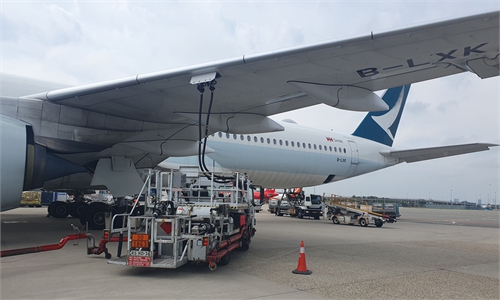
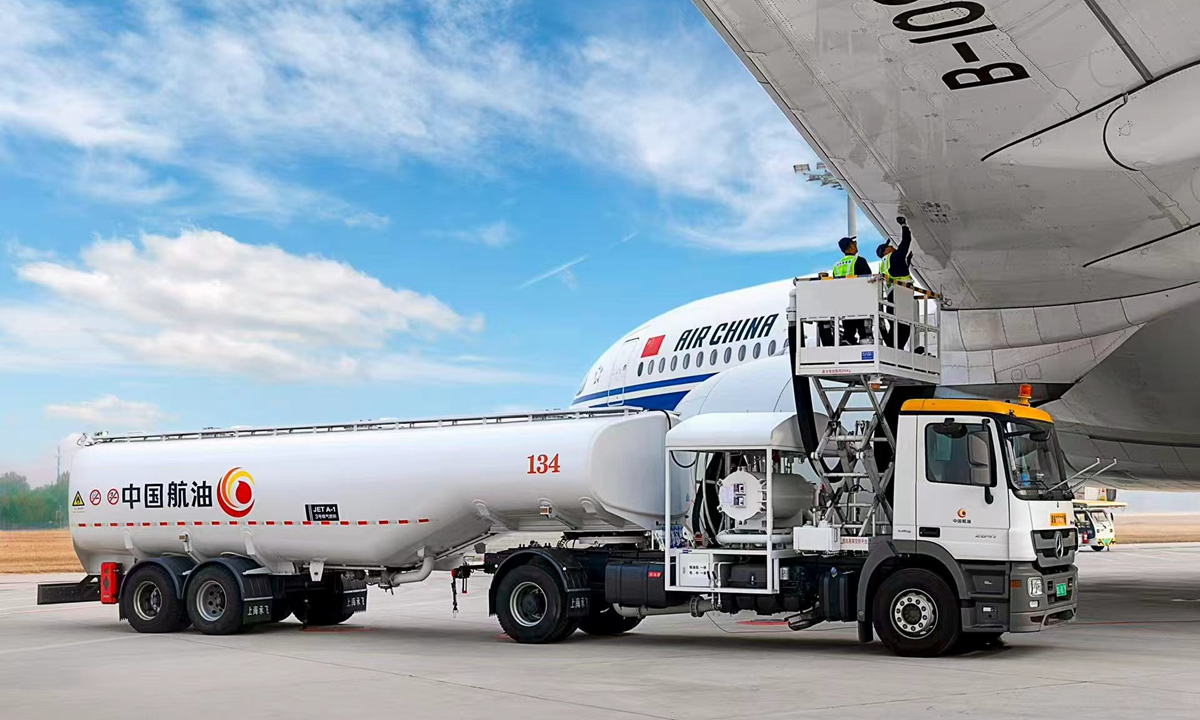
Sinopec is world's largest oil refiner and China's top aviation fuel producer, while CNAF is the country's largest state-owned aviation fuel supplier, which integrates the purchase, transportation, storage, quality management, sales and into-plane service of aviation fuel, the Xinhua News Agency reported in January.
A report released by the Sinopec Economics & Development Research Institute Co in December 2025 said that in China's future refined oil consumption structure, aviation kerosene has become a significant growth driver.
Citing S&P Global forecasts, Sinopec said that China's aviation fuel consumption is expected to rise from 39.28 million tons in 2024 to 75 million tons by 2040, and the significant increase in jet fuel demand must be effectively supplied through stable channels.
Following the restructuring, the two companies will achieve a powerful synergy between upstream and downstream operations, further integrating Sinopec's industrial advantages in refining-chemical integration and regional layout with CNAF's nationwide supply guarantee system, thereby enhancing the resilience and security of the industrial and supply chains, according to Sinopec.
Currently, the largest international aviation fuel service providers are mainly integrated petrochemical companies, while in China, the production, sales, and refueling of aviation fuel are operated by different enterprises, and the overall competitiveness of the sector still lags behind that of major international aviation fuel service providers.
The move is aimed at integrating the currently fragmented segments of China's aviation fuel industry — from production to sales and refueling — into an integrated model in line with international major players, thereby boosting the sector's global competitiveness and promoting the green and low-carbon transformation of aviation energy supply, Guo Jia, a veteran market watcher, told the Global Times on Sunday.
In his view, compared with traditional energy-consuming sectors, the aviation fuel industry faces more stringent requirements for green and low-carbon development, while also ushering in significant strategic opportunities.
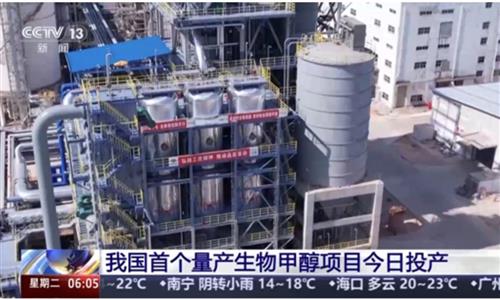
A key battleground for this green transformation is Sustainable Aviation Fuel (SAF), which is an alternative to conventional aviation fuel. It can be made from many different sustainably sourced materials, such as used cooking oil, biomass waste and residues, and renewable energy and carbon. SAF can significantly reduce life cycle carbon emissions, typically by about 80 percent compared with conventional aviation fuel, according to The International Air Transport Association (IATA).
In December 2025, IATA released new estimates for SAF production showing that in 2025, SAF output was estimated at 1.9 million tons, compared with 1 million tons in 2024. However, SAF production growth is projected to slow this year, with output reaching 2.4 million tons.
SAF production in 2025 represented only 0.6 percent of total jet fuel consumption, and it is expected to increase to 0.8 percent this year. At current price levels, the SAF premium translated into an additional $3.6 billion in fuel costs for the industry in 2025.
Sinopec also vowed that following the restructuring, the two companies will pool their research and development (R&D) and supply strengths to create an SAF technology hub, accelerate industrial chain build-out and commercial scaling, and encourage deeper cooperation across the value chain.
RELATED ARTICLES