Illustration: Liu Xidan/GT
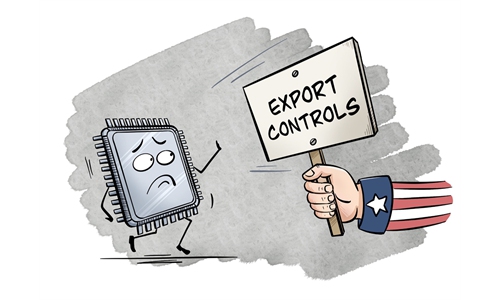
A Bloomberg report headlined "Lutnick Presses SK Hynix, Samsung to Boost Memory Output in US" has drawn attention in South Korea, prompting discussion about how far Washington's efforts to expand domestic chip-making capacity could affect South Korea's semiconductor ecosystem.In recent days, some South Korean media outlets have expressed concerns. For instance, the Korea JoongAng Daily reported on Friday that industry sources believe Washington ultimately wants memory chips production to move to the US.
For South Korean chipmakers, however, building such plants in the US would mean higher construction and labor costs, along with concerns that proprietary manufacturing technology and production expertise could be transferred to the US.
These concerns have emerged at a sensitive moment for South Korea's semiconductor industry. On June 29, the Yonhap News Agency cited South Korean Industry Minister Kim Jung-kwan, who said that the country plans to develop a new semiconductor production base in its southwestern region through 800 trillion won ($533.5 billion) in corporate investments that will create four memory chip fabrication plants.
From this perspective, the concerns voiced in South Korea are not without basis. Seoul's announcement of a plan to expand domestic chip manufacturing came shortly before reports of US Commerce Secretary Howard Lutnick's remarks. The timing highlights growing competition for semiconductor investment and manufacturing capacity between the US and an ally, reflecting diverging interests in a strategically important industry.
As artificial intelligence continues to expand globally, memory chips are benefiting from new growth opportunities, with the US and South Korean companies at the forefront of competition in the sector. For South Korea, maintaining its competitiveness in memory chips carries important implications for its overall economy and exports, given the significant role semiconductors play in the country's industrial mix.
For many years, South Korea's reliance on semiconductor production and export has been significant. The country's chip exports reached a record $173.4 billion in 2025, accounting for roughly one-quarter of the country's total exports of $709.7 billion. That strength has carried into this year, with semiconductor exports rising 163 percent year-on-year in the first six months, according to Yonhap.
These figures underline the strategic challenge facing South Korea as semiconductor supply chains continue to evolve.
A shift in the location of chip production capacity could have wider implications for South Korea's manufacturing base and export performance, given the role semiconductors play in its economy. Yet the industry's importance may not necessarily strengthen South Korea's bargaining position, and on the contrary, it could make its chip sector a focus of competition.
Recent remarks by Lutnick, along with concerns voiced in South Korea, reflect this growing tension.
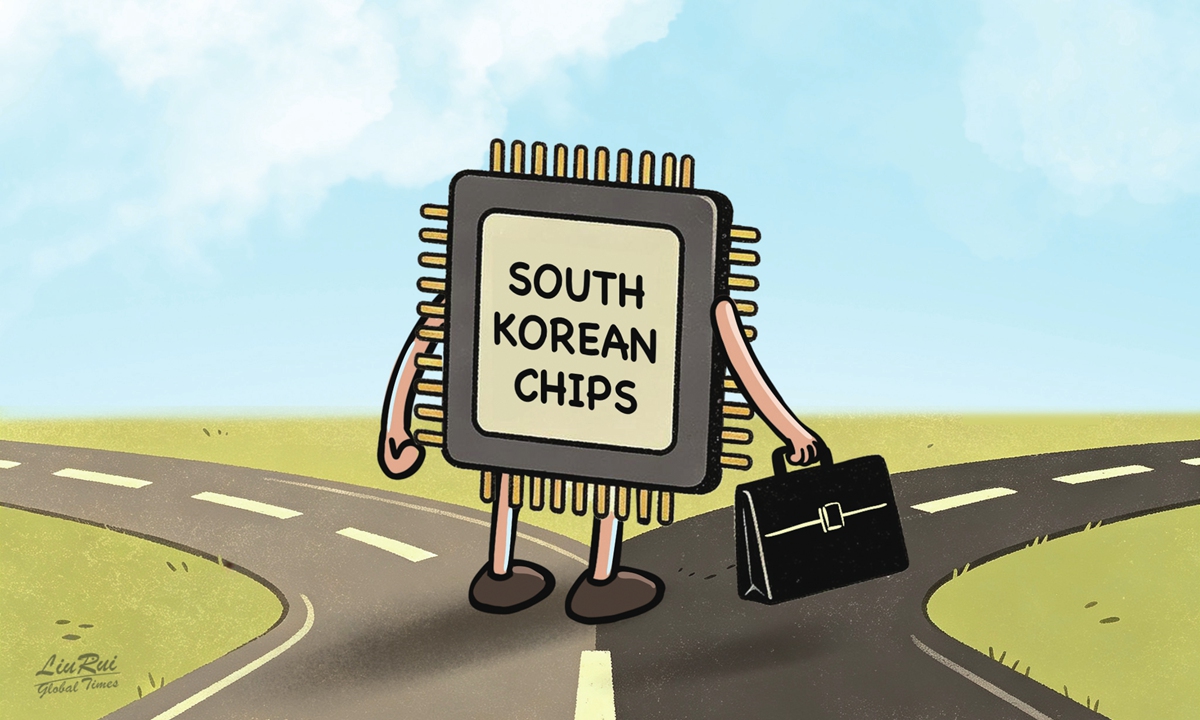
The growing divergence of interests between South Korea and the US over chip-making underscores the importance of maintaining a diversified network of export markets and economic partners.
Expanding chips production in South Korea alone may not guarantee broader access to the US market as competition over semiconductor capacity evolves.
For South Korea, broader economic partnerships could provide greater flexibility and help strengthen the resilience and long-term competitiveness of its semiconductor sector. Against this backdrop, markets beyond the US are likely to become increasingly important for South Korea's semiconductor industry.
The rapid adoption of AI in the US has created strong demand for memory chips, but it represents only one segment of the global market. Other markets also offer substantial opportunities as demand for advanced computing and digital infrastructure continues to grow.
For South Korean chipmakers, an important question is how to expand sales of their most advanced memory chips in these markets, as advanced memory technology will be central to capturing market opportunities.
The greater the pressure South Korean chipmakers face from the US, the more important other global markets become. China, in particular, remains one of the world's largest semiconductor markets, with larger room for complementarity and cooperation between the two countries' chip industries.
South Korean companies may need to take into account China's rapidly advancing semiconductor innovations. For South Korean companies, gaining market share in China and other important markets will increasingly depend on their ability to offer advanced products that meet the evolving needs of global customers.
The author is a reporter with the Global Times. bizopinion@globaltimes.com.cn
RELATED ARTICLES