ARTS / CULTURE & LEISURE
Grass-roots writers nominated for China’s prestigious literary prize
By Published: Jul 13, 2026 08:51 PM

In the Washington Metro, you might pass a busker strumming a guitar. In a Paris café, a waiter might be seen scribbling notes between orders.
But in China, the spotlight of one of the country's highest literary honors has now fallen on a delivery rider weaving through city traffic on an electric bike and a vendor weighing produce and noting down observations in quiet moments at a market stall.
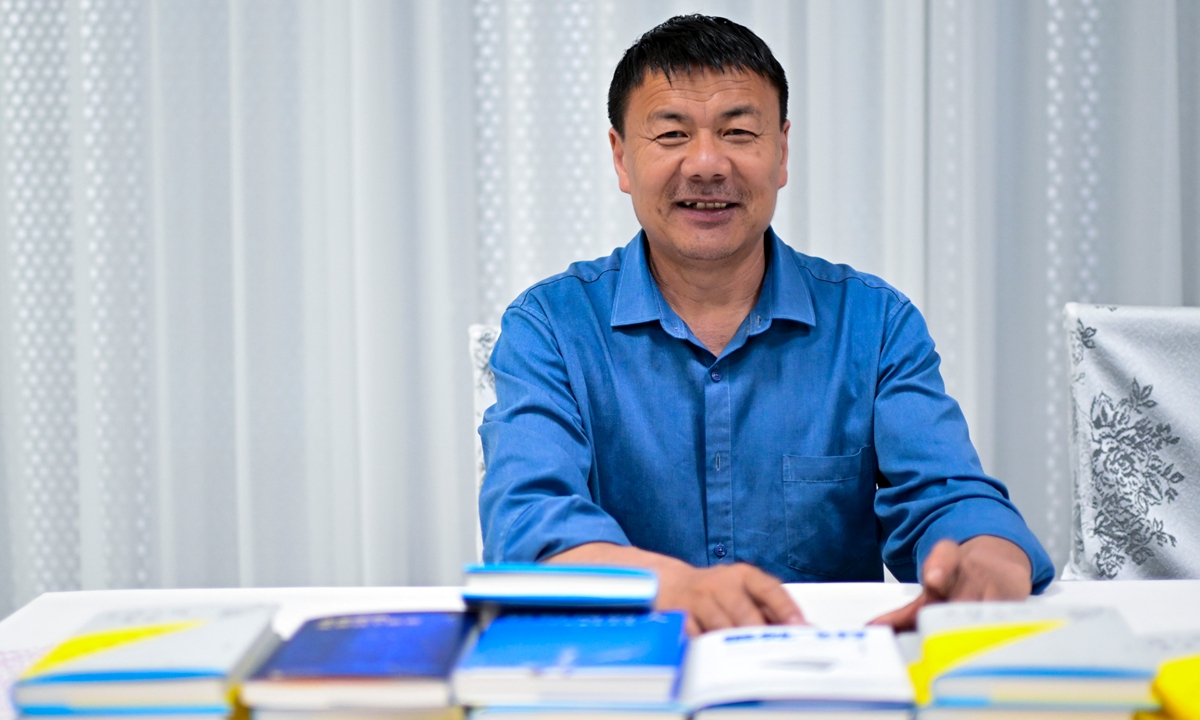
Wang has spent over eight years delivering food, covering more than 150,000 kilometers in the five years since he first began the job - the equivalent of circling the Earth nearly four times.
His poetry collection Low Altitude Flight contains lines written in the gaps between orders, while waiting at traffic lights or in elevators. There are no grand declarations, only precise observations: using his feet to "hammer the earth" in an age that worships speed, trying to make every footprint a record of time. These are poems born directly from the rhythm of his days working.
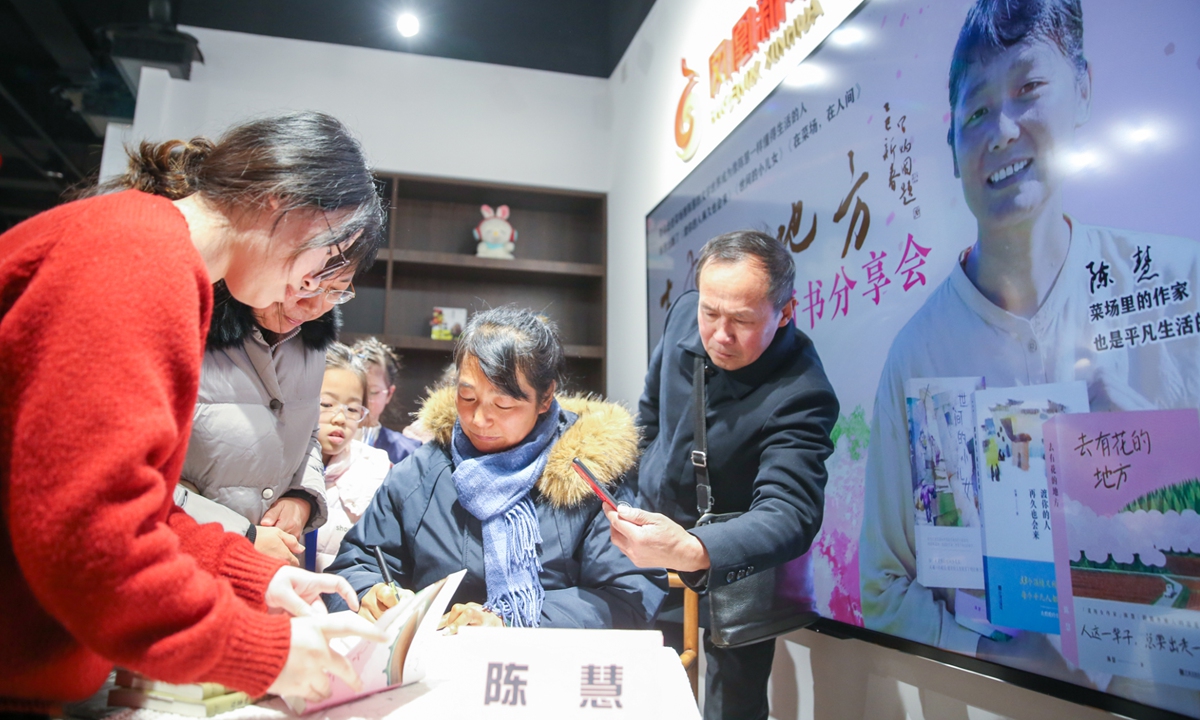
For international readers, this may recall the tradition of blue-collar writing in the West. China's mainstream literary establishment has actively embraced these writers rather than treating their work as marginal voices speaking only to their own communities.
The Lu Xun Literary Prize, organized by the China Writers Association and awarded every four years, has traditionally been seen as a competition for professional writers.
Nominating grass-roots writers - people without formal literary training or elite educational backgrounds - marks a notable opening of the door. A theoretical work also shortlisted, "The Laborers Sing Their Own Songs," explicitly addresses this development, asking anew the old questions: Who writes literature? For whom? And about what?
Both Wang and Chen's books have already demonstrated their worth beyond symbolic value. According to his publisher, Wang's collection is set to appear in English in the US later this year as part of a major international publishing project.
Chen's essays have been featured on respected book lists in China. The prize judges appear to have been guided by the strength of the texts themselves, not merely by the authors' backgrounds.
This move fits into a wider pattern. For years, global audiences have encountered China's story through its most visible achievements - high-speed rail networks, technological advances, and large-scale infrastructure. These accounts have their place, but they can feel distant from daily life.
The writings of Wang and Chen offer another way in: stories told by people who are living the reality they describe, without a pre-set literary identity or outside observer's gaze.
Their work carries an authenticity that is hard to replicate. The pain and small joys they record belong to them in the first place. In this sense, their approach echoes other powerful literary traditions: the Beat Generation drawing directly from restless post-war US life, or Brazilian writer Jorge Amado capturing the energy and struggles of poor neighborhoods. When those who are usually observed become the ones holding the pen, literature gains a different weight and truthfulness.
This can be seen as a practical expression of "people-centered" cultural ideas: moving from simply pointing cameras or notebooks at ordinary citizens to enabling those citizens to write for themselves.
As Wang's poetry prepares to reach US readers and Chen's observations find broader audiences at home, these nominations offer a reminder about the depth and variety of contemporary Chinese experience. The country's literary map has room for both refined, high-cultural works and writing that emerges from the ground level - "flying low" alongside more elevated perspectives.
The author is a reporter with the Global Times. life@globaltimes.com.cn
But in China, the spotlight of one of the country's highest literary honors has now fallen on a delivery rider weaving through city traffic on an electric bike and a vendor weighing produce and noting down observations in quiet moments at a market stall.
Wang Jibing Photo: VCG
On Sunday night, the nomination list for the ninth Lu Xun Literary Prize was made public. Alongside established authors appeared two striking names: Wang Jibing, a 56-year-old delivery rider based in Kunshan, East China's Jiangsu Province, and Chen Hui, who has run a general goods stall for 18 years in a wet market in Liangnong town, Yuyao city, East China's Zhejiang Province. Their inclusion signals something more than a simple tale of underdogs succeeding. It points to a quiet but noticeable shift in how Chinese literature values and recognizes who gets to tell the country's stories.Wang has spent over eight years delivering food, covering more than 150,000 kilometers in the five years since he first began the job - the equivalent of circling the Earth nearly four times.
His poetry collection Low Altitude Flight contains lines written in the gaps between orders, while waiting at traffic lights or in elevators. There are no grand declarations, only precise observations: using his feet to "hammer the earth" in an age that worships speed, trying to make every footprint a record of time. These are poems born directly from the rhythm of his days working.
Chen Hui Photo: VCG
Chen Hui's essays in In the Market, In the World draw from 18 years behind her stall. She describes the fish seller next to her whose fingers carry a permanent gray tint no scrubbing can remove, or the elderly customer who divides her pension into careful amounts: one for her grandson's sweets, one saved for medical needs, and one quietly passed to a daughter who married far away. The writing stays close to the ground, rooted in the details of everyday survival and human connection.For international readers, this may recall the tradition of blue-collar writing in the West. China's mainstream literary establishment has actively embraced these writers rather than treating their work as marginal voices speaking only to their own communities.
The Lu Xun Literary Prize, organized by the China Writers Association and awarded every four years, has traditionally been seen as a competition for professional writers.
Nominating grass-roots writers - people without formal literary training or elite educational backgrounds - marks a notable opening of the door. A theoretical work also shortlisted, "The Laborers Sing Their Own Songs," explicitly addresses this development, asking anew the old questions: Who writes literature? For whom? And about what?
Both Wang and Chen's books have already demonstrated their worth beyond symbolic value. According to his publisher, Wang's collection is set to appear in English in the US later this year as part of a major international publishing project.
Chen's essays have been featured on respected book lists in China. The prize judges appear to have been guided by the strength of the texts themselves, not merely by the authors' backgrounds.
This move fits into a wider pattern. For years, global audiences have encountered China's story through its most visible achievements - high-speed rail networks, technological advances, and large-scale infrastructure. These accounts have their place, but they can feel distant from daily life.
The writings of Wang and Chen offer another way in: stories told by people who are living the reality they describe, without a pre-set literary identity or outside observer's gaze.
Their work carries an authenticity that is hard to replicate. The pain and small joys they record belong to them in the first place. In this sense, their approach echoes other powerful literary traditions: the Beat Generation drawing directly from restless post-war US life, or Brazilian writer Jorge Amado capturing the energy and struggles of poor neighborhoods. When those who are usually observed become the ones holding the pen, literature gains a different weight and truthfulness.
This can be seen as a practical expression of "people-centered" cultural ideas: moving from simply pointing cameras or notebooks at ordinary citizens to enabling those citizens to write for themselves.
As Wang's poetry prepares to reach US readers and Chen's observations find broader audiences at home, these nominations offer a reminder about the depth and variety of contemporary Chinese experience. The country's literary map has room for both refined, high-cultural works and writing that emerges from the ground level - "flying low" alongside more elevated perspectives.
The author is a reporter with the Global Times. life@globaltimes.com.cn
RELATED ARTICLES