ARTS / BOOKS
Novel shines light on rescue teams behind China's space missions
Beyond the Galaxy
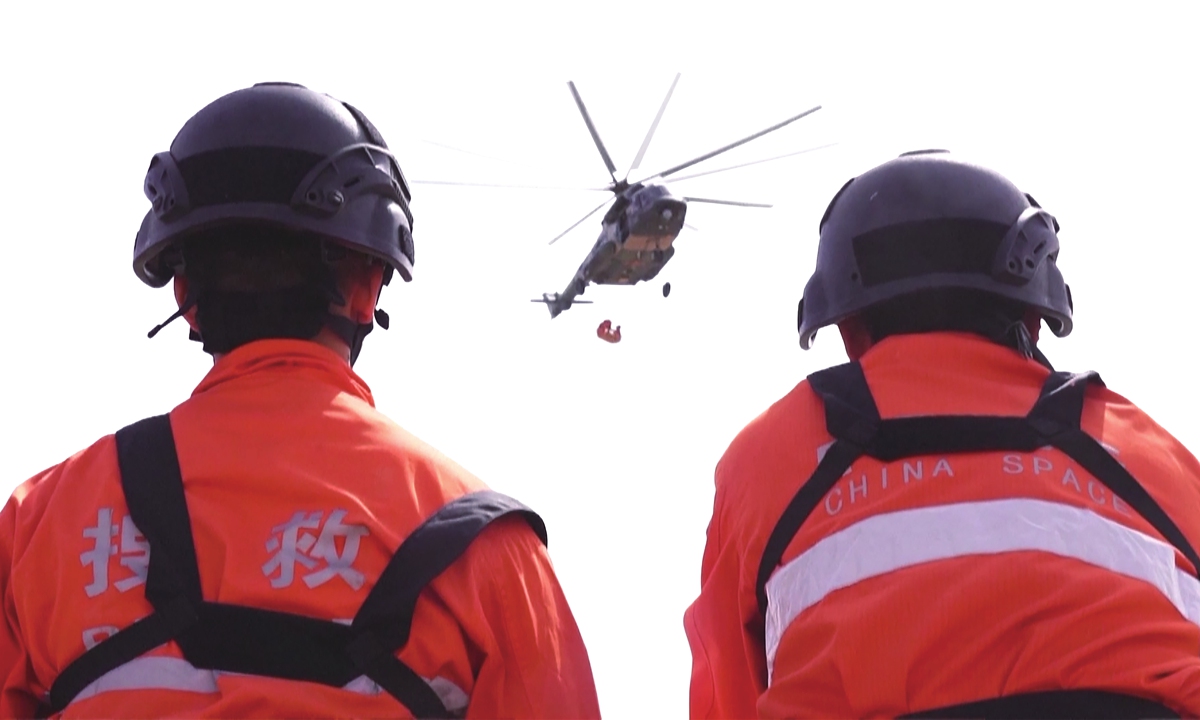
Two search and rescue team members take part in the Shenzhou-15 spacecraft's return mission.
As China's Shenzhou spacecraft returned safely from orbit, the world's attention was drawn to the capsule beneath its red-and-white parachute and the astronauts emerging from inside. Yet beyond the cameras, a group of orange-clad figures were already moving through the vast desert.
They sped across the desert in rescue vehicles, descended from helicopters above the landing site, and helped astronauts out of the return capsule. Unlike the many aerospace workers dressed in blue, these rescuers wore orange - a color that has become a symbol of the final safety net on astronauts' journey home. Wherever a return capsule lands, they are already there.
A newly published novel, Lights of Desert, Stars Over Firmament written by aerospace writer Ziwu, has turned the literary spotlight for the first time toward this little-known but critical field. Through the perspective of an insider, the book reveals the stories of China's space search and rescue teams - the people who quietly stand behind the nation's manned space missions.
"China's aerospace program is a mission carried out by thousands of people working together," Ziwu told the Global Times. "Behind it are countless ordinary aerospace workers. Space rescue is only one example. Many other positions are the same."
The writer said that she hopes the novel will encourage readers to see the ordinary figures who quietly support China's space achievements from behind the scenes.
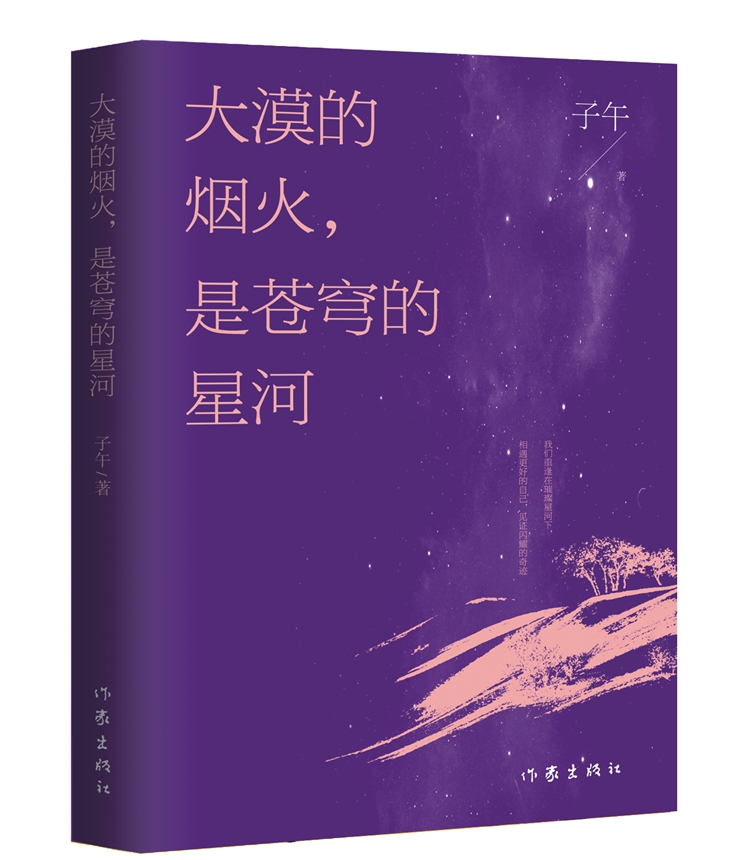
The book of Lights of Desert, Stars Over Firmament Photos: Courtesy of Ziwu
From Gobi to bookshelf
The novel is set around the return mission of Shenzhou-12, a mission that marked a turning point for the Dongfeng Landing Site. Previously used as a backup landing area in North China's Inner Mongolia Autonomous Region, it became China's primary landing site for crewed spacecraft after the Shenzhou-12 mission.
Set against the backdrop of the fictional Mocheng Landing Site, where a crewed spacecraft mission is on emergency standby, the novel follows the six-year-reunion of space search and rescue team leader Gu Xinghe and photojournalist Cong Yan, who is assigned to cover the mission.
The title was inspired by the tradition of setting off fireworks at the Jiuquan Satellite Launch Center, also known as the Dongfeng Aerospace City, after missions are completed. The phrase "lights of desert" in the book's title represents the ordinary lives of the countless aerospace workers who toil far from public attention, while the "stars over firmament" symbolizes humanity's grand ambitions in space.
Ziwu has spent more than 15 years at the Jiuquan Satellite Launch Center, first providing meteorological support and later working in news-related roles. Her years in the Gobi Desert allowed her to encounter the often-overlooked workers behind China's space missions, whose stories eventually became the inspiration for her novel.
That inspiration took shape during a nighttime rescue mission, when she followed a rescue convoy into the desert for the first time.
"It was my first close-up encounter with space search and rescue, and also the first time that I entered the desert with an entire convoy," she recalled. "When the wind and sand rose and dust filled the air, I was deeply moved."
Before the mission began, she saw rescue team members preparing for departure in front of the Dongfeng Aerospace City auditorium, where morning light fell across their orange uniforms. The image stayed with her and later became the opening scene of her novel.
During the mission, watching the rescuers set up security lines around the return capsule further deepened her admiration for the team.
"They seemed to be shining," she said. "Through years of training and preparation, they quietly protect astronauts and stand guard for the final step on their journey home. But they are rarely known by the public."
That realization led her to choose space rescue as the focus of her novel. She noted that she hopes her writing could expand public admiration beyond astronauts and famous scientists to include the many workers who ensure every mission ends safely.

Chinese writer Ziwu
Unsung heroes
For Ziwu, authenticity is the most important principle of the book. When asked whether she adjusted real rescue procedures for dramatic effect, her answer was a firm "No."
More than half of the characters are based on real people, and many scenes were drawn from her own observations of landing site searches, emergency drills and rescue training.
While writing, she frequently consulted experts in the field to ensure accuracy.
"The scenes were recreated based on the real conditions of rescue teams," she said. "Everything was carefully checked with professional rescue experts."
In her view, staying true to reality is not a limitation on creativity, but a form of respect.
"I think faithfully presenting the truth is the greatest tribute to them," she said.
At a book sharing event held in Beijing on Wednesday, Song Chenchen, editor of the book from The Writers Publishing House, said she was immediately drawn to the unusual perspective of the novel after reading Ziwu's manuscript. The profession of space search and rescue workers, she said, offered readers a fresh window into China's space achievements.
A visit to Dongfeng Aerospace City further strengthened her decision to publish the book. In the seemingly quiet desert environment, numerous aerospace workers have devoted themselves to their missions far from the public eye. Their stories, she said, deserved to be fully recorded.
Ziwu is now working on another story about the aerospace workers she has encountered in her daily life.
"Greatness is often easier to describe," she said. "But portraying the ordinary is much harder. The more ordinary they appear, the more extraordinary they can be."
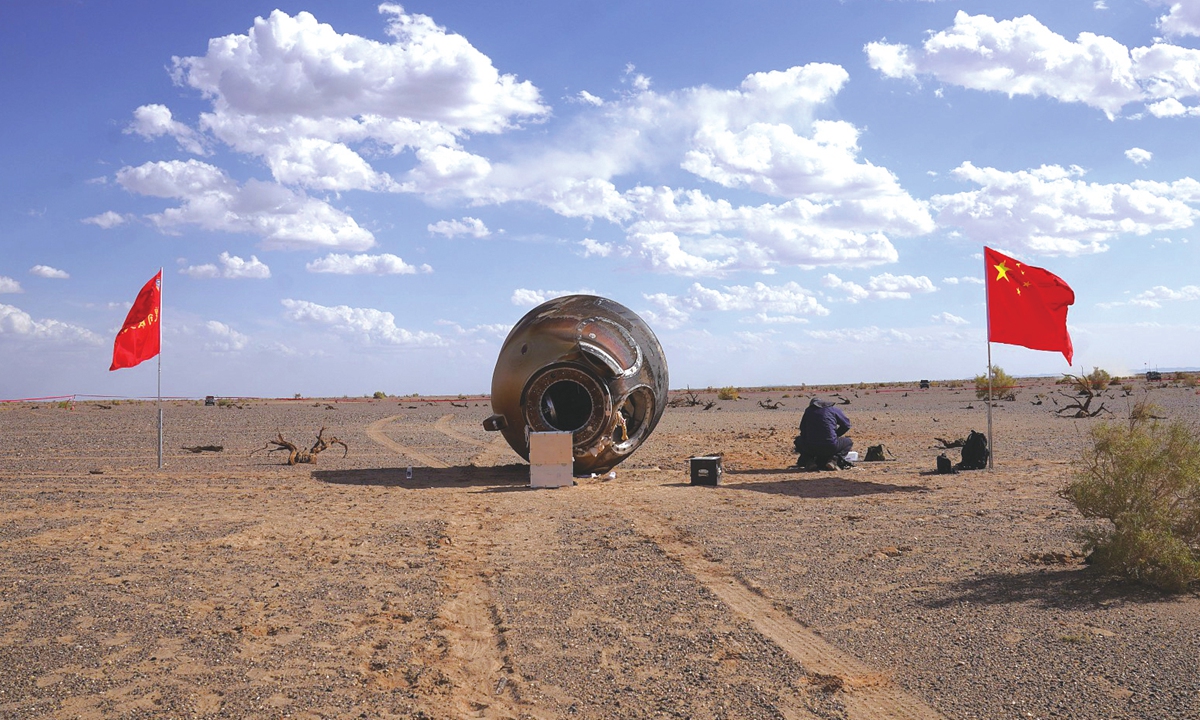
The reentry capsule of the Shenzhou-12 manned spacecraft touches down at the Dongfeng landing site on September 17, 2021 Photos: VCG
RELATED ARTICLES