ARTS / CULTURE & LEISURE
'Sincerity, love' most powerful things in human relationships
Actor Song talks about new drama, growing up
By Liu Yating and Published: Jul 14, 2026 09:00 PM

Love for You Photo: Courtesy of Douban
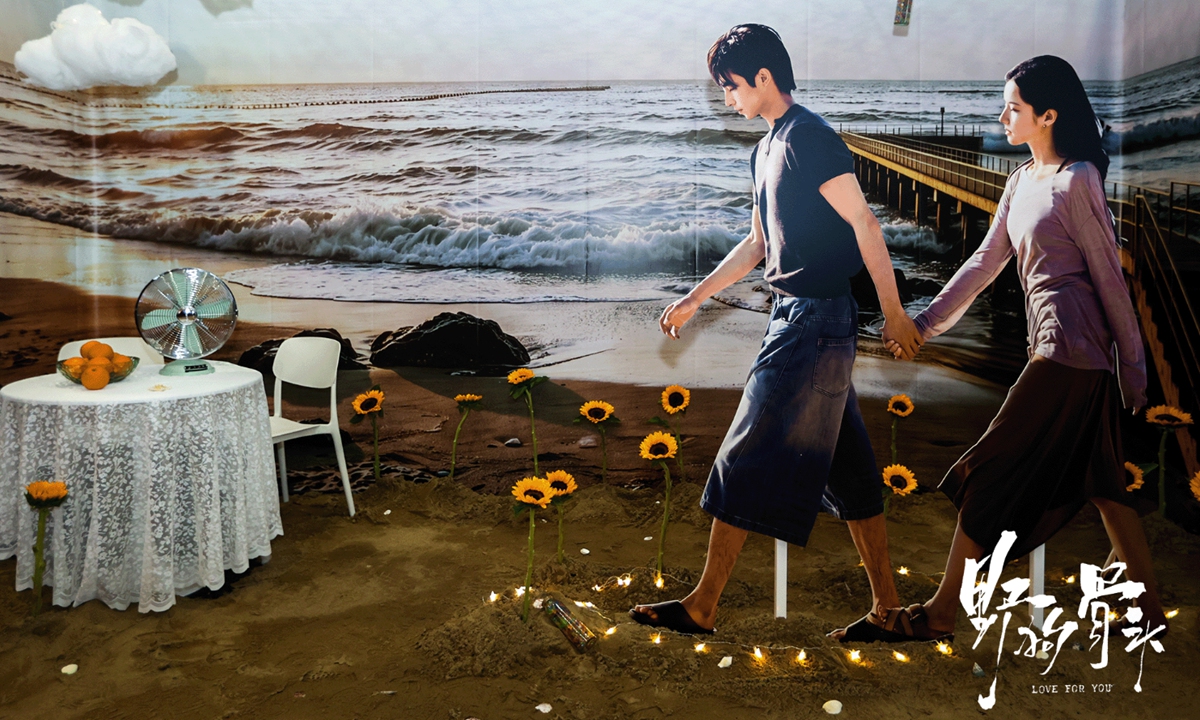
In the new drama Love for You, the leading role Chen Yi first appears true to his nickname, "Wild Dog:" sharp, guarded, almost feral. Played by Song Weilong, Chen carries a coiled intensity born of early wounds. Yet beneath the hard shell lies a young man who is quietly and fiercely protective of the one person who makes survival feel worthwhile.
The series, which recently began airing, follows the story of Chen Yi and Miao Jing - played by Zhang Jingyi, as they navigate family upheaval and years of hardship, becoming each other's anchor. Bound by a connection from their parents' past, the two find in one another the strength to endure. For Song, 27, the story's pull was simple: the deep, side-by-side companionship of two people walking through the mud together.
"Chen is someone who is very sensitive and fragile inside," Song told the Global Times in an exclusive interview with the Global Times.
"The 'wild dog' impression comes from having to use a tough exterior to protect himself after being hurt." Song's performance follows Chen across a six-year span, a choice that required small but telling physical shifts. The younger version moves with a lighter step and sleeps openly on his back. After years of grinding difficulty, the elderly Chen carries himself differently - heavier, more defeated, curling up in rest.
Meanwhile, Song did not arrive on set with fixed plans, but worked from internal understanding and adjusted in the moment, guided by his co-stars and the scene's rhythm. His guiding principle for the role was straightforward: bring a sincere heart and avoid overacting.
"No matter what kind of performance, you need to bring a true heart, try to be natural, and not force it too much," he said. Even the dialogue reflects that realism. People in real life do not speak in perfectly rounded tones, Song noted. Lines should fit the character's personality and circumstances rather than chase technical perfection.
The drama's emotional core is the quiet devotion between Chen and Miao. Chen will put himself in danger for her without hesitation. To Song, this is not self-sacrifice in the dramatic sense but a natural outgrowth of love. "The most precious thing between them is love," he said.
Song's approach to choosing projects mirrors this preference for emotional substance. He looks for resonance. If he cannot understand or like a character, he sees it as unfair to both himself and the audience. Despite a martial arts background that gives him an advantage in fight scenes - better coordination and quicker pickup of choreography - he does not actively chase action roles. A story must offer either strong entertainment value or rich emotional layers to draw him in.
This selectivity reflects a broader maturity. Song has been in the industry for more than a decade. Like many young actors who rose quickly, he once let outside noise trigger self-doubt and internal exhaustion. With age, he has learned to listen without being controlled. "You can hear others' voices, but you must stay objective. The most important thing is to protect your own heart," he said.
Song's latest milestones include releasing an album marking his 10th debut anniversary and singing an original song for Love for You. He finds singing offers immediate joy, while the satisfaction derived from acting arrives later, once the work is out and audiences respond. During filming, he focuses only on doing his best in the moment. Afterward, he reviews lessons learned but refuses to well on regret. "I know that at that stage, I already gave my maximum effort," he said.
When asked what he would say to his younger self just starting out, Song's answer carried gentle gratitude: "It's been good. Thank you. You've worked hard."
The universality of emotion is something Song returns to when discussing why his stories have succeeded on international stages. Chinese dramas are increasingly finding audiences abroad, and he noted the reason is fundamental: Love, fear, sadness, and hope require no translation.
"People love, they grieve and feel fear - no matter where come from or what language they speak," he said. "The most powerful things in human relationships are sincerity and love." And through Chen Yi, Song hopes to pass a little of that along. In China's fast-moving entertainment industry, where young actors often face pressure to chase trends or maintain perfect images, Song's emphasis on responsibility stands out. His responsibility to himself means choosing roles that matter and staying true to his instincts. Meanwhile, his responsibility to audiences means delivering honest performances rather than empty displays of skill.
This stance feels particularly relevant at a time when Chinese TV and film are balancing commercial demands with deeper storytelling. Audiences respond to characters who feel lived-in, flawed yet continue to strive - much like Chen, who fights not for grand heroism but simply to keep moving forward and protect what he holds dear.
As Love for You unfolds on screen, it offers audiences more than a dramatic romance or coming-of-age tale. It presents a portrait of two young people learning that protection can look like fierceness, but healing often arrives through quiet companionship and shared endurance. For Song, embodying that journey has been another step in his own longer path - one measured not by flash and pomp but by sincerity and steady effort.
Looking ahead, Song prefers to let things unfold naturally. He hopes to keep receiving roles he genuinely cares about and to approach each one with the same seriousness. "Be responsible to myself, and also responsible to the audience," Song said. "I will do my best to perform every character well."
RELATED ARTICLES