Lithuanian new PM seeks mending China ties yet sticks to wrong Taiwan region ‘representation,’ concrete steps needed instead of verbal gestures: Chinese expert
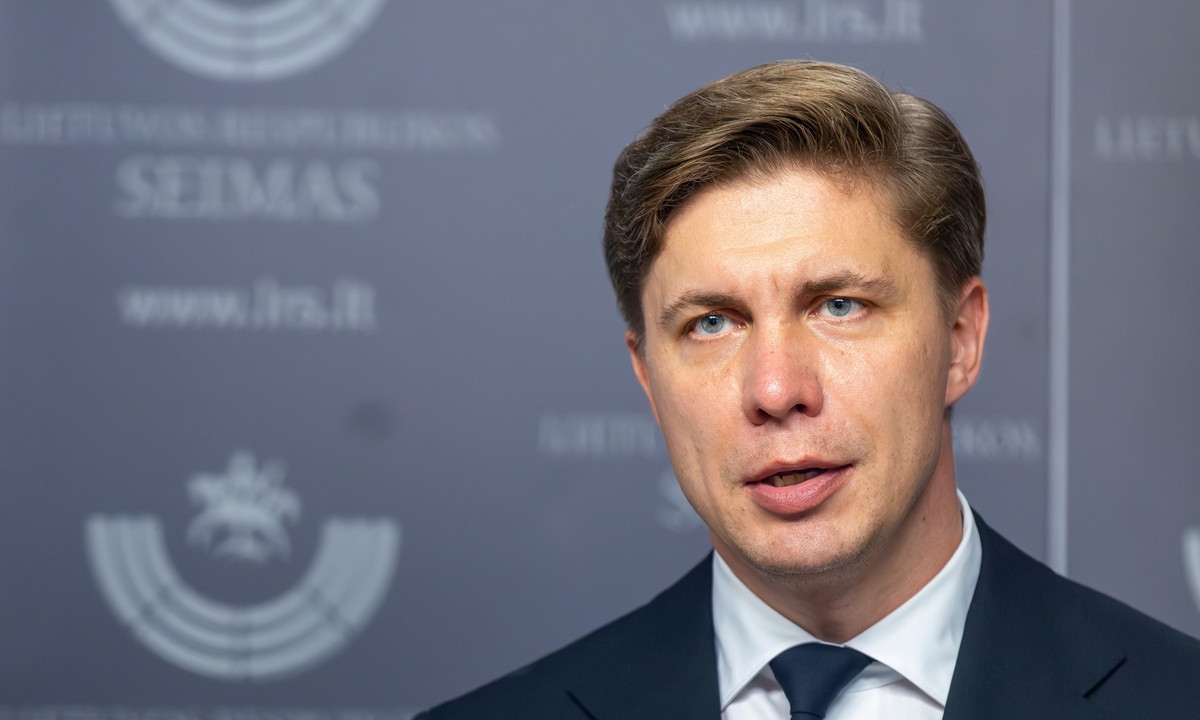
Lithuania's Prime Minister Mindaugas Sinkevicius Photo: VCG
As Lithuania's new Prime Minister Mindaugas Sinkevicius took office on Tuesday, he signaled an intention to normalize ties with China on his first day in the job, but also claimed this could be achieved without a change in the so-called "Taiwanese representation," according to media reports. A Chinese expert said on Wednesday that Lithuania's verbal overtures likely stem from its economic challenges, however, any meaningful shift should be demonstrated through concrete steps from Lithuania.Lithuanian lawmakers backed a new government led by Sinkevicius, which plans to normalize ties with China. Lawmakers voted 72-29, with four abstentions, to confirm the three-party grouping's program on Tuesday, Bloomberg reported.
According to Reuters, Sinkevicius said on Tuesday the 2021 decision to allow China's Taiwan region to open a de-facto embassy in the country was "maybe too brave" as he sought to repair relations with China on his first day in the job.
In November 2021, Lithuania approved the establishment of the so-called "Taiwanese Representative Office in Lithuania" by the Taiwan authorities. In response, China announced that it would downgrade its diplomatic relations with Lithuania to the chargé d'affaires level, according to the Chinese Foreign Ministry.
The manifesto of the government of Sinkevicius, which was voted through on Tuesday, clearing the way for him to become prime minister, includes the goal to "normalize" the relationship back to appointing each others' ambassadors, the report said.
However, Sinkevicius also claimed that he believed the relationship with China could be restored without a change in the so-called "Taiwanese representation." "The Foreign Ministry has several options on how to solve the situation", he said, without detailing the options, as reported by Reuters.
Jian Junbo, director of the Center for China-Europe Relations at Fudan University's Institute of International Studies, told the Global Times on Wednesday that the tangible economic toll from the frozen bilateral ties may have acted as a catalyst for Lithuania's posture to repair relations with China.
Over the past four years, economic and trade relations between China and Lithuania have experienced a "precipitous drop." Data from Lithuania's statistics service, Statistics Lithuania, showed that Lithuania's exports to China plummeted by more than 50 percent.
Having witnessed the severe fallout wrought by the former administration's diplomatic policy, Lithuania's new government may perceive a chance to reset its foreign policy — a factor that could account for its recent gestures to mend relations with China, Jian said.
In February, then Lithuanian Prime Minister Inga Ruginienė said that Lithuania made a strategic mistake by allowing a so-called "Taiwanese representative office" to open in Vilnius, Lithuanian National Radio and Television reported. "I think Lithuania really jumped in front of a train and lost," Ruginienė said.
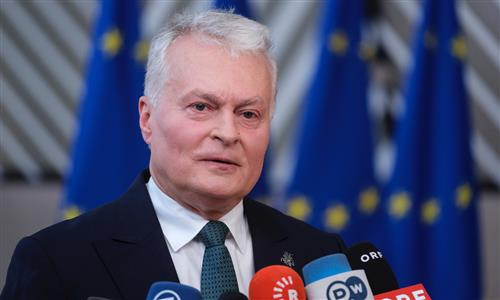
In June, Lithuanian President Gitanas Nauseda said he expects to see the first results of the country's diplomatic outreach to China within the next six months, according to Bloomberg.
In Jian's view, while the new Lithuanian cabinet appears to have adopted a seemingly pragmatic policy toward China, its goodwill gestures need to be followed by concrete follow-up actions.
"If Lithuania insists on keeping its wrongful moves related to China's Taiwan region yet expects to patch up ties with China, it shows the country has failed to grasp how gravely its moves undermine China's core interests. It still lacks a full understanding of the nature of this dispute and cannot recognize its own mistakes," Jian said. The root of the bilateral rift lies with Lithuania, and tangible steps are needed to make amends, he said.
China has repeatedly made clear its position on China-Lithuania relations. "The crux of the current difficulties is that the Lithuanian side violated the one-China principle and went back on its political commitment made in the joint communiqué on the establishment of diplomatic relations," Chinese Foreign Ministry spokesperson Guo Jiakun told a regular press conference in June, when asked to comment that Lithuania has agreed to allow China to open a chargé d'affaires office.
"China remains open as always to communication. It is hoped that the Lithuanian side will act promptly and decisively to correct past mistakes and return to the right track of adhering to the one-China principle so as to create conditions for the normalization of relations with China," Guo said.
RELATED ARTICLES