ARTS / CULTURE & LEISURE
2,000-year-old chessboards found in Han Dynasty tombs
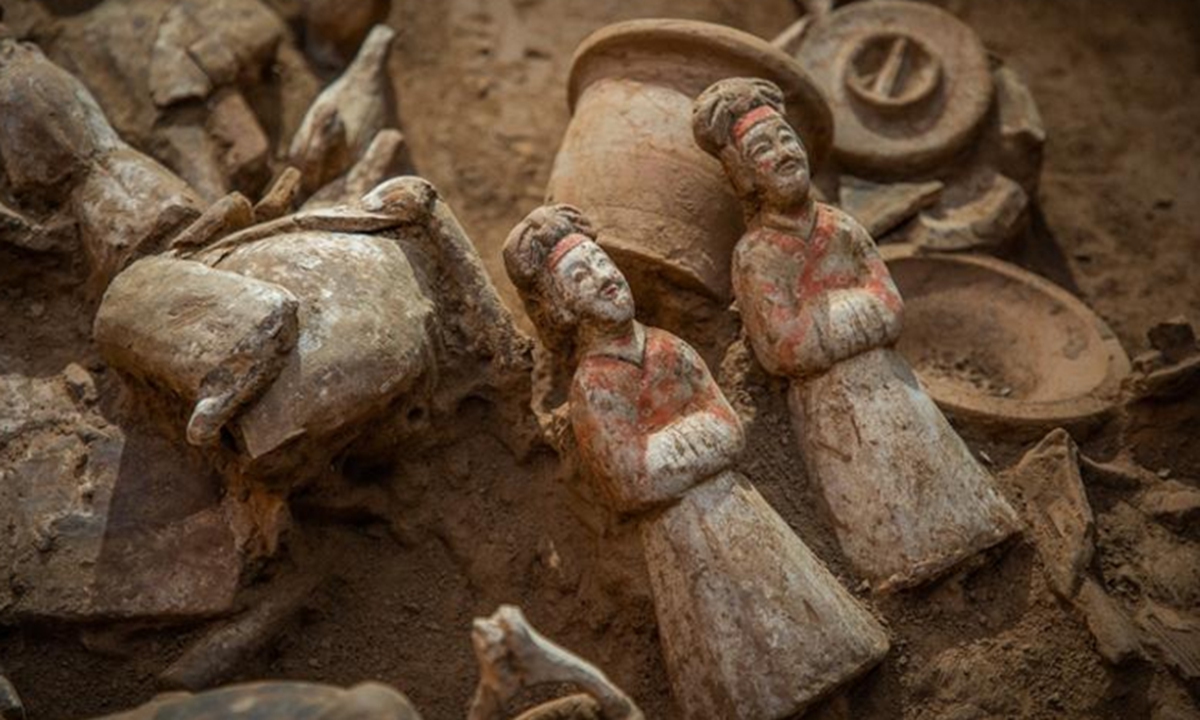
Artifacts unearthed from a site in Xi'an's Xincheng district Photo: Courtesy of Shaanxi provincial institute of archaeology
Chinese archaeologists have unveiled four new archaeological discoveries in Northwest China's Shaanxi Province, including a collection of Han Dynasty (206BC-AD220) tombs containing ancient chessboards, dating back to 2,000 years ago, a Northern Zhou Dynasty (557-581) joint burial site, and tombs from the Sixteen Kingdoms (304-439) and Tang Dynasty (618-907) periods.The Shaanxi provincial institute of archaeology announced the latest findings on Wednesday.
One of the discoveries was a tomb dating back to the Sixteen Kingdoms period, unearthed in Xi'an's Xincheng district.
From May to June 2023, archaeologists conducted excavations at a site as part of an urban redevelopment project. A Sixteen Kingdoms-era tomb was discovered in the northeastern section of the site.
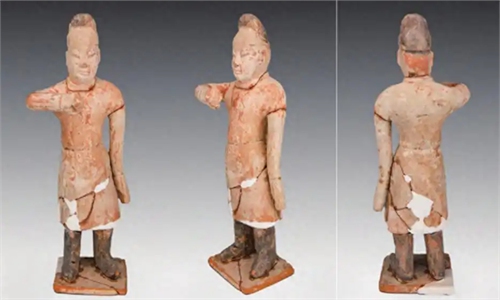
Although the tomb had been previously disturbed, archaeologists recovered 60 pieces or sets of burial objects, most of which were pottery figurines. The artifacts can be divided into three categories: human figures, figures related to travel and transportation, and domesticated animals.
The burial collection was relatively complete and included common elements found in Sixteen Kingdoms tombs in the Guanzhong region, including figures depicting travel scenes, musical performances, livestock and kitchen-related objects.
Archaeologists said the discovery provides new evidence for understanding the distribution of Sixteen Kingdoms tombs in the Guanzhong area. Some of the unearthed horse figures, including saddles, harnesses and painted decorations, were well preserved, offering valuable information for research into horse equipment and ornamentation during the period, according to the institute.
The tomb also contained a rich collection of female seated musicians, travel figures and ceremonial guards, as well as animal and kitchen figurines, providing important material for studying the composition of figurine groups and burial objects in Sixteen Kingdoms tombs.
Another major discovery came from an excavation in Xi'an's Chang'an district, where archaeologists uncovered 11 ancient tombs at a construction site.
The excavation, conducted from May to June 2022, found that two tombs, known as M1 and M2, were particularly well preserved. Both contained epitaphs with clear dates, adding valuable information to research on middle and late Tang Dynasty burials in Xi'an.
The tombs also yielded a large number of pottery figurines with diverse forms.
The epitaph from M2 was especially significant, providing new information on marital relationships, family structures and burial practices among couples during the middle and late Tang period.
Experts say the tomb owner had a deep understanding of Taoist practices. Several unusual figurines found in the tomb, including figures with tall hairstyles, large ears and deer with curled horns, may be associated with Taoist beliefs and mythology, offering new material for studying religious imagery and cultural symbolism in ancient China, according to the institute.
A separate excavation at Shaanxi Normal University's Chang'an campus revealed 10 relatively well-preserved Han Dynasty tombs.
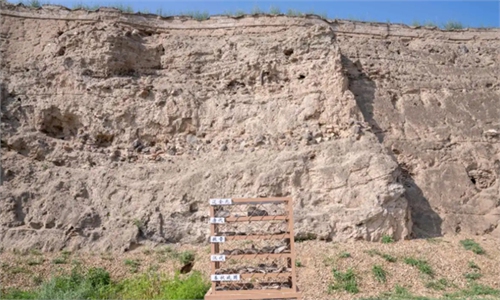
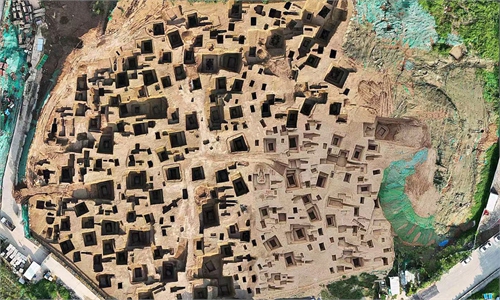
The excavation was carried out in 2022 ahead of the construction of student dormitories at the university. Archaeologists cleared 25 tombs and two ash pits, with 10 Han tombs remaining intact enough for detailed study.
A total of 130 sets of burial objects were recovered, including pottery, bronze and iron artifacts, as well as Liubo chessboards. Liubo, literally "six sticks," is a two-player board game dating back over 2,000 years and believed to be the ancestor of Xiangqi, or Chinese chess. It was immensely popular among royals and commoners during the Western Han Dynasty, but its exact rules were lost after the Tang Dynasty (618-907), according to the Xinhua News Agency.
The discovery of two Liubo chessboards in tombs M4 and M17 are among the highlights of the excavation. The boards were carved onto plain or patterned bricks, enriching archaeological materials related to the ancient Chinese board game.
The excavation also provides new materials for studying changes in burial objects, including their types, quantities and combinations, from the late Western Han (206BC-AD25) to the late Eastern Han (25-220) periods.
The fourth discovery was a Northern Zhou Dynasty tomb excavated east of Jinli village in the Xixian New Area between February and April 2021.
According to the unearthed epitaph, the tomb belonged to Yuwen Wei, who held several official positions. He died in 579.
The tomb contained 115 sets of burial objects, including pottery, porcelain, metal artifacts and jewelry.
Human remains found inside the rear chamber indicate that the tomb was a joint burial site for Yuwen Wei and his wife. Archaeologists found female remains on the eastern side of the coffin area and a relatively complete male skeleton on the western side, matching the information recorded in the epitaph.
Among the most notable discoveries was a white porcelain water container. The object features a distinctive shape, fine clay body and delicate craftsmanship. The discovery provides new evidence for research into the development of white porcelain during the Sui period (581-618).
RELATED ARTICLES