ARTS / TV
Beijing Zoo's new habitat puts giant pandas' welfare at its heart
What makes a panda's home?
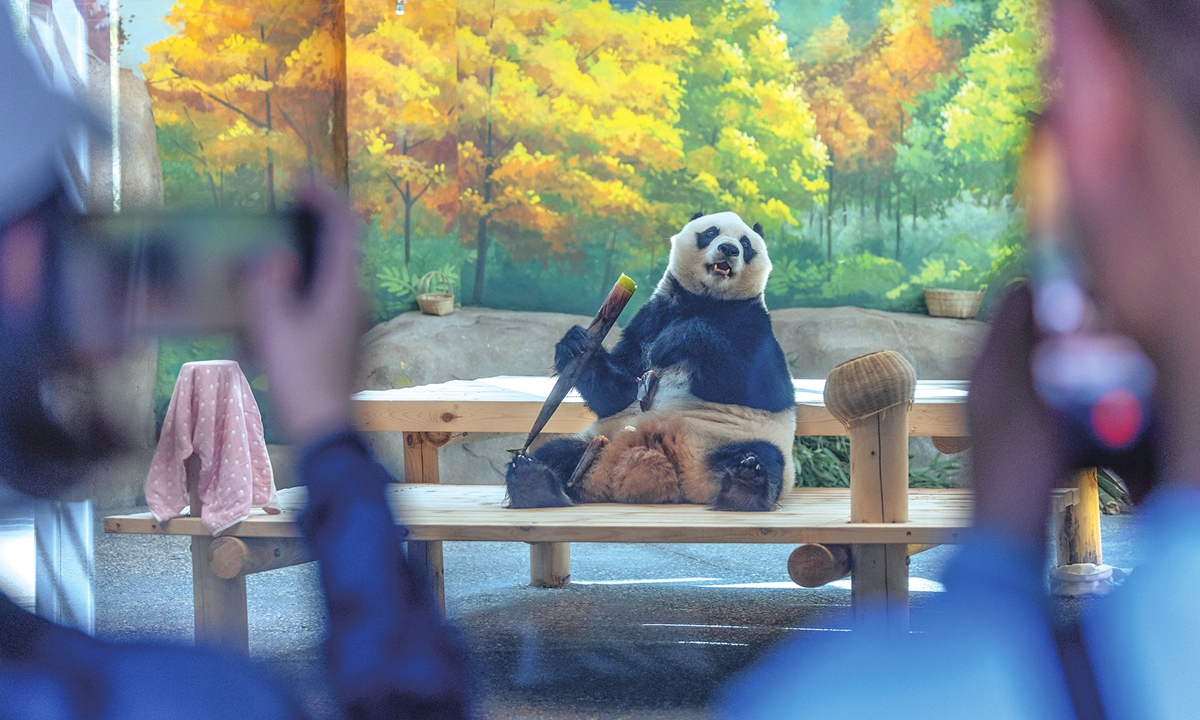
Visitors take photos of a giant panda at the Beijing Zoo's newly expanded giant panda house. Photo: Li Hao/GT
For years, a familiar scene has unfolded outside the giant panda enclosure at the Beijing Zoo: Long lines of visitors waiting for a glimpse of the country's most beloved animal. Videos and photos of pandas climbing, rolling and resting regularly attract millions of views online, making these bears global sensations. Now, the giant pandas at the zoo are getting a brand-new habitat designed around their natural behaviors, physical needs and overall well-being. Ahead of its public opening on Thursday, the Global Times visited the newly expanded giant panda house and found that the upgrade is not simply about creating a larger viewing space. Instead, it reflects a broader effort to provide pandas with more scientific care, a more natural environment and improved welfare.Pandas come first
The expansion project began in December 2023. Located on the east side of the existing giant panda house, the new facility covers 13,000 square meters, with a total floor area of 2,484 square meters. It includes four indoor exhibition areas, five indoor animal rooms and five outdoor activity spaces.
Five giant pandas - Meng Lan, Fu Xing, Bai Tian, Ji Nian and Fu Jiang - will be the first residents of the new facility when it opens.
Lu Yanping, a deputy director of the Beijing Zoo, disclosed the selection of pandas was based on comprehensive evaluations of their health, safety and overall condition.
"The condition of each panda is the most important factor in deciding whether it will be displayed," he told the Global Times.
The Beijing Zoo currently houses 10 giant pandas. The zoo will gradually rotate more pandas into the new facility based on their individual conditions.
While the expanded space is expected to welcome more visitors, the zoo said pandas' welfare remains its top priority.
"The condition of each panda is the most important factor in deciding whether it will be displayed," he said.
Public enthusiasm for giant pandas remains high. A mother who visited the zoo with her child told the Global Times on Wednesday that her family was looking forward to the opening of the new panda house. Her child is a big panda fan, and she hopes the expanded facility will make it easier for visitors to spend more time observing the animals.
"The panda house is always very popular whenever we visit," she said. "We're looking forward to seeing the new facility and spending more time watching them."
The giant panda exhibit had long served as the Beijing Zoo's signature attraction prior to the opening of the new facility. Take the year 2024 as an example: It helped the zoo welcome 4.8 million visitors, and the figure has continued to rise ever since. To better balance visitor demand with the pandas' welfare, the new facility incorporates design features aimed at minimizing disturbances to the animals and reducing the stress that large crowds may bring.
The new design separates visitor routes from staff operation areas, reducing disturbances caused by noise and improving daily management efficiency. A circular viewing route helps prevent congestion and limits stress caused by large crowds gathering in one area.
For panda fans, the new facility offers a better way to observe pandas. For the pandas themselves, it represents a living environment designed around their comfort, health and natural behaviors, according to the zoo.
"Our goal is to create an environment where pandas can thrive while allowing visitors to enjoy observing them in a responsible and comfortable way," Lu said.
Tech-enabled care
To better support pandas' natural behaviors and daily needs, the zoo has incorporated a range of measures covering habitat design, health monitoring and behavioral enrichment.
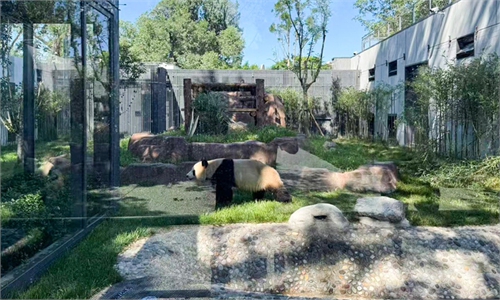
The pandas now live in an environment designed to more closely resemble their natural mountain habitats. The facility features four themed habitats, recreating elements of the giant panda's natural environment through landscaping, streams, mist systems and climbing structures.
Their health and surroundings are also monitored around the clock through a smart monitoring system that tracks environmental conditions as well as biological indicators, including body temperature, respiratin and heart rate. If any unusual data is detected, it can alert caregivers, helping them identify potential health problems at an early stage.
The design also considers the psychological needs of pandas.
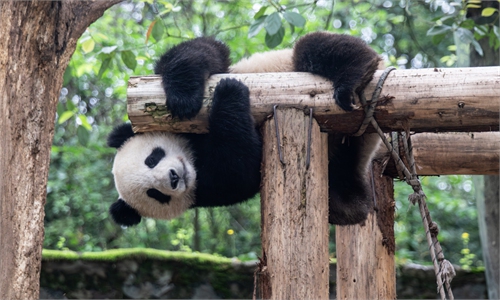
Taking into account the giant pandas' natural tendency to climb, the facility is equipped with climbing structures in both indoor and outdoor areas, along with pools and misting systems that keep the animals cool and comfortable during hot summer months.
The new facility introduces a variety of enrichment activities aimed at encouraging natural behaviors and preventing boredom. Caregivers have provided different types of enrichment items, including interactive toys such as floating balls and bamboo balls, resting items such as blankets and bamboo mats, and exploration objects such as baskets and bags.
"These enrichment items are rotated regularly according to the pandas' characteristics and the conditions of their activity areas," Lu said.
Because each panda has a unique personality, caregivers also tailor the environment to individual needs. Some pandas may receive higher climbing platforms, larger woven beds, or customized toys to encourage movement and exploration.
Meng Lan, one of Beijing Zoo's most playful pandas and known online for his attempts to explore beyond his enclosure, now has higher glass barriers in the new facility to ensure his safety. The habitat also includes specially pruned trees that allow him to climb while providing much-needed shade.
According to the zoo, the combination of technology and professional care allows keepers to better understand each panda's condition and provide more personalized management.
Each panda has one or two primary caregivers responsible for monitoring its daily routines, including diet.
"Every panda is different," Lu said. "Their food preferences and eating amounts vary. Some prefer certain types of bamboo, while others may favor different varieties, so we make adjustments according to each individual."
RELATED ARTICLES