ARTS / CULTURE & LEISURE
Encountering Qinghai amid salt lakes, wildlife and clear sky
Emeralds on the plateau
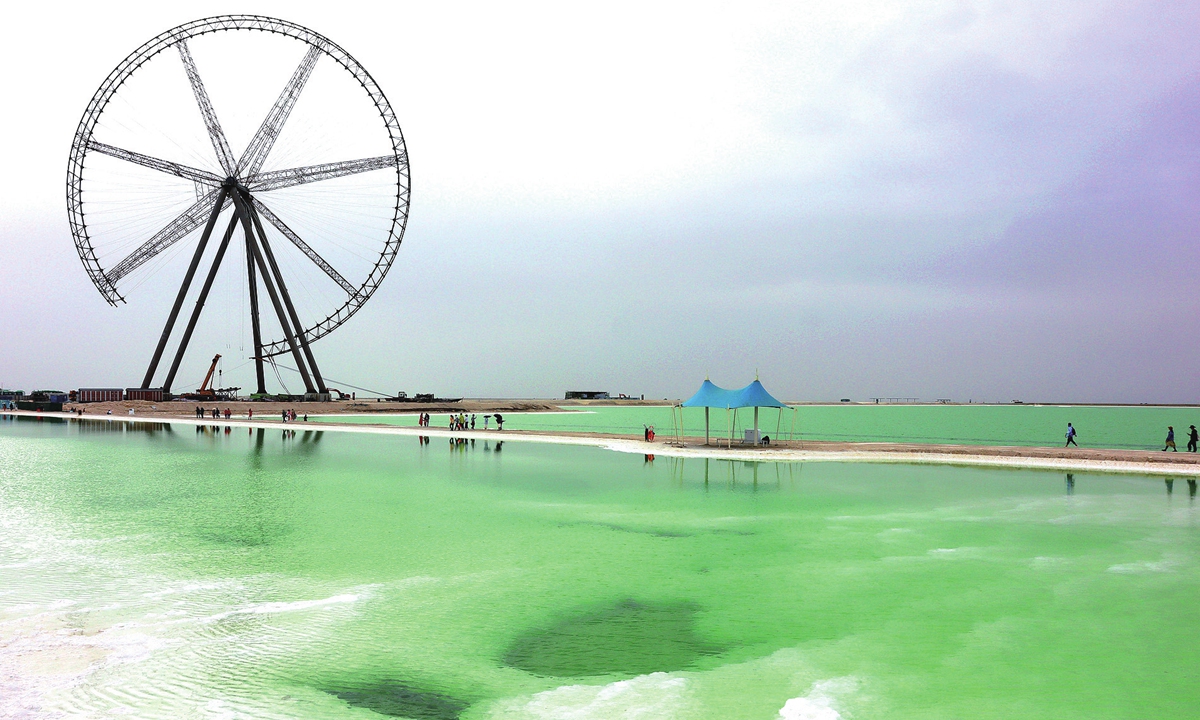
A view of Qarhan Salt Lake Photo: VCG
Emerald-colored ripples lapped gently against a salt lake shore. The white beach stretched toward green water, forming a scene that looked almost like an Impressionist painting, with distant mountains beneath a dark blue sky. Visitors posed for photographs along the shore or rested under parasols, as if enjoying a seaside holiday.Yet this is not a famous coastal resort, but Qarhan Salt Lake in Northwest China's Qinghai Province, one of China's highest-altitude provinces.
Qarhan is China's largest salt lake and the second-largest one in the world. Its high mineral content gives the water a jade-like green appearance under the sunlight, while the sky, clouds and white salt banks are mirrored on its surface. The colors are so vivid that the landscape can appear almost unreal.
Qinghai itself remains less familiar to many travelers. It has not been romanticized as widely in literature, nor does it often appear near the top of conventional China travel lists. But the province has a character entirely of its own.
It is home to Qinghai Lake, China's largest inland lake, and serves as a habitat for Tibetan antelopes, snow leopards, and many other wild animals. It is also one of China's most ethnically diverse provinces, where different communities and cultures have lived side by side for generations.
Among mineral-rich salt lakes, open grasslands and wildlife roaming beneath vast skies, Qinghai offers a landscape shaped as much by nature as by the people who have learned to live with it.
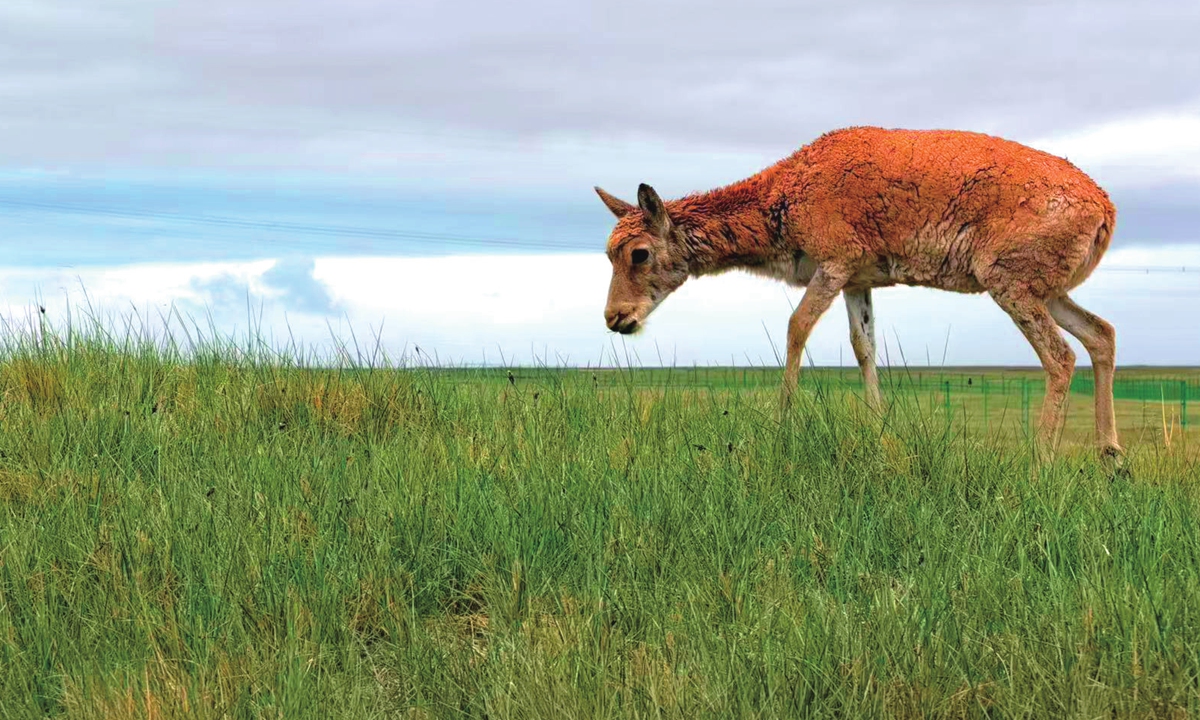
A rescued Tibetan antelope Photo: Feng Fan/GT
Salt lakesTranslated literally, the Chinese name "Qinghai" means blue-green sea.
Across the province, water takes on two very different forms: clear freshwater lakes and mineral-rich expanses of brine where few forms of life can survive. Both give the region its distinctive beauty.
At Qarhan Salt Lake, that beauty is immediate. "You can't find water of this green apple color anywhere else," a tourist from Central China's Henan Province told the Global Times. "The scenic area even sells green apple drinks in the same fresh color as the lake. They look great in photographs."
According to staff at the salt lake, minerals including potash have long been extracted from the area. Tourism began to develop more recently, with the scenic site opening in 2023.
It received more than 500,000 visits in its first year, followed by 1 million in 2024 and more than 1.43 million in 2025 respectively. Visitor numbers are expected to reach 1.8 million this year.
The scenic area covers nearly 10 square kilometers. Parasols, deck chairs and a giant Ferris wheel still under construction lend it the air of an emerging resort.
Nearby souvenir shops sell salt lake refrigerator magnets, soaps and notebooks. A translucent bar of soap modeled on the lake's green water and white shoreline has become especially popular. "It feels like buying a tiny piece of the lake," one visitor said.
Only a short distance from this leisurely scene, however, another side of Qarhan comes into view.
Across a vast industrial section of the lake, brine pumping stations and workboats continuously extract mineral salts from beneath the water.
According to Qinghai provincial government, the lake has supplied China with potash fertilizer since 1958. By the end of 2025, a local company had developed an annual potash fertilizer production capacity of 5 million tons. Its domestic market share exceeded 35 percent, while its share of domestically produced supply surpassed 60 percent, ranking first in China and fourth globally.
"At Qarhan Salt Lake, ecological protection comes first. Industrial and tourism development are carried out only on the premise that the local environment is well protected," a staff member of the company told the Global Times.
That approach has allowed the lake to retain its striking scenery while continuing to support a major mineral industry.
The company has also developed a resource-use system based on solid-liquid conversion, scientific extraction, the coordinated exploitation of high- and low-grade resources, and recycling. Potassium, lithium, magnesium, sodium, chlorine, boron and other associated resources in the brine are processed for higher-value use.
According to Qinghai provincial government, employee physical examinations, health monitoring, on-site inspections, hazard reporting and risk notification have all achieved full coverage.
At Qarhan, industry and tourism stand almost side by side: One draws value from beneath the lake, the other draws visitors to its surface.
A haven for wildlife
Qinghai's wildlife is just as striking. On a train journey from Golmud toward Hoh Xil, mountain ranges and low-hanging clouds filled the windows. Every so often, an animal appears in the distance, turning the passing landscape into a quiet search for movement.
Years of conservation have helped wildlife populations recover rapidly across the province. In March, China News Service quoted Qinghai Party chief Wu Xiaojun as saying that the Tibetan antelope population had rebounded from fewer than 20,000 when the species was endangered to more than 70,000 today. According to data released by Qinghai provincial government in October 2025, the province is also home to around 1,200 snow leopards.
Through rescue work and habitat protection, rare animals have not only returned in greater numbers, but have also become part of Qinghai's appeal to visitors.
At a wildlife park in Xining, capital of Qinghai, visitors can see snow leopards, Chinese desert cats, Pallas's cats and other rare native species. The park receives more than 700,000 visits each year.
Unlike animals captured from the wild for exhibition, many of those living at the park were rescued after being injured or found with congenital illnesses. Because they could no longer survive independently after treatment, they remain at the zoo and gradually became its best-known residents, according to the park.
Higher on the plateau, the relationship between humans and wildlife can feel even more intimate. At a wildlife rescue station in Hoh Xil, the Global Times reporter encountered three Tibetan antelopes that had been separated from their herds after being injured.
The species once suffered heavily from poaching. As its numbers fell, it also became wary of human contact.
But one antelope undergoing rehabilitation reacted differently. When the reporter approached, it looked back with curiosity and even moved closer, seemingly eager to investigate.
There was no fear in its eyes, only a natural alertness.
For an animal once driven to the edge by human activity, that moment carried unusual weight. The "spirit of the plateau" no longer fled at the sight of people. Such trust did not return by chance. It was built through years of coexistence and through the persistence of countless people in Qinghai who have made ecological protection part of everyday life.
Among the jade waters of Qarhan, the open skies of Hoh Xil and the quiet gaze of a Tibetan antelope, Qinghai reveals its own kind of beauty - remote but not empty, fragile yet resilient, and increasingly open to travelers willing to look beyond the usual routes.
RELATED ARTICLES