ARTS / CULTURE & LEISURE
AI entries stripped of contest prizes as organizers improve screening
A suspected AI-generated calligraphy work that won second prize in a Chinese competition has triggered fresh debate over whether AI-created works should compete in categories intended for human-created works and how organizers can verify entries.
On Wednesday, a calligraphy work that received second prize in a competition in Dongguan, South China's Guangdong Province, was questioned by online users who suspected it was generated with AI.
Some viewers pointed out that the characters appeared unusually uniform in size and style, while punctuation marks were identical throughout the piece - details that appeared inconsistent with traditional handwritten calligraphy.
A staff member from the organizers told ThePaper.cn that it has confirmed the work to be AI-generated and had been promptly removed it from the list of winners.
The incident followed another AI controversy involving a photography competition in Hohhot, North China's Inner Mongolia Autonomous Region.
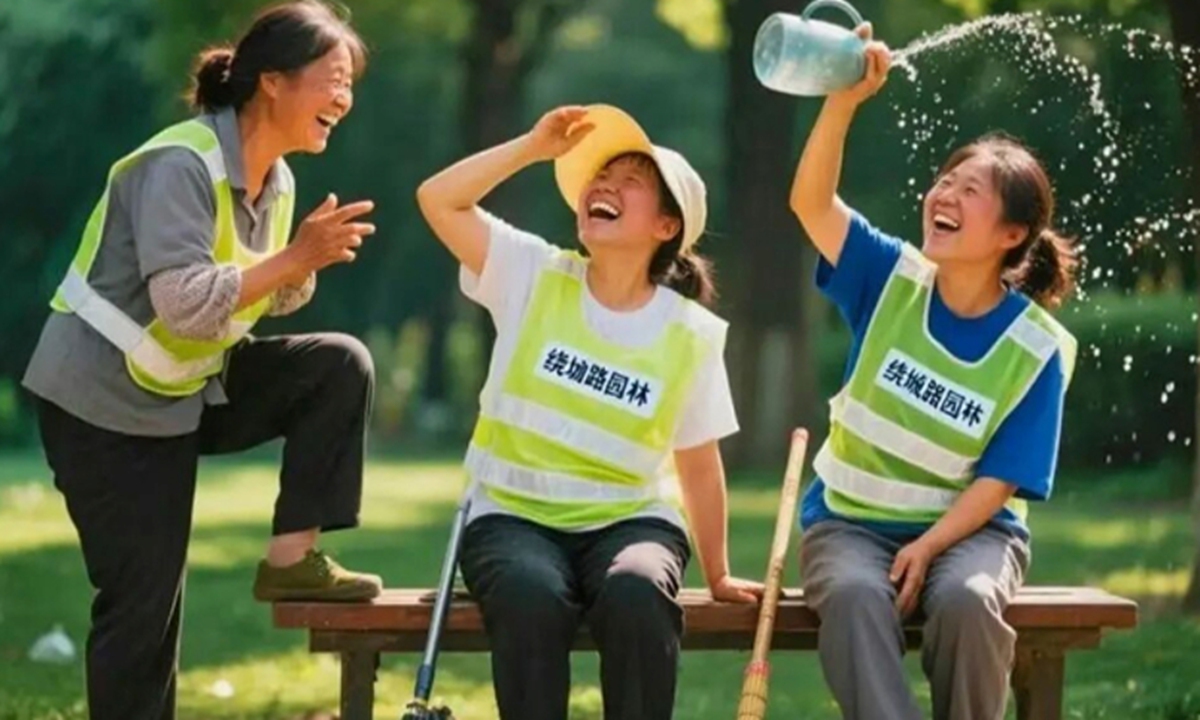
After the image circulated online, viewers questioned its authenticity, pointing to several unnatural details, including distorted text on the workers' uniforms, awkward hand positions and the possibility that the three figures shared similar facial features.
On Tuesday, the Hohhot Federation of Literary and Art Circles said in a statement that an investigation found the image had been generated by AI and was not an original photograph taken at a real location.
The organization canceled the work's eligibility for the competition, exhibition and related recognition, suspended the event for rectification and said responsible parties would be dealt with according to relevant regulations.
A Beijing-based photographer surnamed Xia told the Global Times that many photography competitions require participants to submit original works, meaning AI-generated images may violate rules when entered into categories intended for traditional photography.
"Some international competitions now have dedicated categories for AI-generated works," Xia said. "But for general photography contests open to the public, AI-generated works should not be entered into categories intended for original photographs."
Bu Xiting from the China Cultural Industry Association told the Global Times that organizers do bear responsibility for reviewing entries, but it is unrealistic to expect them to identify every AI-generated work with complete accuracy.
"AI technology is developing rapidly. It is difficult to achieve 100 percent identification relying only on human judgment or ordinary detection tools," he said.
The debate reflects a broader challenge facing creative competitions worldwide: How to define the boundaries between human creativity, AI-assisted creation and fully AI-generated works.
To address this challenge, competitions should establish clearer rules, including requiring participants to make authenticity declarations and creating reporting and review mechanisms, he said.
As a photographer, Xia said AI has brought new possibilities to artistic creation, and some AI-generated works have artistic value.
"But when a competition is designed to evaluate human creativity and craftsmanship, AI-generated works should be judged under separate rules rather than in the same category," Xia said.
On Wednesday, a calligraphy work that received second prize in a competition in Dongguan, South China's Guangdong Province, was questioned by online users who suspected it was generated with AI.
Some viewers pointed out that the characters appeared unusually uniform in size and style, while punctuation marks were identical throughout the piece - details that appeared inconsistent with traditional handwritten calligraphy.
A staff member from the organizers told ThePaper.cn that it has confirmed the work to be AI-generated and had been promptly removed it from the list of winners.
The incident followed another AI controversy involving a photography competition in Hohhot, North China's Inner Mongolia Autonomous Region.
The disputed image
The disputed image won first prize in a local competition. It showed three sanitation workers resting on a roadside bench, with one appearing to pour water from a bottle.After the image circulated online, viewers questioned its authenticity, pointing to several unnatural details, including distorted text on the workers' uniforms, awkward hand positions and the possibility that the three figures shared similar facial features.
On Tuesday, the Hohhot Federation of Literary and Art Circles said in a statement that an investigation found the image had been generated by AI and was not an original photograph taken at a real location.
The organization canceled the work's eligibility for the competition, exhibition and related recognition, suspended the event for rectification and said responsible parties would be dealt with according to relevant regulations.
A Beijing-based photographer surnamed Xia told the Global Times that many photography competitions require participants to submit original works, meaning AI-generated images may violate rules when entered into categories intended for traditional photography.
"Some international competitions now have dedicated categories for AI-generated works," Xia said. "But for general photography contests open to the public, AI-generated works should not be entered into categories intended for original photographs."
Bu Xiting from the China Cultural Industry Association told the Global Times that organizers do bear responsibility for reviewing entries, but it is unrealistic to expect them to identify every AI-generated work with complete accuracy.
"AI technology is developing rapidly. It is difficult to achieve 100 percent identification relying only on human judgment or ordinary detection tools," he said.
The debate reflects a broader challenge facing creative competitions worldwide: How to define the boundaries between human creativity, AI-assisted creation and fully AI-generated works.
To address this challenge, competitions should establish clearer rules, including requiring participants to make authenticity declarations and creating reporting and review mechanisms, he said.
As a photographer, Xia said AI has brought new possibilities to artistic creation, and some AI-generated works have artistic value.
"But when a competition is designed to evaluate human creativity and craftsmanship, AI-generated works should be judged under separate rules rather than in the same category," Xia said.
RELATED ARTICLES