Peoples walk on a street in New Delhi, India, on March 15, 2026. Photo: VCG
Indian officials have recently sent a slew of signals for improving economic ties with China, with an advisor reportedly calling for allowing more Chinese investment into the Indian manufacturing sector. While the recent moves suggest a pragmatic shift in its approach toward China, New Delhi should take concrete steps as there remain considerable restrictions, Chinese experts said.
India should reconsider its economic approach toward China and allow more Chinese investment into its manufacturing sector as shifting global trade dynamics make the US a less dependable partner for New Delhi, a member of Indian Prime Minister Narendra Modi's Economic Advisory Council was cited by The Economic Times as saying.
Rakesh Mohan, a part-time member of the council, said New Delhi should use its low-cost manufacturing base to attract investment from Chinese companies instead of relying mainly on protectionist measures. Such a strategy, he said, could help create jobs, strengthen exports and make India more competitive in global supply chains, according to The Economic Times.
India has recently offered various signals of an intention to strengthen economic cooperation with China. In March, Bloomberg reported that India had approved relaxation of rules for investments from bordering countries to support local manufacturing, with the move mainly aimed at China, signaling improving economic ties with its largest neighbor.
Chinese experts said the trend marks a shift in the Indian government's approach toward Chinese investment, from "strict restrictions" to a more strategically pragmatic stance. If the Indian government is genuinely willing to pursue pragmatic cooperation, deeper investment ties between the two countries would help to deliver mutually beneficial and win-win outcomes, experts noted.
"India's manufacturing sector has struggled to achieve the expected growth in recent years, with its share in the economy remaining largely unchanged while the country continues to face significant employment pressures. As artificial intelligence accelerates industrial transformation, the window for traditional manufacturing development is narrowing, prompting India to seek new ways to upgrade its manufacturing capabilities and create more jobs," Liu Xiaoxue, a former associate research fellow at the National Institute of International Strategy under the Chinese Academy of Social Sciences, told the Global Times on Friday.
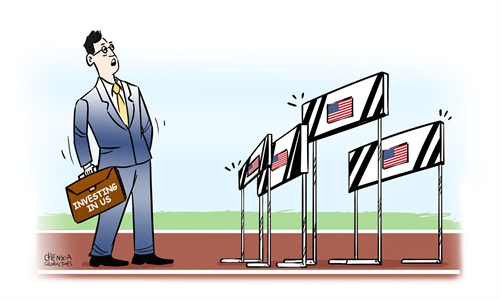
Despite India's continued efforts to signal its demand for manufacturing cooperation, the country's market has not yet fully opened to Chinese businesses, a gap that continues to weigh on investor confidence. Notably, The Economic Times acknowledged that India still maintains some restrictions on Chinese investment and business activities.
In 2020, New Delhi tightened scrutiny of investments from Chinese companies, according to Reuters, although in March this year India allowed investors with up to 10 percent Chinese ownership to invest under the automatic route, subject to applicable sectoral caps.
The Global Times has observed that despite India's recent moves to ease access for Chinese investment, Chinese manufacturers remain cautious about expanding their presence in the country. Chinese investors, having been affected by previous business setbacks, structural policy constraints and the broader geopolitical environment, are generally adopting a "trade-first, investment-watch" approach, the Global Times has learned.
They may not rush to establish large-scale manufacturing operations in India simply due to recent easing moves, as India still needs to demonstrate more sincerity in taking concrete steps to attract foreign investment, according to experts.
The Indian government needs to provide more pragmatic and comprehensive policy guidance and support to create a favorable environment for businesses from both countries to pursue cooperation, Liu said.
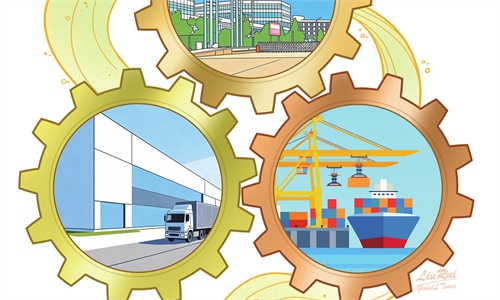
China is a global leader in manufacturing and is committed to sharing its development experience with the world. China's global competitiveness in manufacturing is widely recognized, and India's efforts to develop emerging green industries such as new energy vehicles and photovoltaics require substantial investment, technology and industrial chain support - areas where China has strong advantages, Liu noted.
RELATED ARTICLES