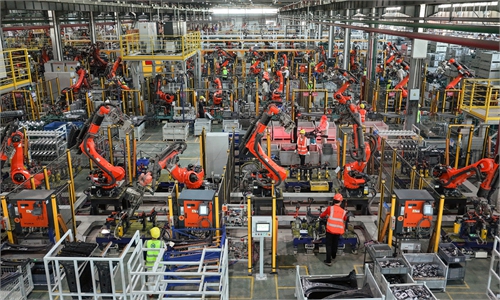
China’s robust economy is boosted by innovation, high-end manufacturing: Yao Jingyuan
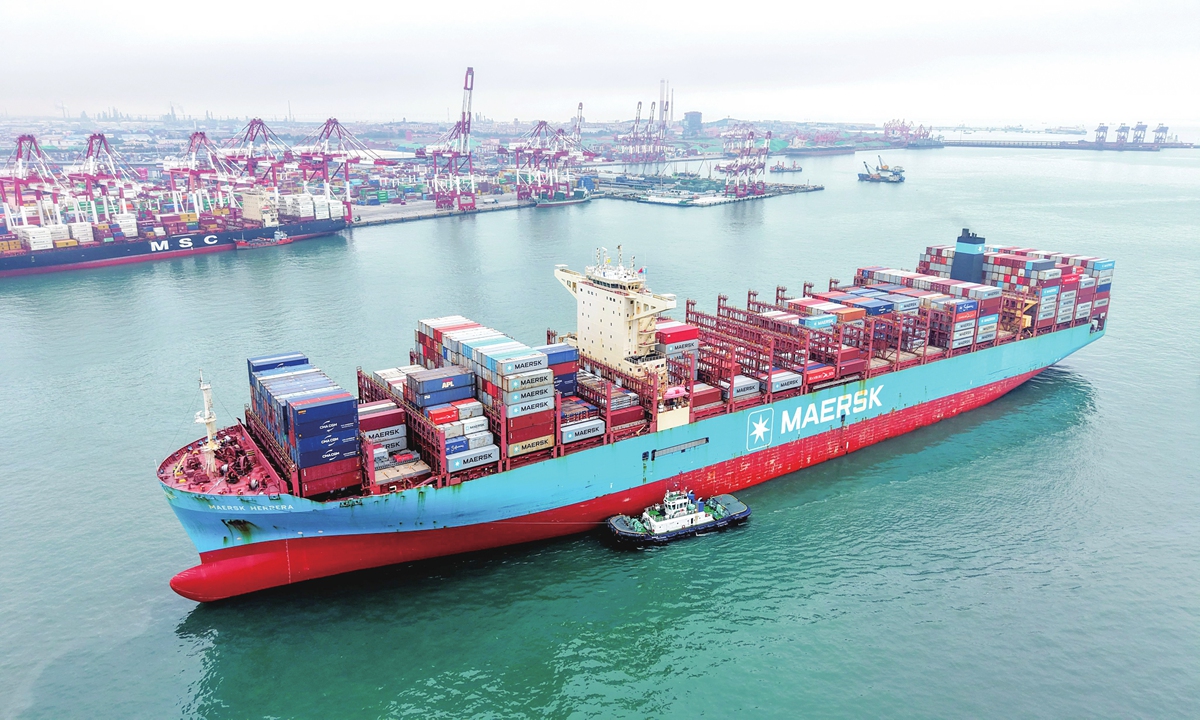
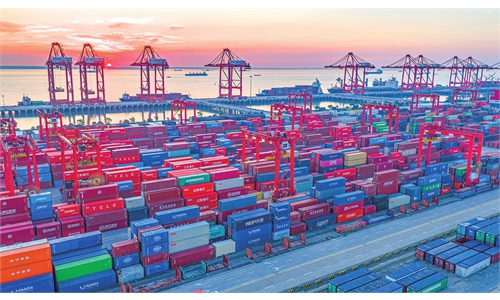
A cargo ship loaded with foreign trade containers enters a port in Qingdao, East China’s Shandong Province, on July 16, 2026. Photo: VCG
China's GDP expanded by 4.7 percent year-on-year to reach 69.57 trillion yuan ($10.28 trillion) in the first half of 2026, the National Bureau of Statistics reported on Wednesday. The GDP growth in the first half of the year remains well within our annual target range of 4.5 to 5 percent. While achieving this robust performance, we must acknowledge at the same time that the economy's downward pressure has not been resolved yet.
Some of the pressures stem from external shocks. For example, the global oil prices have spiked due to high uncertainties in the Middle East, which has impacted relevant domestic industrial chains, in particular the petrochemical industry. However, such impact is not limited to China as other countries in the world have all been impacted.
The imbalance between China's supply and demand persisted in the first half, and this issue is reflected in indices including the insufficient equipment operating rate and lower product sales-to-production ratio, which weigh on the economy.
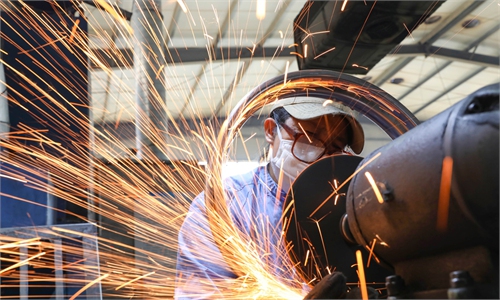
Specifically, China's value-added industrial output of large and medium-sized enterprises in the first six months rose 5.4 percent year-on-year, while fixed-asset investment dropped by 5.7 percent. China's total retail sales of consumer goods expanded by 2.7 percent year-on-year in the first half, according to the latest NBS data.
From the perspective of market demand, investment slowed in the first half of the year for some structural reasons, and more measures are needed to stabilize social investment. Over the past few decades, China's investment rate has easily doubled the global average, leading to highly visible world-class achievements.
China now leads the world in many fields, including high-speed rail, highways, and sea ports, and its electricity generation capacity last year accounted for one-third of the global total.
Looking ahead, the 15th Five-Year Plan (2026-30) proposes 109 major projects in six areas, including landmark infrastructure projects like the Yaxia Hydropower Project, the new Three Gorges Waterway Channel, and a new satellite-enabled internet. If implemented effectively, these new projects can replace many traditional infrastructure projects. With regard to industrial equipment investment, it is suggested that more top-down efforts and resources should be mobilized to accelerate the integration of manufacturing with AI and digital technologies.
Growth in China's consumption slowed to some extent in the first half of the year. Weakness in goods consumption was mainly due to several factors: insufficient consumer confidence, unstable public expectations regarding income and employment, and the diminishing marginal effect of the government's "trade-in" policy.
To shore up domestic consumption, China has set a goal of raising total retail sales of consumer goods to 60 trillion yuan ($8.8 trillion) by 2030 and further strengthening consumption's role in driving economic growth, according to the 15th Five-Year Plan period (2026-30). This five-year plan is of great importance, and I believe that home consumption will continue to be the most important engine driving China's economic growth.
Despite some moderation, there are multiple highlights from the first-half economic data. For example, though goods consumption slowed, China's service consumption performed strongly in the first half, with the value-added output of the service sector rising 5.2 percent year-on-year.
And, China's foreign trade volume expanded by16.9 percent year-on-year to reach 25.47 trillion yuan in the January-June period, hitting a new high. Among which, imports and exports of computing hardware, including electronic components and computer parts, reached 5.13 trillion yuan, up 56.6 percent year-on-year.
There are three key factors that helped accelerate China's foreign trade and will continue to underpin a sustained growth in the second half of the year.
First, China has built the world's largest industrial system with the most complete range of sectors and the most integrated structure. It covers all 41 major industrial categories and 666 sub-categories under the United Nations industrial classification.
Second, we have built an exceptionally strong production capacity during the past few decades. Chinese entrepreneurs own a remarkable ability: once they see an opportunity, they can quickly scale production to achieve the world's lowest costs and highest output. Third, governments at all levels, from the central government to local authorities, provide strong support for foreign trade.
After the first-half year data was released, I have heard differing views, with some suggesting that market confidence is subdued and expectations are weak. However, I believe we should look forward with optimism. China's endogenous economic potential will be gradually released, and the government's pro-growth measures will take greater effect in the second half of the year.
From the perspective of production, tech progress, scientific innovation, and high-tech industries are expected to advance further in the second half of the year. And corporate production conditions and the overall quality of economic operations are expected to gain pace.
On the demand side, I propose that some major projects outlined in the 15th Five-Year Plan (2026-30), originally scheduled for 2028 or 2029, should be brought forward. And projects that meet the conditions should start as soon as possible. This will help create a favorable environment for the economy.
Yao Jingyuan is a special researcher of the Counselor's Office of the State Council. bizopinion@globaltimes.com.cn
RELATED ARTICLES