Quadruped robots shine at WAIC in Shanghai as human-machine collaboration enters new phase
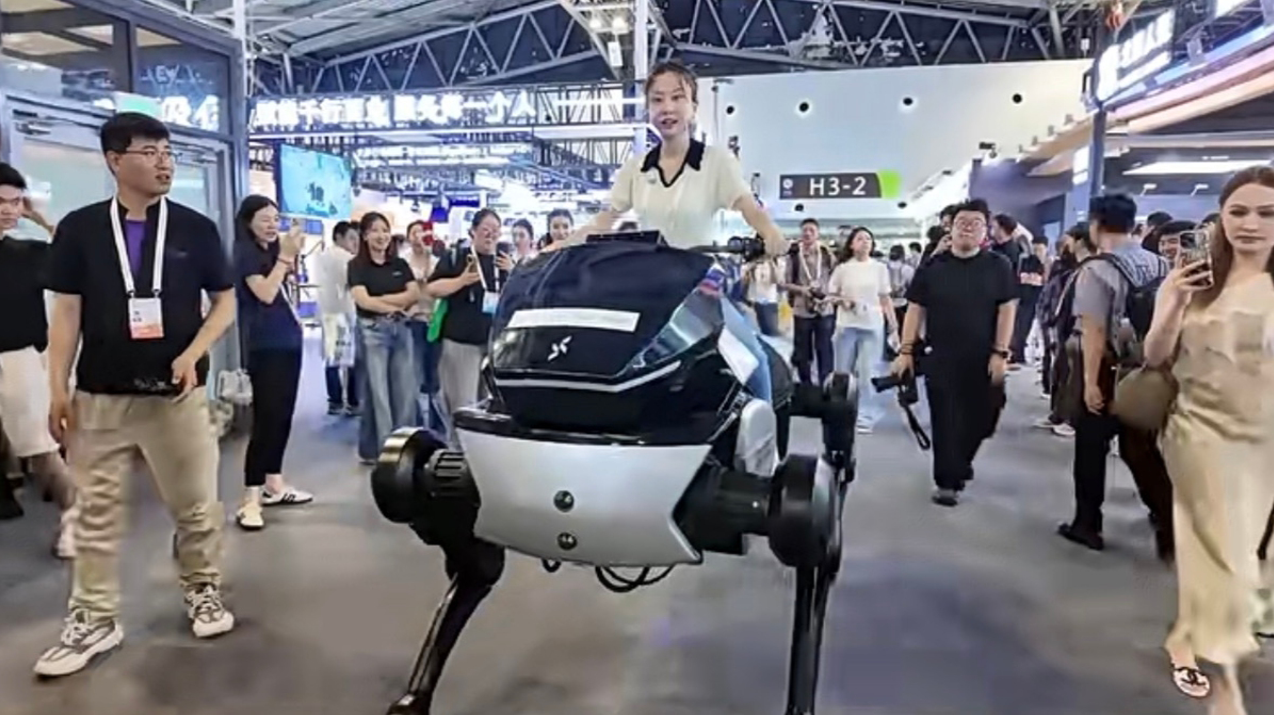
Screenshot from Pudong Fabu
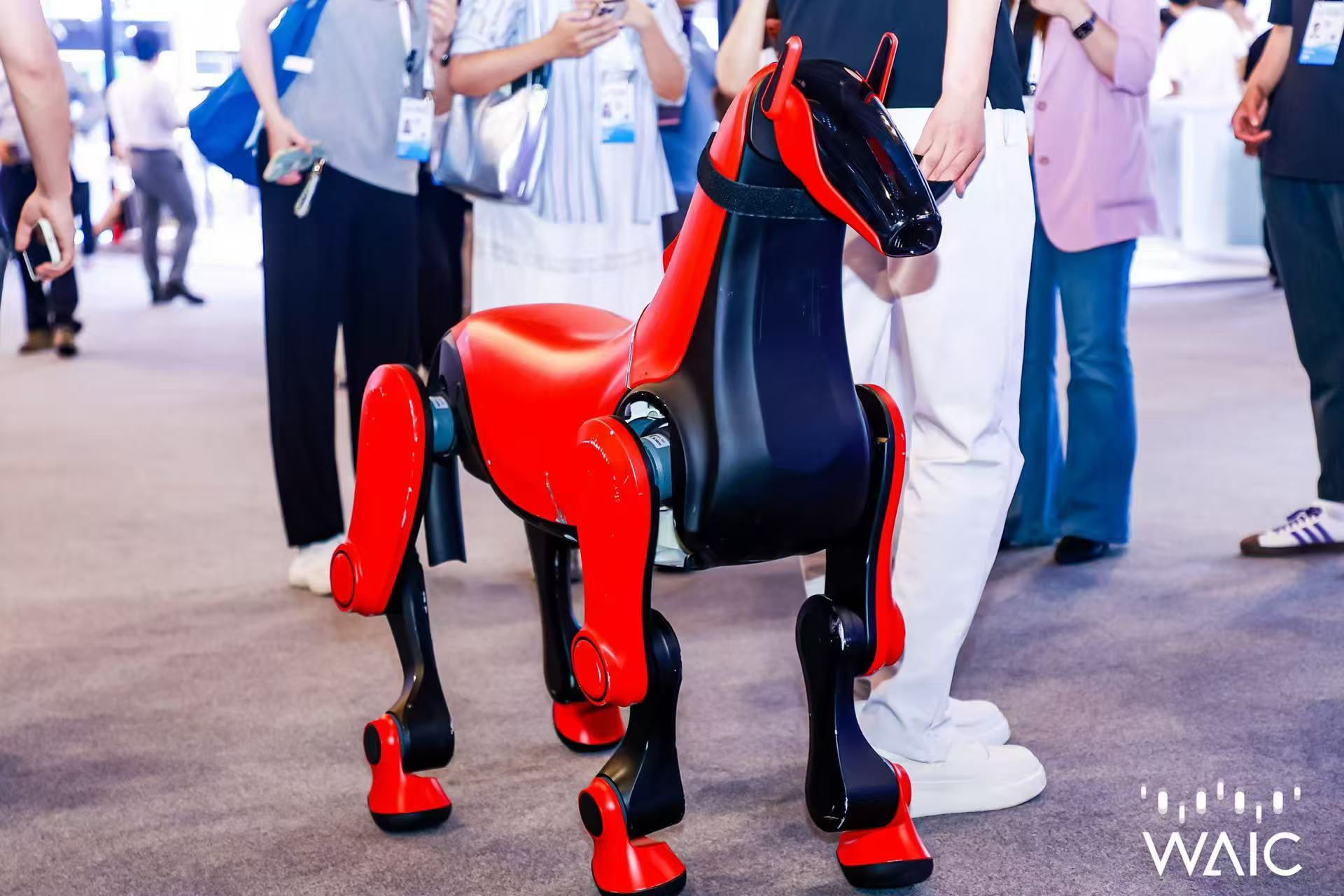
Photo: courtesy of DEEP Robotics
At the 2026 World Artificial Intelligence Conference (WAIC), one of the most eye-catching experiences on the show floor was the chance to ride a quadruped robot - an encounter that felt less like testing a machine and more like stepping into a scene from the future.
Quadruped robots emerged as an attraction at the WAIC, where companies showcased a new generation of machine "horses" and riding robots designed to carry people, transport goods, and operate across complex terrain.
Among the most talked-about exhibits was a riding robot developed by Chongqing Haochen Embodied Intelligence Technology Co, with technical support from AGIQUAD, a subsidiary of Shanghai-based AgiBot. The company said the robot has opened for global pre-orders at the event and is scheduled for small-batch delivery in September.
According to an on-site staff member, the robot can reach a top speed of 15 kilometers per hour, carry up to 75 kilograms, travel as far as 20 km on a single charge, and climb slopes of up to 25 degrees. It also supports all-terrain travel, obstacle avoidance on multiple surfaces, body-form switching, and voice interaction.
"We don't define it as a tool, but as a partner," a staff member said. "It can chat and interact with you like a companion."
The company said its long-term goal is to obtain a motorcycle or four-wheel vehicle license for the robot within three years, enabling it to operate on public roads.
Meanwhile, the Qiji X1 All-Terrain Intelligent Mount-Quadruped Cyber Horse from DaxAI Robot has also drawn crowds of visitors at the ongoing 2026 WAIC in Shanghai.
It is billed as the world's first AI-powered smart riding quadruped.
A company representative told the Global Times on Sunday that the Qiji X1 is a rideable quadruped built for rough terrain, with a dynamic 300 kg payload, 40 km range, and 10 km/h top speed, making it suitable for short-distance immersive riding in forests, grasslands and other outdoor environments.
Featuring a pure quadruped biomimetic structure, it autonomously navigates complex terrains including steep slopes, gravel and mud. Built for premium off-road leisure, it transforms AI from lines of code on a screen into a truly rideable, real-world device, the representative said.
Hangzhou-based DEEP Robotics also drew attention with a limited-edition robot horse unveiled to mark the Year of the Horse in 2026.
The model combines biomimetic design with industrial quadruped robotics technology. It inherits motion control systems from the Lynx M20 series and can reach a maximum speed of 5 meters per second, according to a note the company sent to the Global Times on Sunday.
Weighing about 30 kg and standing about half a meter tall, the robot horse can carry up to 50 kg and is built on the same rugged platform used in industrial inspection, emergency rescue and logistics scenarios, said the company.
Industry observers at the event said quadruped robots are increasingly being positioned as a new form of human-machine collaboration rather than as a replacement for human labor.
"They won't completely replace people," one exhibitor surnamed Wang told the Global Times. "But they can free many workers from dangerous environments and help unlock more of human potential."
RELATED ARTICLES