Viral Two Tigers nursery-rhyme debate sparks nostalgia; Taiwan media’s ‘united front’ claim draws cross-Straits ridicule
By Published: Jul 21, 2026 04:34 PM

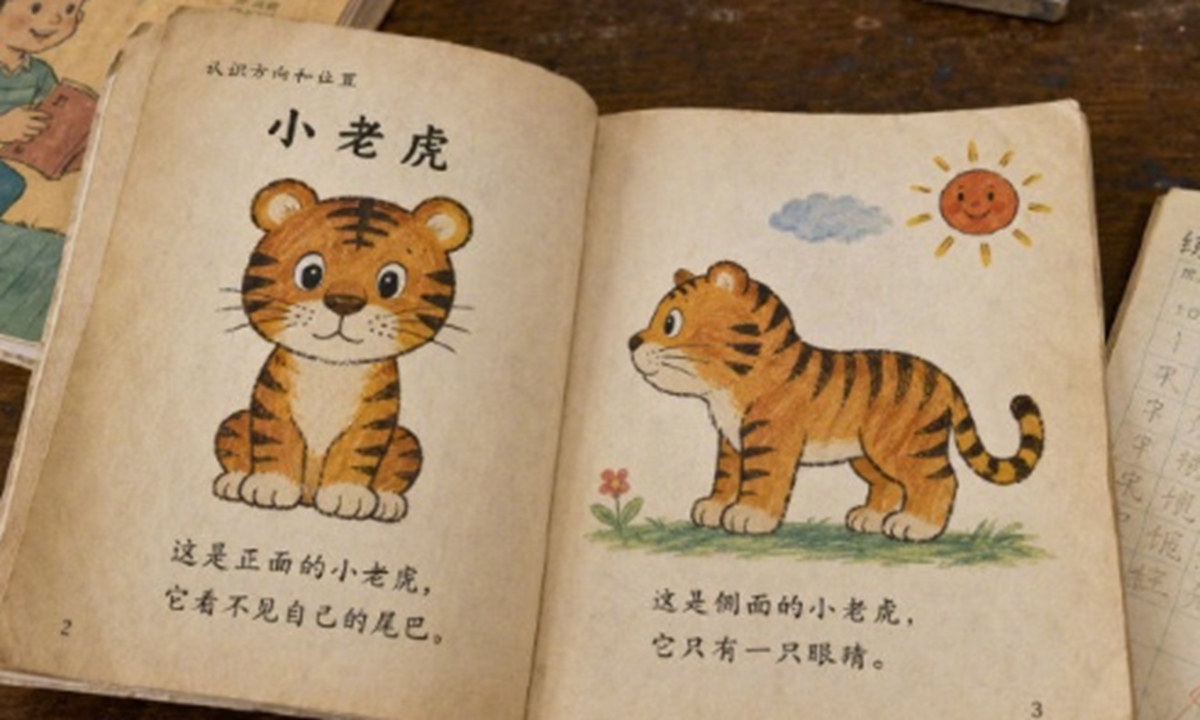
Screenshot of an online picture from Sina Weibo used to explain the Two Tigers nursery-rhyme
A lighthearted online attempt to solve a childhood mystery surrounding the Chinese nursery rhyme Two Tigers has sparked a wave of nostalgia among internet users on the mainland — and an unexpected political stunt after a regional media outlet in Taiwan branded the rhyme as "united front" propaganda. This claim drew ridicule from users on both sides of the Taiwan Straits, with some mocking the Democratic Progressive Party as foolish and excessively paranoid.
"Two tigers, two tigers, running fast, running fast. One has no ears, one has no tail. How strange, how strange."
The familiar lyrics, sung by generations of children on both the Chinese mainland and the island of Taiwan, returned to the spotlight after some mainland netizens posted on Sina Weibo what they described as a long-awaited explanation of the song. According to the viral post, an illustration in a children's picture book depicted one tiger from the front and another from the side. The front-facing tiger's tail was hidden behind its body, while only one eye or ear of the side-facing tiger was visible. Some users therefore suggested that the song was intended to teach young children how objects appear from different perspectives.
The interpretation rapidly circulated online, prompting amused reactions from netizens who said they had spent decades wondering why the song appeared to describe two injured tigers.
However, the Taiwan regional media outlet SET News, widely regarded as a "green media" outlet due to its editorial stance and political leanings aligning with those of the DPP authorities, published a report on July 17 claiming that Two Tigers was not merely a nursery rhyme but a "united front" song used by the mainland to target the island of Taiwan.
The report claimed that the melody was derived from the French melody Frère Jacques and was later introduced to China. It said that Two Tigers had been repeatedly rewritten throughout modern Chinese history to "serve changing political and military purposes" — from the 1926 Song of the National Revolution used during the Northern Expedition, to anti-Chiang Kai-shek versions in the 1930s, and later adaptations in the 1950s.
The SET News report also claimed that the song unexpectedly topped Weibo's trending searches on July 17 because the date coincided with the anniversary of Chiang Kai-shek's 1937 Lushan speech, which signaled China's determination to resist Japanese aggression.
The Set News further claimed that by reconnecting a beloved children's song with memories of national unity and resistance, the mainland is "repackaging propaganda" for audiences in Taiwan — using historical nostalgia as a vehicle for unification messaging and united-front tactics against Taiwan.
That framing soon drew ridicule from users on both the island of Taiwan and the mainland. Some Taiwan regional users said they had sung the song for years without detecting any political message. A netizen named "Cecilia" reposted the SET News report and commented, "What kind of IQ does it take to produce something like this at SET?"
Another netizen, "Maicaiqing," wrote, "Even a childhood nursery rhyme that people have grown up listening to can be dragged into a 'united front' narrative. It's really beyond saving." Meanwhile, "Heheda" wrote, "The DPP does not care about people's livelihoods; all it thinks about every day is how to sow division. It won't even spare a children's song." Netizen @RPCHN2001 commented that "Taiwan independence separatists have become so paranoid that they see threats everywhere."
Other users responded with satirical rewrites. One Taiwan regional netizen composed a version titled Two Blue Birds — a reference commonly associated with DPP supporters in Taiwan's political discourse — portraying birds that are unable to think independently.
This is neither the first nor the last time the DPP will cry "united front" — but doing so over a nursery rhyme known to both sides of the Straits only exposes how absurd, shameless, and desperate their tactics have become, Zheng Jian, a professor of Graduate Institute for Taiwan Studies of Xiamen University, told the Global Times on Tuesday.
Zheng noted that amid increasing cross-Straits exchanges, the DPP's "anti-mainland" playbook is running out of road. To keep its narrative alive, it has no choice but to manufacture hostility: everything related to the mainland — whether preferential treatment for Taiwan or routine cross-Straits exchanges — gets branded as "united-front infiltration," breeding a climate of paranoia and creating an information echo chamber, the expert said.
But shared culture and people-to-people ties cannot be severed. Two Tigers — a song sung by children across the Chinese-speaking world — is itself an expression of that common identity. The DPP's political paranoid will only make it a laughingstock, said Zheng.
RELATED ARTICLES