ARTS / CULTURE & LEISURE
China’s Book Sunbathing Festival revives ancient Eastern seasonal wisdom
By Published: Jul 21, 2026 09:38 PM


Illustration: Liu Xiangya/GT
Did you know ancient Chinese rare books regularly get a gentle "sunbath" so they may be better preserved? As the summer heat sweeps across China, this centuries-old tradition is returning to libraries and cultural institutions nationwide. Celebrated on the sixth day of the sixth month of the traditional Chinese calendar, the Shaishu Festival, or Book Sunbathing Festival, is revived every year. Led by the National Library of China, dozens of provincial libraries and ancient book repositories open their most precious collections to open-air sunlight.Exquisite thread-bound volumes and hand-copied ancient manuscripts are carefully laid out to bask in the sun, reviving an imperial and scholarly custom tracing back to the Han Dynasty (206BC-AD220).
"We also call it pushu, which means 'exposing books to the sun.' The tradition dates to the Han Dynasty, when households aired their book collections in hot summer days to ward off moisture and pests," Chen Hongyan, former head of the Ancient Books Department at the National Library of China, told the Global Times on Tuesday.
Sun-drying fragile ancient manuscripts may seem counter-intuitive in the current modern era, yet the practice is far from a primitive preservation trick.
Chen explained that rooted in tian ren he yi - China's core philosophy of harmony between humanity and nature - the ritual embodies unique Eastern ecological wisdom. Long before climate-controlled vaults and chemical pest control existed, ancient Chinese scholars chose to work with natural seasonal rhythms.
The festival's well-chosen timing reflects such a profound observation. Falling right after the rainy plum blossom season, early summer brings dry air and constant sunshine, perfect for dehumidifying books and eliminating book-eating insects.
Ancient scholars followed rigorous, refined rules: only soft morning sunlight was used to avoid damaging aged paper, books were placed on bamboo mats to keep them away from damp ground, and every page was flipped gently.
Historical records and legends, Chen noted, further enrich this time-honored custom. Sima Guang, the renowned historian from the Northern Song Dynasty (960-1127), documented the meticulous sun-drying routines he used to conserve his family library. In the Qing Dynasty, the imperial encyclopedic masterpiece Siku Quanshu (Complete Library of the Four Treasuries) adopted official seasonal sun-drying protocols refined from Song Dynasty (960-1279) traditions.
Modern libraries are fully equipped with constant-temperature and constant-humidity systems, making sun-drying functionally unnecessary for book preservation. Yet the ancient festival has survived and evolved, transforming from a practical daily chore into a vibrant public cultural event.
As Chen noted, the core meaning of modern book basking has shifted from mere preservation to "sharing," breaking the ivory-tower seclusion of ancient manuscripts and bringing them closer to the public.
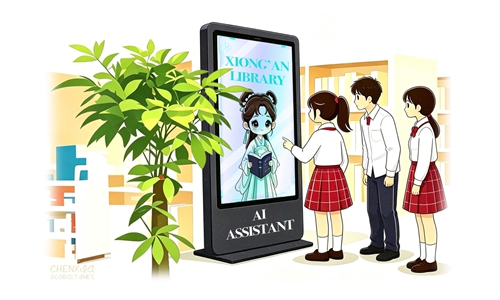
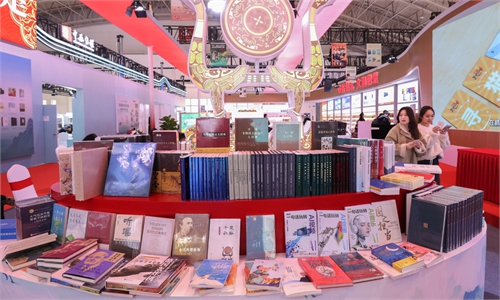
Today's celebrations ingeniously integrate ancient rituals with modern innovation. Besides traditional sunbathing activities, venues host ancient book restoration workshops, woodblock printing demonstrations, immersive mixed reality digital exhibitions and live-streamed manuscript showcases. Digital platforms unlock free online access to thousands of ancient texts, allowing audiences at home and abroad to explore China's profound literary heritage remotely, per the Xinhua News Agency.
Zhang Xiaozhong, deputy director of the Nanjing Library's Historical Documents Department, cited the library's innovative practices as a typical example. The Nanjing Library has torn down the barriers of closed ancient book warehouses for the festival, publicly displaying rarely-seen manuscripts.
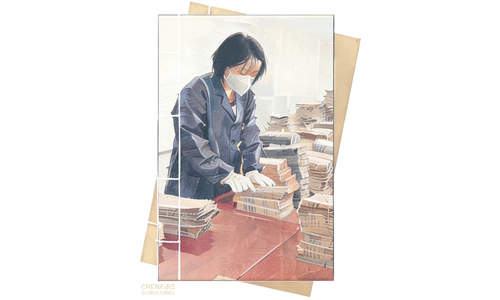
"Professional restorers deliver on-site demonstrations of intangible heritage crafts such as thread book binding and paper rubbing, dispelling the remoteness and mystery surrounding ancient books and cultural relics," Zhang told the Global Times. He added that to broaden cultural outreach in the digital era, the library has launched diverse modern communication initiatives: live-streamed tours of national treasures, cloud-based digital exhibition halls, and a provincial ancient book resource platform that provides full-text access to over 5,000 ancient volumes for free.
Scholars point out that such innovations demonstrate Chinese culture's strong capacity for self-renewal: It honors ancestral traditions while embracing cutting-edge technology to sustain cultural continuity across generations.
Cultural scholar Yu Jinlong highlighted the illuminating contrast between Chinese and Western archival conservation philosophies. Western preservation relies heavily on artificial intervention, using sealed climate-controlled rooms and chemical fumigation to reshape environments for manuscript protection. By contrast, the Chinese approach emphasizes adaptation and harmonious coexistence with nature.
"Neither method is superior, yet the difference reveals two distinct civilizational outlooks: One seeks to transform nature, while the other strives to live in harmony with it," said Yu.
Chen echoed that much like European literary salons that advocate book sharing and cultural exchange, China's Book Sunbathing Festival embodies humanity's universal love for books and cultural heritage.
"The love for books and the passion for traditional culture have always been the common language of all humanity," said Chen.
The author is a reporter with the Global Times. life@globaltimes.com.cn
RELATED ARTICLES