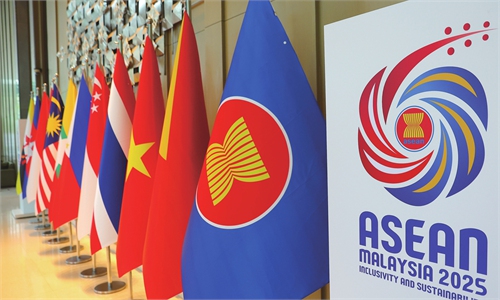
Resist external interference and deepen China-ASEAN cooperation: Global Times editorial
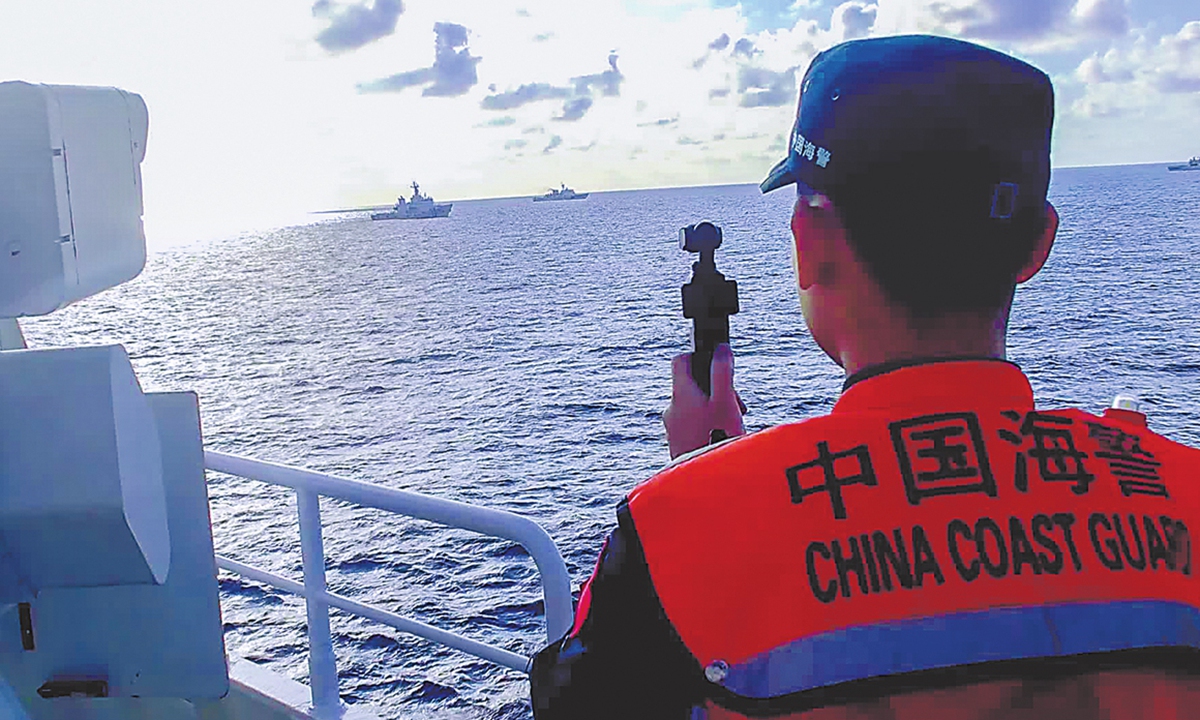
Out of humanitarian considerations, the Chinese side permitted the transfer of injured personnel from the Philippines' illegally grounded warship BRP Sierra Madre at Ren'ai Jiao, on the morning of July 21, 2026. A CCG officer monitored the full process of transfer. Photo: Courtesy of the CCG
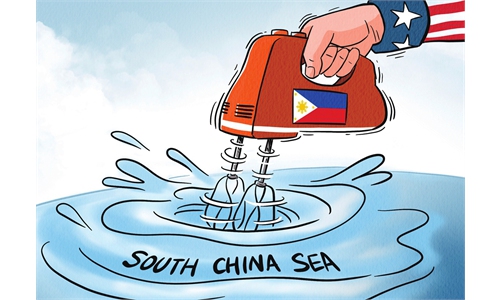
When the Philippines uses the South China Sea issue to hold China-ASEAN relations hostage, it needs to recognize one basic fact: China and ASEAN are neighbors, and mutually beneficial cooperation will always define the relationship. Against the broader momentum of China-ASEAN cooperation, provocations by a handful of countries are destined to fail. Those who choose to serve as others' pawns will ultimately end up as expendable pieces.
On the eve of the China-ASEAN Foreign Ministers' Meeting, the noise deliberately stirred up by certain Philippines military and coast guard forces in the South China Sea has become particularly jarring. On Monday, while the China Coast Guard (CCG) was conducting a routine patrol in waters near Ren'ai Jiao, the Philippine illegally "grounded" vessel deployed two rubber boats.
Ignoring repeated clear warnings from the Chinese side, the Philippine rubber boats approached and rammed the Chinese patrol vessel in a dangerous manner. Philippine personnel first used tools including paddles and long poles to attack Chinese law enforcement officers, deliberately creating tension at sea. This was immediately followed by sensationalist reporting from certain external powers and media outlets, deliberately stirring up the situation, smearing China, and fanning confrontation.
This familiar playbook of provoking incidents, playing the victim, and rallying outside support is nothing new and neither are the calculations behind it. Earlier, Manila not only colluded with 13 external countries to continue hyping the illegal "South China Sea arbitration award," but also declared its intention to use this piece of waste paper as the policy baseline for advancing the consultations on the Code of Conduct for the South China Sea. It then deliberately stirred up tensions ahead of the China-ASEAN Foreign Ministers' Meeting to fabricate "legitimacy" for hijacking regional cooperation agendas.
Such tactics - creating incidents through reckless provocations and distorting the facts through media falsehoods - are no way for countries to conduct themselves. They also run counter to the consensus between China and ASEAN member states to jointly safeguard peace and stability in the South China Sea.
This year marks the fifth anniversary of the China-ASEAN comprehensive strategic partnership, and ASEAN has always been a priority in China's neighborhood diplomacy. In recent years, cooperation between the two sides has delivered tangible results, from the "Chinese speed" of the Jakarta-Bandung High-Speed Railway, to the regional connectivity brought by the China-Laos Railway, to the institutional depth of the China-ASEAN Free Trade Area 3.0 upgrade, to the booming trade along the New International Land-Sea Trade Corridor.
These flagship projects have built an increasingly close China-ASEAN community with a shared future. In the first half of this year, the total value of imports and exports between China and ASEAN reached 4.34 trillion yuan, with an increase of 18.2 percent.
The Philippines' provocative actions in the South China Sea not only undermine its role as ASEAN chair, but also cast a shadow over the China-ASEAN Foreign Ministers' Meeting scheduled to take place in Manila, making its motives all the more reprehensible.
The US State Department's groundless accusations that China has been "provocative" and even taken "dangerous and aggressive" actions against the Philippines are nothing but a blatant attempt to distort facts and call white black.
This old trick of taking sides is, in essence, an effort to muddy the waters of the South China Sea for its own strategic gains. Ren'ai Jiao is China's inherent territory, and the CCG's law enforcement and rights protection activities at its own doorstep are fully in line with international law and practice.
There is no room for any external country to point fingers or sow discord in the South China Sea.
When the Philippines uses the South China Sea issue to hold China-ASEAN relations hostage, it needs to recognize one basic fact: China and ASEAN are neighbors, and mutually beneficial cooperation will always define the relationship.
Just a few days ago, the Global Times Institute released its public opinion survey on "Chinese Public Views on ASEAN" in 2026. When asked what comes to mind when they think of ASEAN, 56 percent cited "China-ASEAN cooperation projects." Regarding the current state of China-ASEAN relations, 49 percent of respondents rated them as good.
The findings clearly show that the achievements of China-ASEAN cooperation in recent years are widely recognized. China and ASEAN countries remain committed to resisting external interference and maintaining peace and stability in the South China Sea. Regional countries have every confidence, wisdom, and are capable of properly managing South China Sea issues.
On the South China Sea issue, China has consistently approached differences with the utmost sincerity and patience through consultations and direct dialogue with parties directly concerned. It has never bullied smaller countries, nor has it sought to provoke disputes. Even with regard to the Philippine illegally "grounded" vessel, China has continued to exercise humanitarian restraint. This is not because China is "afraid" of the Philippines. Rather, it reflects China's goodwill and sense of responsibility in safeguarding regional peace and stability. ASEAN member states and the broader international community can see this clearly.
Peace, stability, cooperation and friendship should be the new narrative for the South China Sea issue. China and ASEAN are already working toward this goal by deepening practical maritime cooperation, maintaining dialogue on South China Sea issues, and making bilateral consultations and effective management of differences the prevailing approach.
The South China Sea is not a "hunting ground" for outside powers, nor should it become an "arena" for major-power rivalry. During last year's ASEAN meeting, China and ASEAN member states agreed to make the Code of Conduct in the South China Sea an upgraded version of the Declaration on the Conduct of Parties in the South China Sea, ensuring that the Code is effective, substantive, and consistent with international law.
Hopefully the China-ASEAN Foreign Ministers' Meeting will further strengthen consensus on development and cooperation and make new progress in jointly building a common home that enjoys peace, tranquility, prosperity, beautiful environment and friendship.
Against the broader momentum of China-ASEAN cooperation, provocations by a handful of countries are destined to fail. Those who choose to serve as others' pawns will ultimately end up as expendable pieces. Certain countries are urged to stop putting on political performances and refrain from becoming stumbling blocks to regional development and cooperation.
RELATED ARTICLES