China expresses strong dissatisfaction to EU's fine on AliExpress, supports firms in using legal weapons to safeguard rights

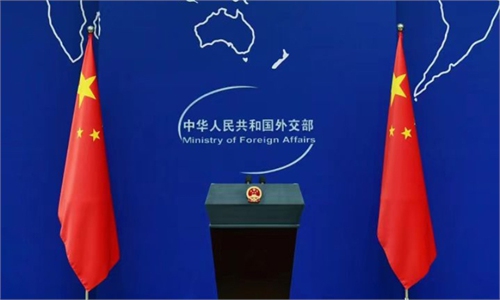
The Ministry of Commerce of China File photo: VCG
China has expressed strong dissatisfaction and serious concern after the European Commission (EC) announced a fine of 550 million euros ($627 million) on AliExpress under the EU's Digital Services Act (DSA) on Monday, a spokesperson of China's Ministry of Commerce (MOFCOM) said on Wednesday.
China firmly opposes the EU's imposition of digital barriers under the pretext of platform regulation, as well as its adoption of discriminatory measures to restrict and suppress the normal operations of Chinese e-commerce enterprises in Europe, the spokesperson said, urging the EU side to stop exploiting the ambiguity of legal provisions to abuse discretionary power and to treat Chinese enterprises fairly.
China will firmly support Chinese enterprises in using legal weapons to safeguard their rights and will take strong measures to resolutely uphold their interests, the spokesperson said.
The MOFCOM's statement came after the EC announced on Monday plans to fine the Chinese enterprise for "breaching its obligations under the DSA to diligently assess and mitigate risks relating to the sale of illegal, unsafe or counterfeit products on its e-commerce platform." The EC ordered AliExpress to submit an action plan by October 20 outlining measures to remedy the breaches, claiming that failure to comply could result in periodic fines.
In response to EC's fine, AliExpress said that the decision and disproportionate fine ignore the sound risk management framework and the significant, proactive enhancements the company has made. "We will appeal the decision," it said.
According to the company, AliExpress has invested substantial resources in risk assessment and mitigation, product safety and consumer protection. "We have worked constructively with the European Commission in the spirit of cooperation and transparency, and we made many improvements and voluntary commitments to meet the evolving expectations under the DSA," the company noted.
It was not the first time that the EU targeted Chinese enterprises with the DSA. In May, the EC issued a fine of 200 million euros to Temu under the Act, claiming that the company failed to diligently identify, analyze, and assess the systemic risks of illegal products being offered on its platform.
Jian Junbo, director of the Center for China-Europe Relations at Fudan University's Institute of International Studies, told the Global Times on Wednesday that Chinese companies have been continuously making improvements and cooperating on compliance. However, despite these efforts, the EU still went ahead to impose the hefty fine.
In addition, the reasons cited by the EU for the fine are not unique to Chinese companies, since other global digital platforms face similar issues. Cross-border e-commerce platforms connect millions of sellers and consumers worldwide, featuring a vast variety of products that are updated rapidly. Therefore, completely eliminating individual non-compliant products poses enormous practical challenges in reality, Jian said.
"However, the EU has significant discretionary power in its enforcement, while disregarding the substantial compliance efforts made by Chinese companies. This action demonstrates clear targeting and is unfair," the expert noted.
The China Chamber of Commerce to the EU (CCCEU) on Wednesday also expressed grave concern over the EC's decision regarding its consideration of enterprises' compliance efforts, the protection of enterprises' legitimate rights and interests, and the proportionality of the penalty measures, and expressed firm opposition against EU's move.
We believe that platform regulation should be based on a clear, transparent, and predictable legal framework. It should not create market barriers through digital rules, and must avoid adversely affecting the normal operations of enterprises and market confidence, it noted.
Alibaba Group facilitates more than 30 billion euros annually in the sale of European-branded products in China, and AliExpress also provides European consumers with a rich and affordable selection of goods.
European media outlet Euractiv said that according to the July 2025 Censuswide survey of existing AliExpress shoppers, 86 percent considered the platform affordable, while 77 percent said that their money went further when shopping there. Censuswide data from June 2025 indicated generally positive experiences with delivery speed, straightforward returns and customer service.
Jian noted that the EU's imposition of the "astronomical fine" on a Chinese company not only harms the legitimate rights and interests of the enterprise, but will also undermine consumer welfare, hinder free trade, and damage the ability of some European retailers and European products to export to China. "This is in fact a lose-lose situation that harms others without benefiting oneself," he added.
In the era of the digital economy, what is needed is dialogue and cooperation, rather than unilateral punishment. China has always advocated for openness and cooperation, and supports enterprises in carrying out normal business activities in compliance with local laws and regulations, the expert said, urging the EU to stop actions that undermine bilateral economic and trade relations, and to resolve differences through equal consultation.
Also on Wednesday, the MOFCOM expressed serious concern to France's newly passed "anti-fast fashion" law, which imposed discriminatory restrictions on Chinese cross-border e-commerce platforms, including Shein, Temu and AliExpress, and vowed to take necessary measures to hit back if the legitimate rights and interests of Chinese enterprises are infringed.
RELATED ARTICLES