ARTS / CULTURE & LEISURE
Wartime book, diploma donated to museum by daughter of hero
Exhibitions open, mark 90th anniversary of Long March victory
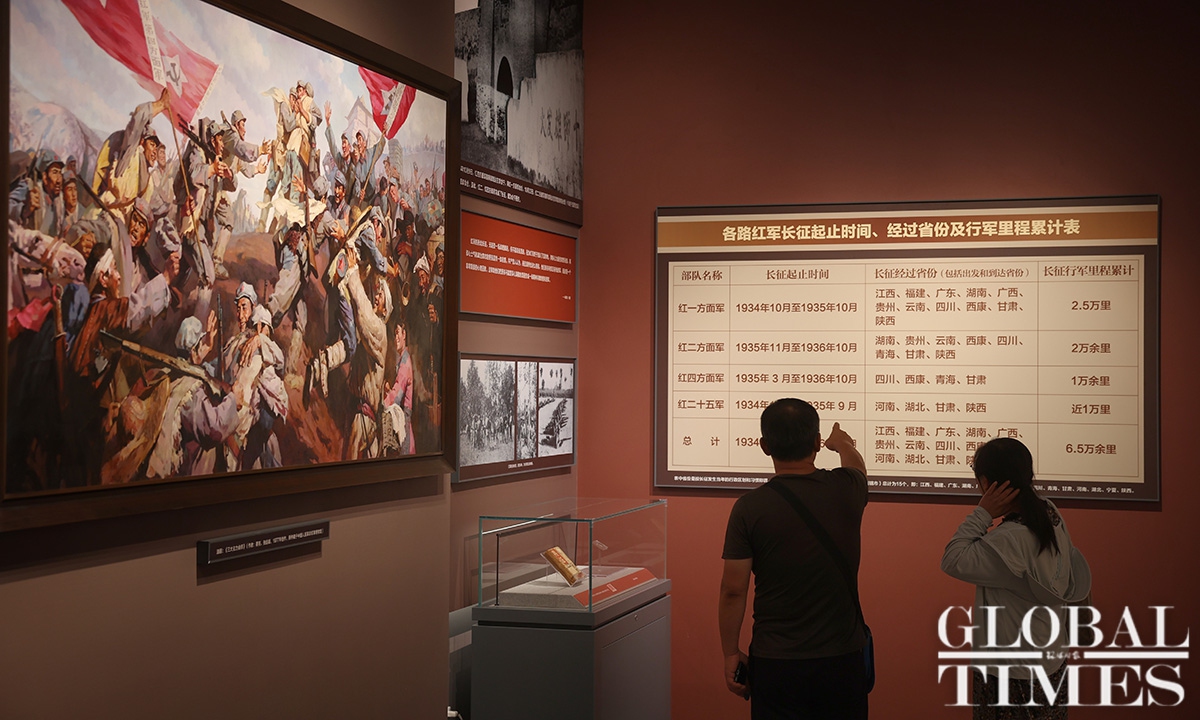
Photo: Cui Meng/GT
After donating her father's book and military academy diploma to the Museum of the War of the Chinese People's Resistance against Japanese Aggression in Beijing on Wednesday, Liu Yaojiang told the Global Times that she was deeply moved to have found a permanent home for these historical relics and hoped that her late father, who fought in the War of Resistance against Japanese Aggression (1931-45), would know that the Long March spirit is being carried forward by future generations.Liu donated the relics at the opening ceremony for two exhibitions held at the museum. One is dedicated to the Long March (1934-36), a military maneuver by the Chinese Workers' and Peasants' Red Army, while the other is about the Military and Political University of Resistance against Japanese Aggression, which was the highest military academy of the people's army led by the Communist Party of China (CPC).
This year marks the 90th anniversary of the victory of the Long March and the establishment of the university.
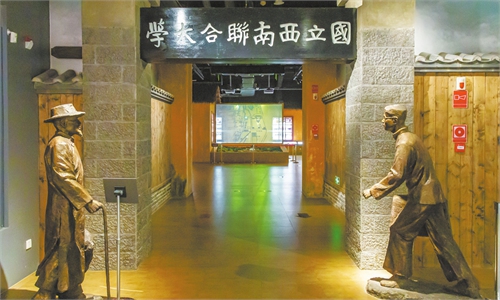
The university was opened in June 1936 and ended its mission in September 1945 with the victory in the War of Resistance. Despite poor conditions during wartime, it trained more than 100,000 military and political officers who played a great role in winning the War of Resistance and the War of Liberation (1946-49) that followed, China.org.cn reported.
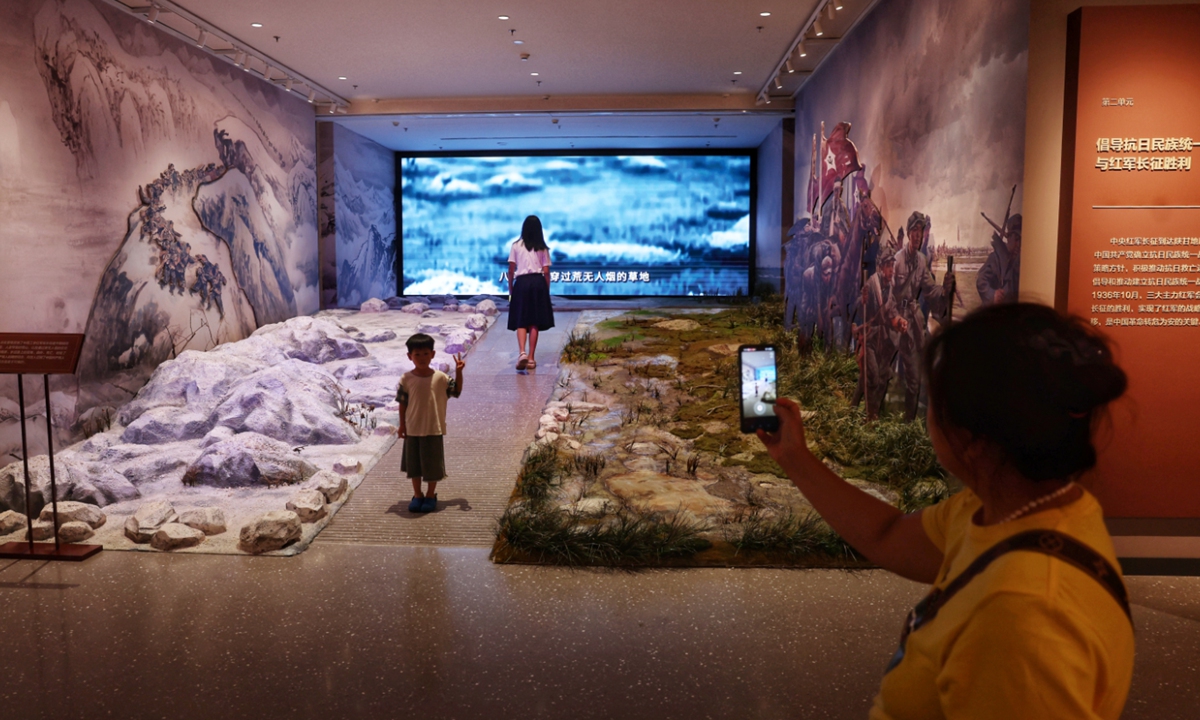
People explore an exhibition to mark the 90th anniversary of the victory of the Long March in Beijing on July 22, 2026. Photo: Cui Meng/GT
The Long March was a defining episode in modern Chinese history. The Red Army marched across raging rivers, snowy mountains and arid grasslands to break the Kuomintang regime's grip on the country and to continue their fight against Japanese invaders. Some of them marched as far as 12,500 kilometers, enduring hunger, thirst and cold. It laid the foundation for the eventual victory of the CPC, the Xinhua News Agency reported.Liu's donations are a book titled Tactics of Landmine Warfare and his father's diploma from the university.
"The university was a cradle that nurtured commanders like my father, who went on to lead troops in battle. His experience fighting the War of Resistance in Haiyang, East China's Shandong Province, later led him to write the book. The book was distributed as a pocket-sized training manual among militia members and army soldiers, who followed its guidance to further develop landmine warfare," Liu noted.
Haiyang is known as the "hometown of landmine warfare." During the War of Resistance, local people developed landmine warfare as a distinctive tactic, which made significant contributions to the eventual victory in the war.
At the opening ceremony of the exhibitions, Wang Yiqiang, son of Chinese army photographer Sha Fei, donated 130 digitized versions of photographs that his father took to document the War of Resistance.
Wang told the Global Times that he was struck by some of the stories behind the photos.
"For instance, students at the military university did not complete their studies before being deployed. Instead, they learned while fighting on the front lines. I believe this exhibition is of great significance, as it encourages people to remember history and carry forward the revolutionary spirit," said Wang.
The Long March-themed exhibition focuses on the great feat in human history, and the strategic decision made by the CPC to march northward to resist Japanese aggression. Through 100 photographs, 40 historical artifacts, and 11 multimedia exhibits, the exhibition illustrates how the CPC, through arduous and extraordinary efforts, successfully linked the effort to overcome its survival crisis with the mission of saving the Chinese nation from peril, said Luo Cunkang, curator of the museum.
The university-themed exhibition, featuring 208 photographs and 120 sets of artifacts, presents how the university, born amid the flames of revolution, remained committed to serving the overall goal of the War of Resistance. It trained urgently needed military and political personnel for victory in the war and cultivated a large number of military and political leaders, Luo said.
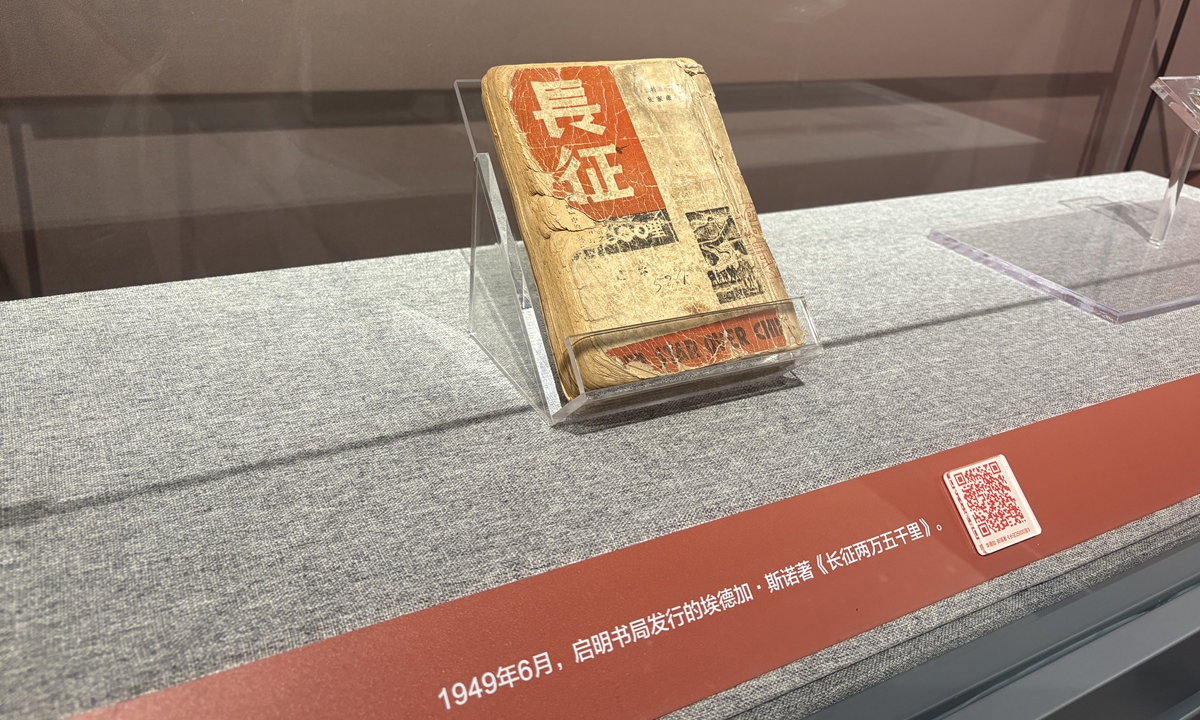
A 1949 edition of US journalist Edgar Snow's Red Star Over China Photo: Wu Jie/GT
One of the precious displays is a 1949 edition of US journalist Edgar Snow's Red Star Over China, one of the exhibition curators Li Rui told the Global Times.From 1928 to 1941, Snow had been to the Shaanxi-Gansu-Ningxia Border Region twice. He witnessed China's revolutionary struggle and the War of Resistance against Japan, introduced them to the world by writing articles, and helped the Western world better understand China, Xinhua reported.
The two exhibitions are set to run until the end of the year.
RELATED ARTICLES