COMMENTS / INSIDER'S EYE
Looking inward may not strengthen India's steel industry for global competition
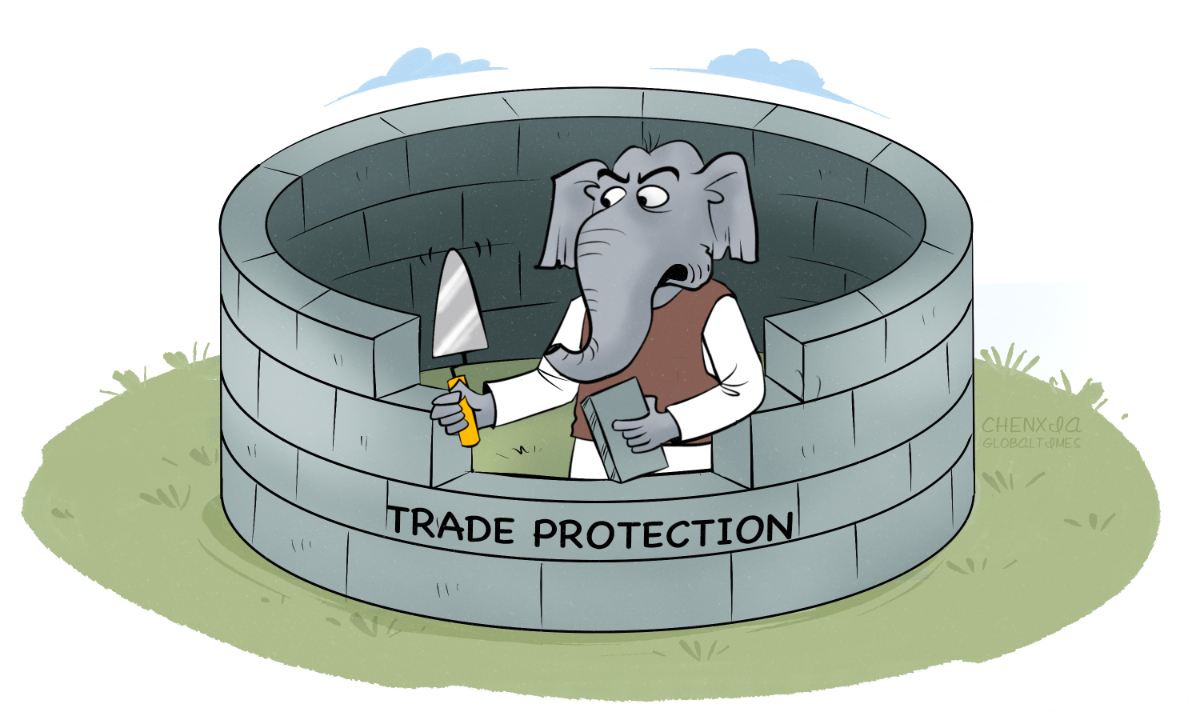
Illustration: Chen Xia/GT
India's steel industry appears to be approaching a crossroads. Reuters reported on Tuesday that Indian steelmakers are pivoting to the domestic market to offset weaker exports as key markets such as Europe and Britain tighten imports. Yet the domestic market may offer little relief. Executives and analysts said that Chinese steel is priced $52-$63 per ton below domestic grades, making it increasingly difficult for Indian mills to absorb output diverted from export markets.
This pivot toward the domestic market appears less like a strategic effort to strengthen India's steel industry than a forced response to mounting pressure in export markets. Such a retreat is unlikely to improve the sector's global competitiveness. Instead, greater reliance on domestic demand risks leaving the industry even more vulnerable as global competition intensifies.
Global competitive pressures are mounting, and this is a reality that cannot be ignored. A broader perspective beyond the steel industry helps to put these pressures into context. The global industrial landscape is undergoing a profound transformation. The model that shaped the past several decades - in which developing economies served as manufacturing bases while advanced economies remained the main consumer markets - is being challenged by a wave of trade restrictions in certain developed economies.
At the same time, developing economies are gaining greater weight in the global economy, with their share of trade and investment continuing to rise. Stronger economic links among developing countries are becoming a more visible trend in global commerce, opening up new possibilities as uncertainty in international trade persists. For industrial producers, evolving supply chains may create opportunities to diversify markets beyond traditional destinations.
India is reportedly the world's second-largest crude steel producer after China, reflecting years of industrial development and investment in the sector. If the pressure Indian steelmakers face in traditional European markets leads to a broader search for export opportunities and stronger ties with emerging markets, where trade connections are continuing to deepen, it could ultimately help the industry strengthen its position in global markets.
Diversifying trade partners and finding new markets is rarely an easy process. The challenges are often greater during the early stages of such a transition, particularly when competition across emerging markets remains intense. By comparison, retreating to the domestic market may offer Indian steelmakers some breathing space by reducing their exposure to international competition. Yet taking the easier route may offer only a false sense of security at the expense of long-term competitiveness.
Indian news agency PTI reported on July 10 that India extended the anti-dumping duty imposed on certain Chinese tubes and pipes until January 27, 2027 to guard domestic makers from "cheap" inbound shipments. The move offers a signal worth watching as India considers how much protection its steel industry needs. While such measures may provide short-term relief, excessive protection risks reducing incentives for steelmakers to improve efficiency and compete in global markets, including against Chinese suppliers.
If domestic producers become overly reliant on a protected market and maintain higher prices, the consequences could extend well beyond the steel sector. Higher steel costs may eventually feed through supply chains, increasing input costs for downstream manufacturers ranging from machinery producers to electronics component makers.
This does not mean Indian steelmakers should turn away from the domestic market, but rather that they should not be shielded from competition. A competitive domestic market - including fair competition with international players such as those from China - could encourage companies to improve efficiency, upgrade technology and strengthen their competitiveness.
India's steel market has considerable potential, but it may not be large enough to absorb the output of the world's second-largest crude steel producer over the long term. For Indian steelmakers, expanding into international markets and diversifying trade partners will remain important parts of sustaining growth.
If Indian steelmakers fear competition from Chinese companies even in their own market, they will find competing in third markets even more challenging. Building a stronger international presence will require them to compete rather than rely on protection. By forging stronger supply chain links and accessing a wider range of markets, India's steel industry can turn its scale into a more durable competitive advantage.
The author is a reporter with the Global Times. bizopinion@globaltimes.com.cn
RELATED ARTICLES