GT Voice: Western media outlets mislead by avoiding real cause of oil volatility
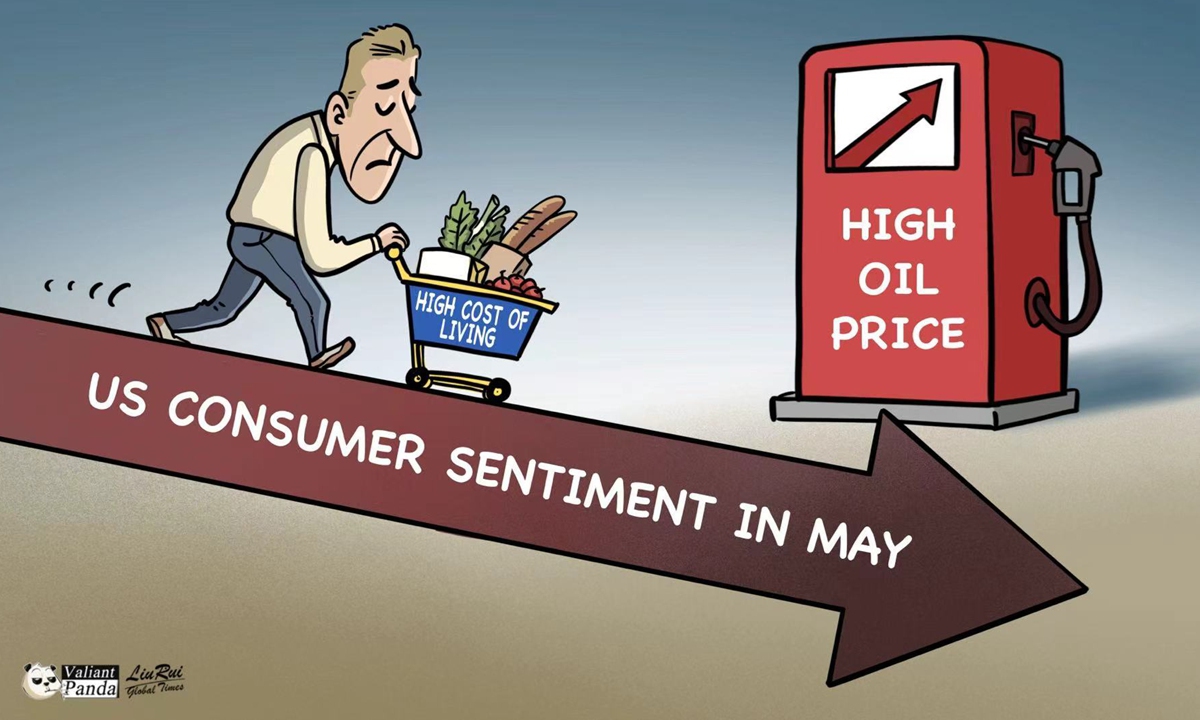
Illustration: Liu Rui/GT
As the shadow of the Strait of Hormuz continues to hang over the global oil market, some Western media outlets have shown a tendency worth noting in their recent coverage of international oil prices: focusing their commentary on Chinese demand.For example, The New York Times on Tuesday published an article headlined "China's Next Move May Decide Whether Oil Prices Soar." A CNN article headlined "The future of oil prices may depend on China," claimed that China's "policy and consumption patterns will be pivotal for the market, regardless of how quickly the Strait of Hormuz reopens."
Yet, this disproportionate focus on Chinese demand sits in odd contrast with the realities of today's oil market. The direct trigger for the current price volatility is plainly visible: it lies in the Strait of Hormuz. Crude oil futures prices continued to surge this week after the US reinstated a naval blockade on Iran in the Strait of Hormuz.
Under normal circumstances, the international crude market can absorb routine fluctuations, and minor adjustments on either side of the supply-demand equation rarely upset the overall equilibrium. But the current panic has nothing to do with conventional supply-and-demand shifts. It stems from the systemic risk of supply disruptions in the Strait of Hormuz.
That uncertainty hovering over a vital global energy artery has struck the most sensitive nerve of Western economies: resurgent inflation. For instance, concern about high inflation mounted at the US Federal Reserve's meeting last month, Reuters reported.
The ripple effects are already tangible. High oil prices are pushing up production costs for the global manufacturing sector, adding pressure to many economies that are already struggling with weak recovery, and forcing millions of ordinary households to pay more for transportation and other goods.
The international crude oil market has never been dictated by a single demand variable. It is the result of interplay of multiple complex factors, including supply patterns, geopolitical games, US dollar liquidity, financial capital speculation, and global supply-demand relations.
When the Strait of Hormuz has become the single greatest risk to global energy supply, training the lens on China's routine purchases while sidelining the geopolitical turmoil - whether deliberately or not - objectively diverts public attention from the true drivers of oil prices. This selective focus amounts to a tacit admission of a grim Western outlook: that the supply-side crisis will not be resolved anytime soon.
As the world's largest crude oil importer, China's purchases have some impact on international oil prices. But the core driving force behind the current oil price volatility comes entirely from geopolitical tensions and the high uncertainty on the supply side. The narrative that forcibly wraps the supply panic ignited by geopolitical tensions in the shell of "China's next move may decide whether oil prices soar" is fundamentally untenable.
China's role in the global energy landscape has always been clear and consistent. For years, China's crude oil procurement has served as one of the most predictable and stable constants in the global market, rather than a risk factor triggering drastic fluctuations. At a press conference held by the State Council Information Office on March 16, an official of the National Bureau of Statistics stated that China boasts solid energy supply capacity and robust foundations to cope with external market volatility.
The question the world should be asking is not how many barrels of oil China will import, but when the global energy channel crisis will be resolved. Global energy supply stability cannot be built on deflection and diversion. It requires a clear-eyed confrontation with the supply-side disruptions at their source - and the political will to fix them.
RELATED ARTICLES