Western smear Illustration: Liu Rui/GT
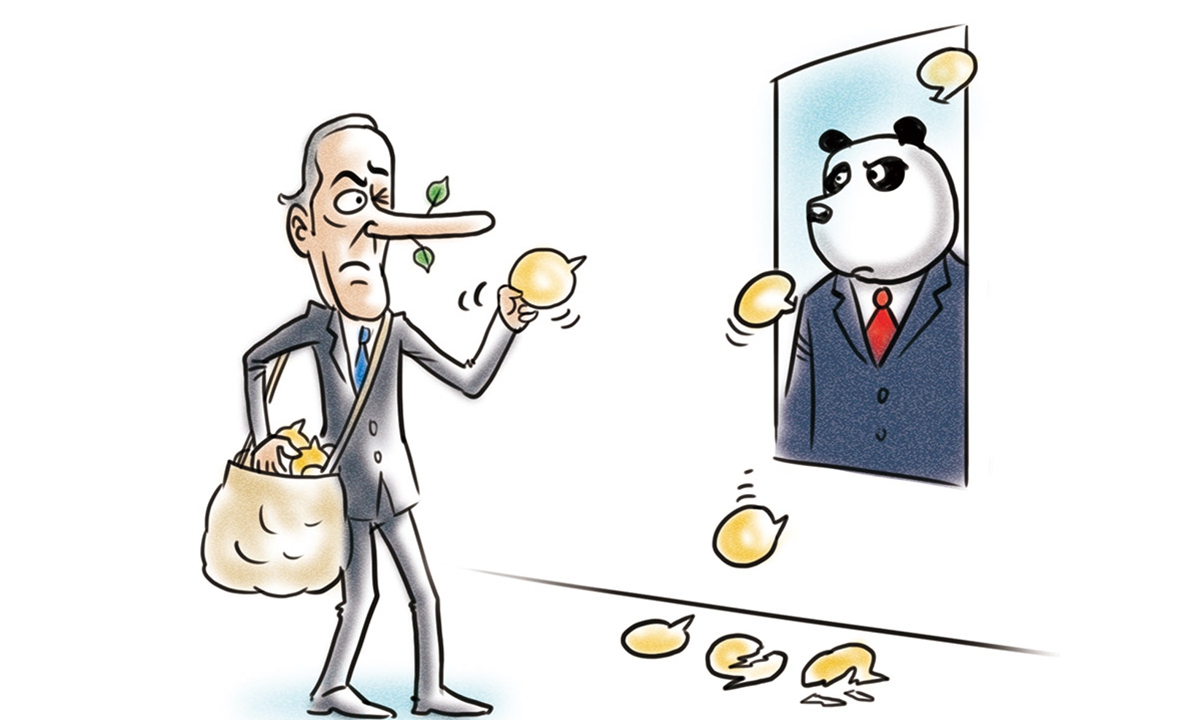
The "China Squeeze" narrative, proposed by Jessica C. Liao and Zenel Garcia, both associate professors of Asian studies in the Department of National Security and Strategy at the US Army War College, in Foreign Affairs, and followed by Arvind Subramanian at the Peterson Institute for International Economics, attempts to distort the facts. They argue that China's persistent dominance in low-skill manufacturing is restricting industrialization opportunities for others. Such claims ignore how China's development has created opportunities for other countries.
In recent years, the world has been grappling with challenges of protectionism and unilateralism. Higher and more volatile tariffs have not only increased the cost of trade, but have also made it extremely unstable and uncertain.
Fortunately, China is always here. China has played a stabilizing role on both sides of trade.
On the export side, it has supported its companies in delivering products efficiently, helping many partners keep their production lines running.
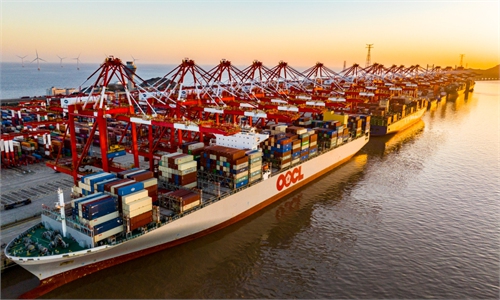
As the largest trading country, China is connecting with global industries, markets and people's lives. In the first half of 2026, China exported 9.36 trillion yuan of mechanical and electrical products, accounting for 63.5 percent of total exports, up 3.5 percentage points year-on-year.
This improvement in export structure has enabled our trading partners to realize their industrialization by importing intermediate products or parts from China and assembling them at home. By exporting a variety of goods, China has successfully leveraged its own advantages while allowing its trading partners to utilize theirs. This philosophy is about support, not "squeeze."
On the import side, China has lowered import tariffs, promoted more trade facilitation measures and imported more products. In the first half of 2026, China's total imports reached 10.74 trillion yuan, an increase of 22.1 percent year-on-year. This surge has allowed many countries to benefit from the opportunities presented by China's domestic market.
By remaining a dependable supplier while also opening its market more widely, China has helped ease supply-chain anxieties rather than deepen them. This is support, not squeeze.
The world is facing several challenges, from climate change to the impacts of technology development. As one of the leading countries in technology, China has cooperated with its trading partners. AI, for example, is a field of significant interest to many countries, but most leading companies in the US are selling their abilities in a closed-source model.
Other companies using American AI services need to pay an expensive bill, and on top of that, they are facing stricter regulations. In contrast, Chinese AI companies follow a different business model. They provide open-source models, making it much easier for the Global South - and even Western countries - to enhance their industries and public services. There is no squeeze, only full support.
Many Chinese companies are trying to introduce more automation and intelligent technology in the manufacturing sector, producing high-quality products at affordable prices, while keeping emissions down to protect the Earth. We wish to cooperate with our foreign partners and that's why more and more Chinese companies are investing in other countries. Southeast Asia is the first choice for cross-border investment for these companies.
The Chinese government is actively engaging with its counterparts regarding investment climates and regulations. These countries have already benefited a lot from stronger economic growth, increased capital inflows, more job creation and improved positions in the global value chain.
China will continue to support cooperation with our partners to expand opportunities for development and create a brighter future for all.
The author is a senior researcher at the Chinese Academy of International Trade and Economic Cooperation. opinion@globaltimes.com.cn
RELATED ARTICLES