IN-DEPTH / IN-DEPTH
Once supported through school herself, a CPC member now carries local pupils in Xizang toward new opportunities
A teacher who returns home
By Published: Jul 23, 2026 09:20 PM

Editor's Note:
The year 2026 marks the 105th anniversary of the founding of the Communist Party of China (CPC). Over the past century, the Party has led China through profound transformations: from national peril to national rejuvenation, from bare subsistence to moderate prosperity, from technological catch-up to independent innovation, and from isolation and underdevelopment to greater educational equity. Generation after generation of CPC members, through their unwavering commitment, have written an epic of uplifting the destiny of the Chinese nation, the well-being of its people and the course of national development.
July 1 marks the CPC's founding anniversary. On this occasion, the Global Times is launching a special series, "105 Years of Uplift," to explore the deeper answer to the question of why the CPC has succeeded. In this final installment, the Global Times tells the story of Medog, the last county in China to gain road access, and how education transformed the lives of local children. Centered on CPC member and headmaster Kelsang Dekyi, of the Monba ethnic group, the story follows her journey from a student supported by national education policies to a teacher who returned home to help more children, while highlighting how education support systems have driven lasting change in the region.
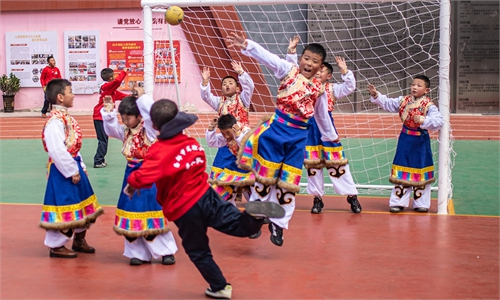
When the recess bell rings, children spill onto the playground. Behind them, multimedia screens still glow in the classrooms, while the art room and computer lab are readied for the next lessons.
Students answer questions in the national common language and study Tibetan-language and English. After class, they play football, draw or practice calligraphy. Only a few details reveal where they are: activities introducing them to Tibetan language, traditional dress and weaving.
Yet just over a decade ago, before the highway reached Medog, this ordinary rhythm of school life would have been difficult to imagine.
Before 2013, reaching Medog from outside still required crossing snow-covered mountains and trekking for several days through canyons and virgin forests. Quite often, schools scattered deep in the mountains could only provide education for one or two grades. To continue their studies, some children had to leave their hometowns and walk for days along mountain roads to schools elsewhere, while some could return home only once every few years.
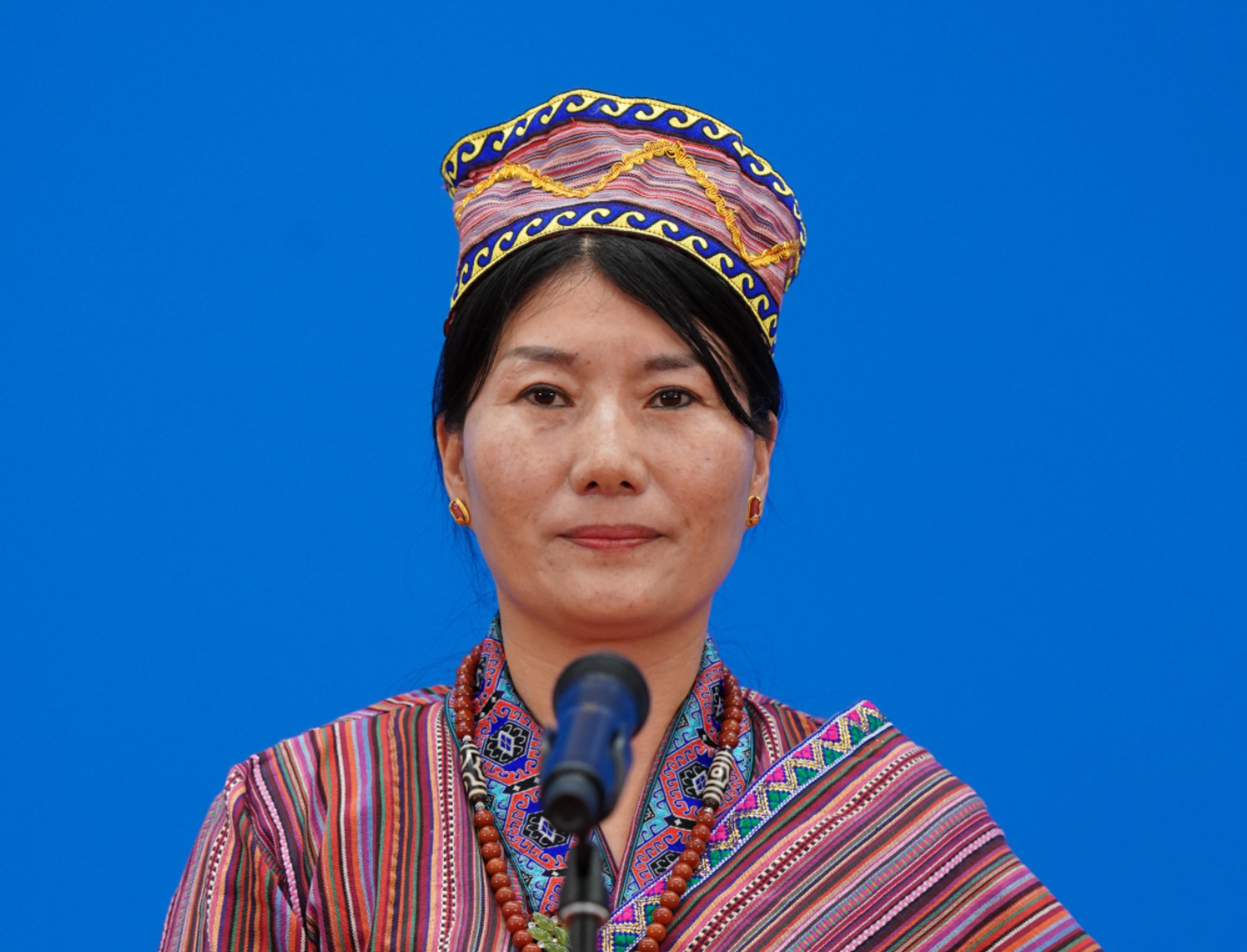
This is the environment in which Kelsang Dekyi grew up and received her education. Today, she is vice principal of Medog Complete Primary School.
"Children today are very fortunate," she told the Global Times. "There is nothing lacking at the school."
Kelsang Dekyi is a member of the Monba ethnic group and also a CPC member. Education benefits provided by the country once helped her leave the mountains and complete her studies. After graduating from university, she chose to return to Medog, which had not yet been connected by roads at the time, to become a rural teacher.
From being supported to leave the mountains to returning home to support more children, Kelsang Dekyi's journey has spanned more than two decades of dramatic changes in Medog's education development. "All these changes come from the care and concern of the Party and the country, which has attached great importance to ethnic minority groups in our hometowns," she told the Global Times.
The road she traveled
When she was a child, while other children played outside, Kelsang Dekyi was kept at home by her mother to study.
Her mother was just an ordinary rural woman, but she was determined that her daughter must receive an education.
"She felt that life was too difficult for girls in Medog. She did not want me to suffer like she had, so she always made sure that I went to school," Kelsang Dekyi told the Global Times.
The first school she attended was a thatched-roof building. Whenever the roof leaked, teachers would take the children out to cut grass and lay it over the roof. The grass grew taller than the children. On the way back, it often tangled around their feet, and the sharp leaves would cut their fingers.
Textbooks were scarce, and teachers' abilities were limited. More than a dozen children repeatedly studied the same textbooks for first and second grade.
In 1989, Medog organized an examination for school-age children. Kelsang Dekyi was admitted to a primary school in Pai town, and later transferred to Nyingchi No.2 Primary School, where she began receiving fully free education.
When she left her hometown, her father accompanied her and several other children on their journey. On the first night, they slept beside a large rock at the foot of a snow mountain, with a bonfire burning nearby as owl calls echoed around them. On the second night, her father cut tree branches and banana leaves and built a temporary shelter beside the road.
While crossing the snow mountains, Kelsang Dekyi suffered from altitude sickness, with blood continuously flowing from her nose. After reaching a place with roads, her father handed the children over to a driver. Whenever they encountered landslides along the way, they got out of the vehicle and continued walking.
From then on, her destinations for education grew increasingly farther away. In 1994, she was admitted to a high school in Yueyang, Central China's Hunan Province. In 1998, she entered the Hebei Normal University for Nationalities in northern China.
During the seven years she studied away from home, she returned home only once, unable to see her mother before she passed away.
"It took a whole month to travel from Hebei to Medog," she recalled. "The summer vacation was only two months long, and I could stay at home for about 15 days before having to leave again."
During that brief return home, she found that changes in her hometown remained limited. Many children still struggled to continue their education, and leaving the mountains remained an opportunity available to only a few.
The idea of returning home, which had gradually taken shape during her years studying away from home, became even stronger.
When she graduated from university, Kelsang Dekyi originally had the opportunity to stay and work in Lhasa, capital of Xizang. Instead, she voluntarily applied to return to Bangxin township - the place she had once struggled so hard to leave.
Later, when talking about her identity as a CPC member, she explained the importance of "remaining true to her original aspiration" - to teach every child well.
As for why she chose to return to the mountains, she simply asked: "If I don't return, who else can we expect to go?"
Education changes more than one life
When Kelsang Dekyi arrived at a primary school in Bangxin town in Medog, in 2001, the school had only two simple classrooms, and more than 30 children shared a single dormitory.
However, the most urgent task was often finding out which students had failed to show up that day. Sometimes, a child who was sitting in the classroom in the morning would suddenly run back home. Some children would even hide in the forest when they saw teachers coming to look for them, while their parents pretended not to know where they had gone.
"For a long time, there was never a day when all the students in a class were present," she later recalled.
Around 2003, a girl in her class with excellent academic performance suddenly stopped attending school. When Kelsang Dekyi arrived at the girl's home, the family was preparing a wedding for the girl, who had not yet graduated from primary school.
During her first visit, Kelsang Dekyi did not get to meet the girl and failed to persuade the family to let her continue her studies.
She returned the next day. Only then did the family reveal their real concern: They could not afford to continue paying for the girl's education. In their view, it would be better for her to return home early and help with farm work.
Kelsang Dekyi shared her own educational journey with the family and explained the education policies provided by the country for students from Xizang.
The girl eventually returned to the classroom. Later, she completed university studies, and returned to Xizang to become a teacher.
Persuading children to return to school did not mean the day's work was over. During every school holiday, teachers still had to escort boarding students back home.
Taking some students home required using a zip line spanning the Yarlung Zangbo River. Although Kelsang Dekyi was afraid of heights, she still sat in the rattan basket, held tightly onto the pulley and slid across the river to the opposite bank.
Such escorts continued for 12 years. According to China Women's News, she accompanied students home 66 times.
Later, as the boarding school system continued to improve, small village schools scattered in the mountains were gradually phased out. Children could receive education at centralized schools in towns, and searching for students from door to door gradually disappeared from teachers' daily work.
Kelsang Dekyi later came to Medog and became the vice principal of the local primary school.
The challenges before her changed. They were no longer about persuading children to attend school, but about what boarding students could learn after class, how border schools could attract professional teachers and how to make better use of students' time at school.
According to the Guangming Daily, during the 2022 national "two sessions," Kelsang Dekyi, then a deputy to the National People's Congress, proposed that Medog Complete Primary School should expand student clubs and extracurricular activities, as many boarders remained on campus after classes.
She said the implementation of the education policies in boarding schools should consider local conditions, strengthen professional teaching resources and after-school services, rather than simply copy approaches from other regions.
Her work as an NPC deputy also expanded to vocational skills training and employment. Kelsang Dekyi submitted a proposal on improving the competitiveness of local migrant workers in the job market, suggesting more targeted skills training based on actual employment needs.
After the proposal was handled, the Xizang regional government said that starting from 2025, skills training related to industrial development would account for no less than 50 percent of all training programs for farmers and herders, with 12,000 additional skilled workers among farmers and herders trained every year.
During the 2026 Xizang regional "two sessions," Kelsang Dekyi spoke about the implementation of her proposal, saying: "The people chose me as their representative, and I serve the people as their representative." She said she would continue visiting communities at the grassroots level and bring people's specific concerns to the meetings.
During interviews at Medog Complete Primary School, Global Times reporters also met some young teachers from the graduate volunteer teaching group of Shanxi Normal University.
Here, PE teacher Liu Silai has really bonded with the students; when he walks around the campus, he is often stopped by the children to say hello, or even for a friendly chat.
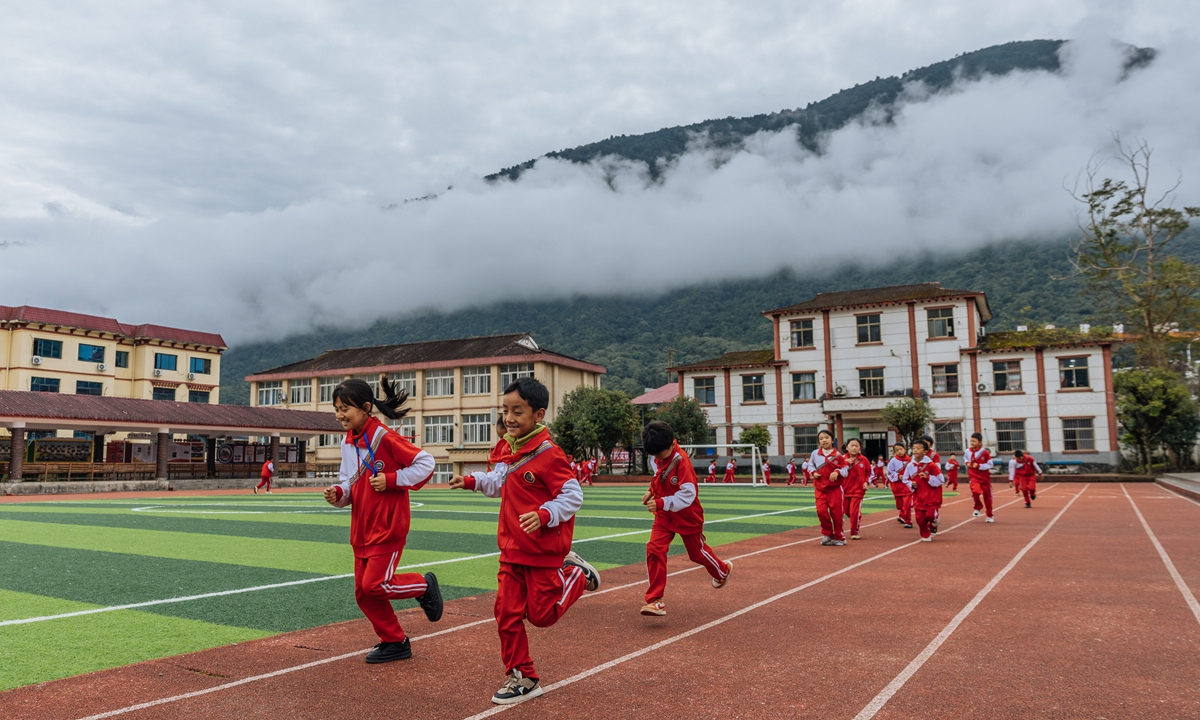
"Their individual skills are good, but they still need to improve their tactical awareness," he told the Global Times during his soccer class.
He introduced running, physical contact and teamwork into lessons, while the school provided teachers, equipment and funding for training and competitions.
These young teachers arrive in Medog in successive one-year cohorts. Since 2017, Shanxi Normal University has sent students to Medog Complete Primary School every year. They teach English, music, PE and art, while also assisting with moral education, campus safety and day-to-day administration.
Such continuity represents one aspect of the Party and the country's support for educational development in border areas and relatively less-developed regions.
In 1994, the central authorities made the major decision to provide nationwide paired-up assistance to Xizang. Since then, different assistance programs have continuously brought teachers, funding and educational resources to Medog.
In 2025, Xizang's gross preschool enrollment rate reached 92.83 percent, while the retention rate for nine-year compulsory education stood at 98.74 percent. Gross enrollment rates for senior secondary and higher education reached 92.04 percent and 60.02 percent, respectively, according to the Xizang regional government.
"All these changes have been made possible because of the care and support of the CPC and the country," Kelsang Dekyi said.
The year 2026 marks the 105th anniversary of the founding of the Communist Party of China (CPC). Over the past century, the Party has led China through profound transformations: from national peril to national rejuvenation, from bare subsistence to moderate prosperity, from technological catch-up to independent innovation, and from isolation and underdevelopment to greater educational equity. Generation after generation of CPC members, through their unwavering commitment, have written an epic of uplifting the destiny of the Chinese nation, the well-being of its people and the course of national development.
July 1 marks the CPC's founding anniversary. On this occasion, the Global Times is launching a special series, "105 Years of Uplift," to explore the deeper answer to the question of why the CPC has succeeded. In this final installment, the Global Times tells the story of Medog, the last county in China to gain road access, and how education transformed the lives of local children. Centered on CPC member and headmaster Kelsang Dekyi, of the Monba ethnic group, the story follows her journey from a student supported by national education policies to a teacher who returned home to help more children, while highlighting how education support systems have driven lasting change in the region.
Kelsang Dekyi Photo: IC
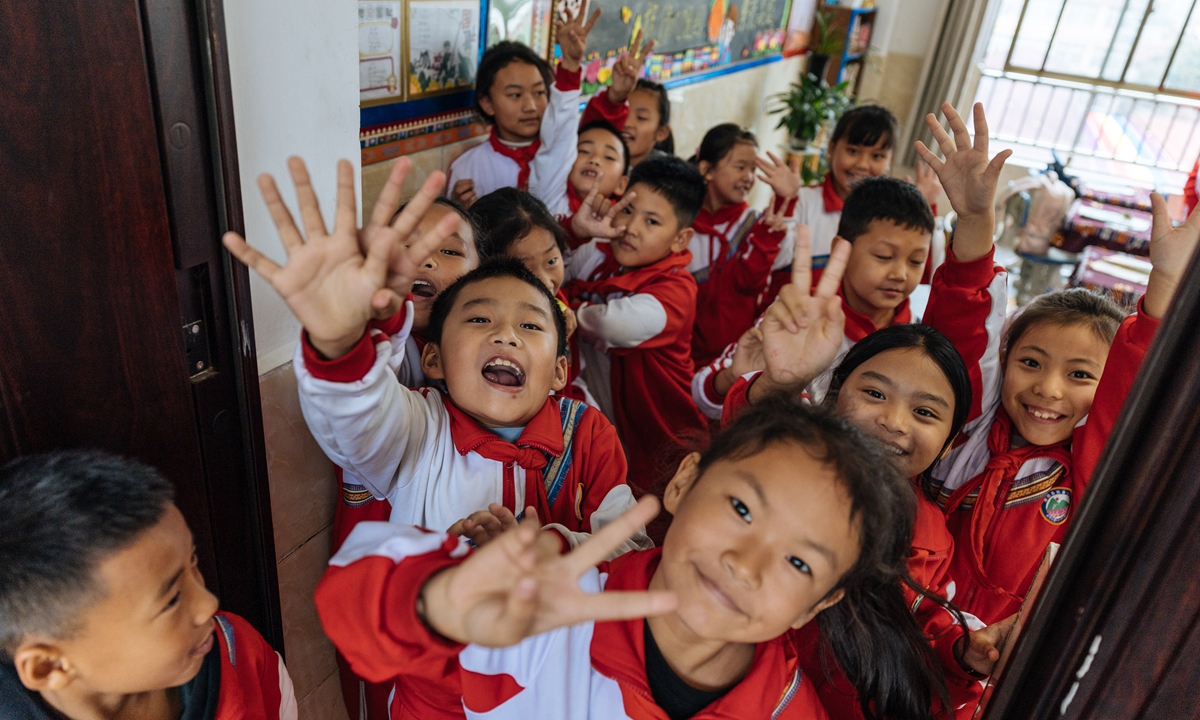
At first glance, Medog Complete Primary School in Nyingchi, Southwest China's Xizang Autonomous Region, could be a primary school anywhere in China.When the recess bell rings, children spill onto the playground. Behind them, multimedia screens still glow in the classrooms, while the art room and computer lab are readied for the next lessons.
Students answer questions in the national common language and study Tibetan-language and English. After class, they play football, draw or practice calligraphy. Only a few details reveal where they are: activities introducing them to Tibetan language, traditional dress and weaving.
Yet just over a decade ago, before the highway reached Medog, this ordinary rhythm of school life would have been difficult to imagine.
Before 2013, reaching Medog from outside still required crossing snow-covered mountains and trekking for several days through canyons and virgin forests. Quite often, schools scattered deep in the mountains could only provide education for one or two grades. To continue their studies, some children had to leave their hometowns and walk for days along mountain roads to schools elsewhere, while some could return home only once every few years.
This is the environment in which Kelsang Dekyi grew up and received her education. Today, she is vice principal of Medog Complete Primary School.
"Children today are very fortunate," she told the Global Times. "There is nothing lacking at the school."
Kelsang Dekyi is a member of the Monba ethnic group and also a CPC member. Education benefits provided by the country once helped her leave the mountains and complete her studies. After graduating from university, she chose to return to Medog, which had not yet been connected by roads at the time, to become a rural teacher.
From being supported to leave the mountains to returning home to support more children, Kelsang Dekyi's journey has spanned more than two decades of dramatic changes in Medog's education development. "All these changes come from the care and concern of the Party and the country, which has attached great importance to ethnic minority groups in our hometowns," she told the Global Times.
The road she traveled
When she was a child, while other children played outside, Kelsang Dekyi was kept at home by her mother to study.
Her mother was just an ordinary rural woman, but she was determined that her daughter must receive an education.
"She felt that life was too difficult for girls in Medog. She did not want me to suffer like she had, so she always made sure that I went to school," Kelsang Dekyi told the Global Times.
The first school she attended was a thatched-roof building. Whenever the roof leaked, teachers would take the children out to cut grass and lay it over the roof. The grass grew taller than the children. On the way back, it often tangled around their feet, and the sharp leaves would cut their fingers.
Textbooks were scarce, and teachers' abilities were limited. More than a dozen children repeatedly studied the same textbooks for first and second grade.
In 1989, Medog organized an examination for school-age children. Kelsang Dekyi was admitted to a primary school in Pai town, and later transferred to Nyingchi No.2 Primary School, where she began receiving fully free education.
When she left her hometown, her father accompanied her and several other children on their journey. On the first night, they slept beside a large rock at the foot of a snow mountain, with a bonfire burning nearby as owl calls echoed around them. On the second night, her father cut tree branches and banana leaves and built a temporary shelter beside the road.
While crossing the snow mountains, Kelsang Dekyi suffered from altitude sickness, with blood continuously flowing from her nose. After reaching a place with roads, her father handed the children over to a driver. Whenever they encountered landslides along the way, they got out of the vehicle and continued walking.
From then on, her destinations for education grew increasingly farther away. In 1994, she was admitted to a high school in Yueyang, Central China's Hunan Province. In 1998, she entered the Hebei Normal University for Nationalities in northern China.
During the seven years she studied away from home, she returned home only once, unable to see her mother before she passed away.
"It took a whole month to travel from Hebei to Medog," she recalled. "The summer vacation was only two months long, and I could stay at home for about 15 days before having to leave again."
During that brief return home, she found that changes in her hometown remained limited. Many children still struggled to continue their education, and leaving the mountains remained an opportunity available to only a few.
The idea of returning home, which had gradually taken shape during her years studying away from home, became even stronger.
When she graduated from university, Kelsang Dekyi originally had the opportunity to stay and work in Lhasa, capital of Xizang. Instead, she voluntarily applied to return to Bangxin township - the place she had once struggled so hard to leave.
Later, when talking about her identity as a CPC member, she explained the importance of "remaining true to her original aspiration" - to teach every child well.
As for why she chose to return to the mountains, she simply asked: "If I don't return, who else can we expect to go?"
Students cheer for the camera at Medog Complete Primary School in Nyingchi, Southwest China's Xizang Autonomous Region. Photo: Li Hao/GT
Education changes more than one life
When Kelsang Dekyi arrived at a primary school in Bangxin town in Medog, in 2001, the school had only two simple classrooms, and more than 30 children shared a single dormitory.
However, the most urgent task was often finding out which students had failed to show up that day. Sometimes, a child who was sitting in the classroom in the morning would suddenly run back home. Some children would even hide in the forest when they saw teachers coming to look for them, while their parents pretended not to know where they had gone.
"For a long time, there was never a day when all the students in a class were present," she later recalled.
Around 2003, a girl in her class with excellent academic performance suddenly stopped attending school. When Kelsang Dekyi arrived at the girl's home, the family was preparing a wedding for the girl, who had not yet graduated from primary school.
During her first visit, Kelsang Dekyi did not get to meet the girl and failed to persuade the family to let her continue her studies.
She returned the next day. Only then did the family reveal their real concern: They could not afford to continue paying for the girl's education. In their view, it would be better for her to return home early and help with farm work.
Kelsang Dekyi shared her own educational journey with the family and explained the education policies provided by the country for students from Xizang.
The girl eventually returned to the classroom. Later, she completed university studies, and returned to Xizang to become a teacher.
Persuading children to return to school did not mean the day's work was over. During every school holiday, teachers still had to escort boarding students back home.
Taking some students home required using a zip line spanning the Yarlung Zangbo River. Although Kelsang Dekyi was afraid of heights, she still sat in the rattan basket, held tightly onto the pulley and slid across the river to the opposite bank.
Such escorts continued for 12 years. According to China Women's News, she accompanied students home 66 times.
Later, as the boarding school system continued to improve, small village schools scattered in the mountains were gradually phased out. Children could receive education at centralized schools in towns, and searching for students from door to door gradually disappeared from teachers' daily work.
Kelsang Dekyi later came to Medog and became the vice principal of the local primary school.
The challenges before her changed. They were no longer about persuading children to attend school, but about what boarding students could learn after class, how border schools could attract professional teachers and how to make better use of students' time at school.
According to the Guangming Daily, during the 2022 national "two sessions," Kelsang Dekyi, then a deputy to the National People's Congress, proposed that Medog Complete Primary School should expand student clubs and extracurricular activities, as many boarders remained on campus after classes.
She said the implementation of the education policies in boarding schools should consider local conditions, strengthen professional teaching resources and after-school services, rather than simply copy approaches from other regions.
Her work as an NPC deputy also expanded to vocational skills training and employment. Kelsang Dekyi submitted a proposal on improving the competitiveness of local migrant workers in the job market, suggesting more targeted skills training based on actual employment needs.
After the proposal was handled, the Xizang regional government said that starting from 2025, skills training related to industrial development would account for no less than 50 percent of all training programs for farmers and herders, with 12,000 additional skilled workers among farmers and herders trained every year.
During the 2026 Xizang regional "two sessions," Kelsang Dekyi spoke about the implementation of her proposal, saying: "The people chose me as their representative, and I serve the people as their representative." She said she would continue visiting communities at the grassroots level and bring people's specific concerns to the meetings.
Students jog during a PE class at Medog Complete Primary School. Photo: Li Hao/GT
The relay of supportDuring interviews at Medog Complete Primary School, Global Times reporters also met some young teachers from the graduate volunteer teaching group of Shanxi Normal University.
Here, PE teacher Liu Silai has really bonded with the students; when he walks around the campus, he is often stopped by the children to say hello, or even for a friendly chat.
"Their individual skills are good, but they still need to improve their tactical awareness," he told the Global Times during his soccer class.
He introduced running, physical contact and teamwork into lessons, while the school provided teachers, equipment and funding for training and competitions.
These young teachers arrive in Medog in successive one-year cohorts. Since 2017, Shanxi Normal University has sent students to Medog Complete Primary School every year. They teach English, music, PE and art, while also assisting with moral education, campus safety and day-to-day administration.
Such continuity represents one aspect of the Party and the country's support for educational development in border areas and relatively less-developed regions.
In 1994, the central authorities made the major decision to provide nationwide paired-up assistance to Xizang. Since then, different assistance programs have continuously brought teachers, funding and educational resources to Medog.
In 2025, Xizang's gross preschool enrollment rate reached 92.83 percent, while the retention rate for nine-year compulsory education stood at 98.74 percent. Gross enrollment rates for senior secondary and higher education reached 92.04 percent and 60.02 percent, respectively, according to the Xizang regional government.
"All these changes have been made possible because of the care and support of the CPC and the country," Kelsang Dekyi said.
RELATED ARTICLES