What makes China's Jingdezhen Handicraft Porcelain Industry Sites a landmark UNESCO World Heritage entry
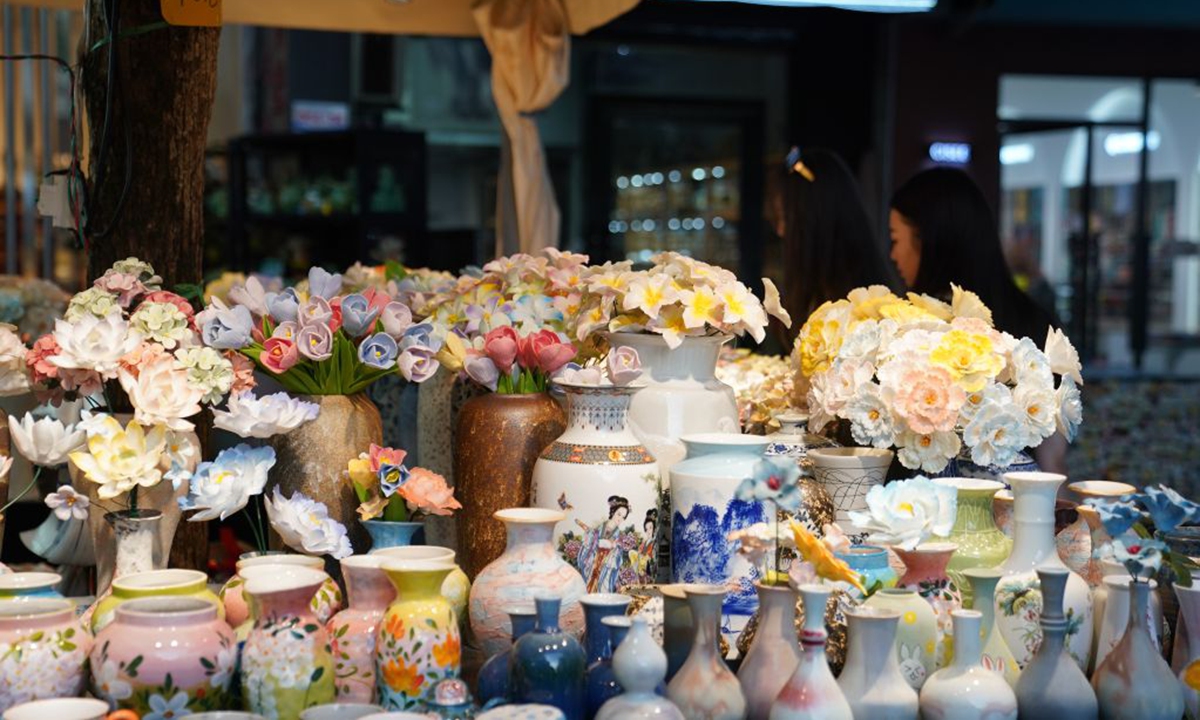
Tourists select ceramic products in Jingdezhen, east China's Jiangxi Province, July 16, 2026. (Xinhua/Zhou Mi)
China's serial heritage nomination Jingdezhen Handicraft Porcelain Industry Sites secured inscription on the UNESCO World Heritage List at the 48th World Heritage Committee session in Busan on Saturday, marking the country's first complete handicraft porcelain production system to earn global cultural heritage recognition.
WHAT DO THE HERITAGE SITES COVER?
The serial property consists of five geographically scattered but functionally linked component parts spread across Jingdezhen City, east China's Jiangxi Province, covering a total heritage zone of 1,979 hectares with a 5,545.7-hectare protective buffer zone. Each segment fulfills an indispensable role in the ancient porcelain manufacturing ecosystem.
The Town Area Porcelain Production Center sits in downtown Jingdezhen, preserving tangible relics of a large-scale, intensive porcelain manufacturing system that took shape in the Song (960-1279) and Yuan (1271-1368) dynasties and continued through the Ming (1368-1644) and Qing (1644-1911) dynasties.
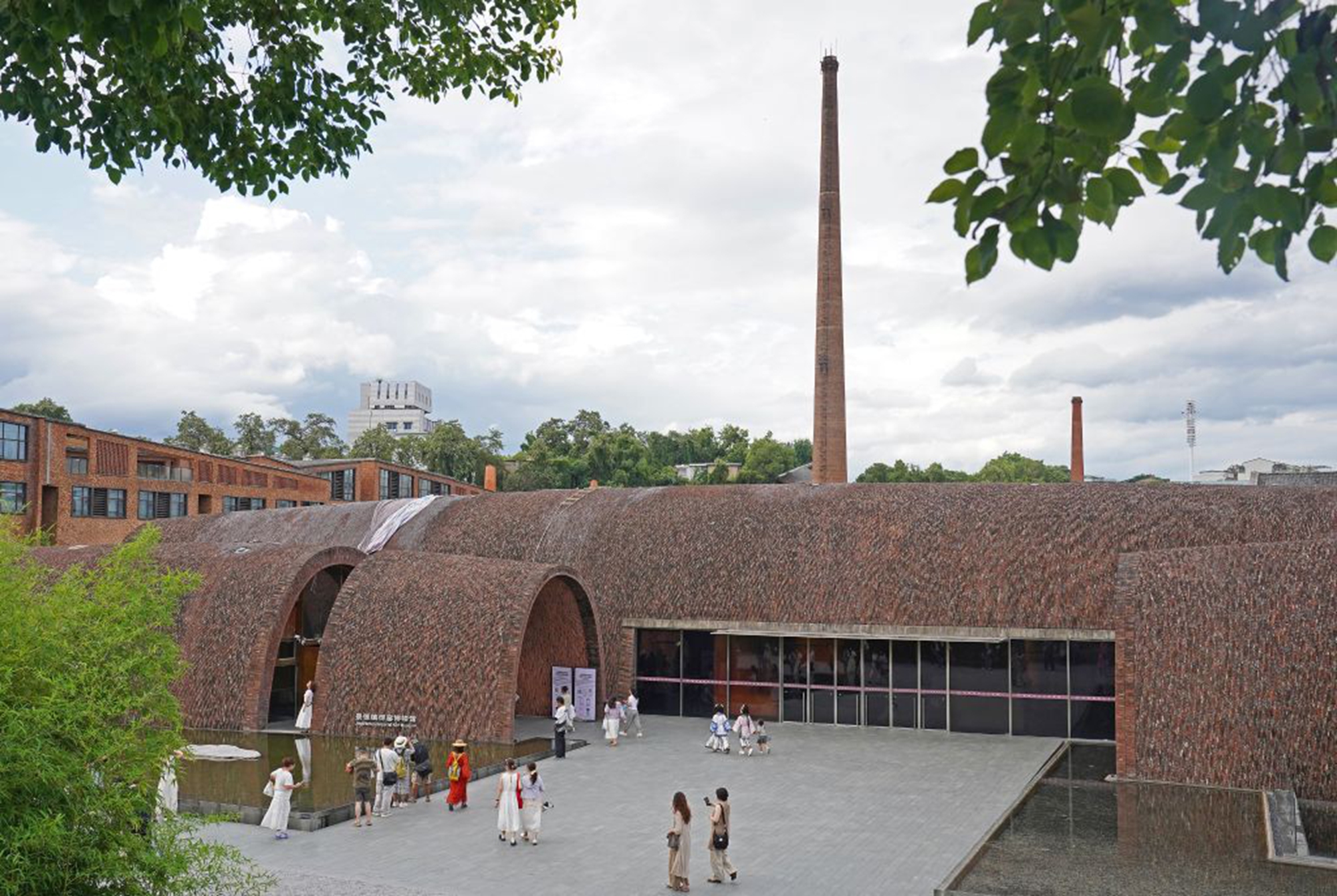
Tourists visit the Jingdezhen Imperial Kiln Institute in Jingdezhen, east China's Jiangxi Province, July 7, 2026. (Xinhua/Wan Xiang)
The Hutian Ancient Kiln Site served as the core kiln complex for Jingdezhen's handmade porcelain industry during the Song and Yuan periods.
The Gaoling Porcelain Clay Mining Site was the most renowned source of kaolin raw materials in the Ming and Qing eras. The Changling Porcelain Stone Mining Site constituted a key production base for porcelain stone and glaze stone over the Ming and Qing dynasties.
The Jiaotan Firewood Production Area stands as a typical intact example of the entire firewood logging and waterborne transport system that supplied kilns throughout the Ming and Qing periods.
It is worth noting that the handicraft porcelain industry heritage covers not only tangible relics such as ancient kiln sites, but also the integrated systems of porcelain-making techniques, industrial organization and social order embodied collectively by the serial heritage components.
WHERE DO THE SITES' OUTSTANDING UNIVERSAL VALUES COME FROM?
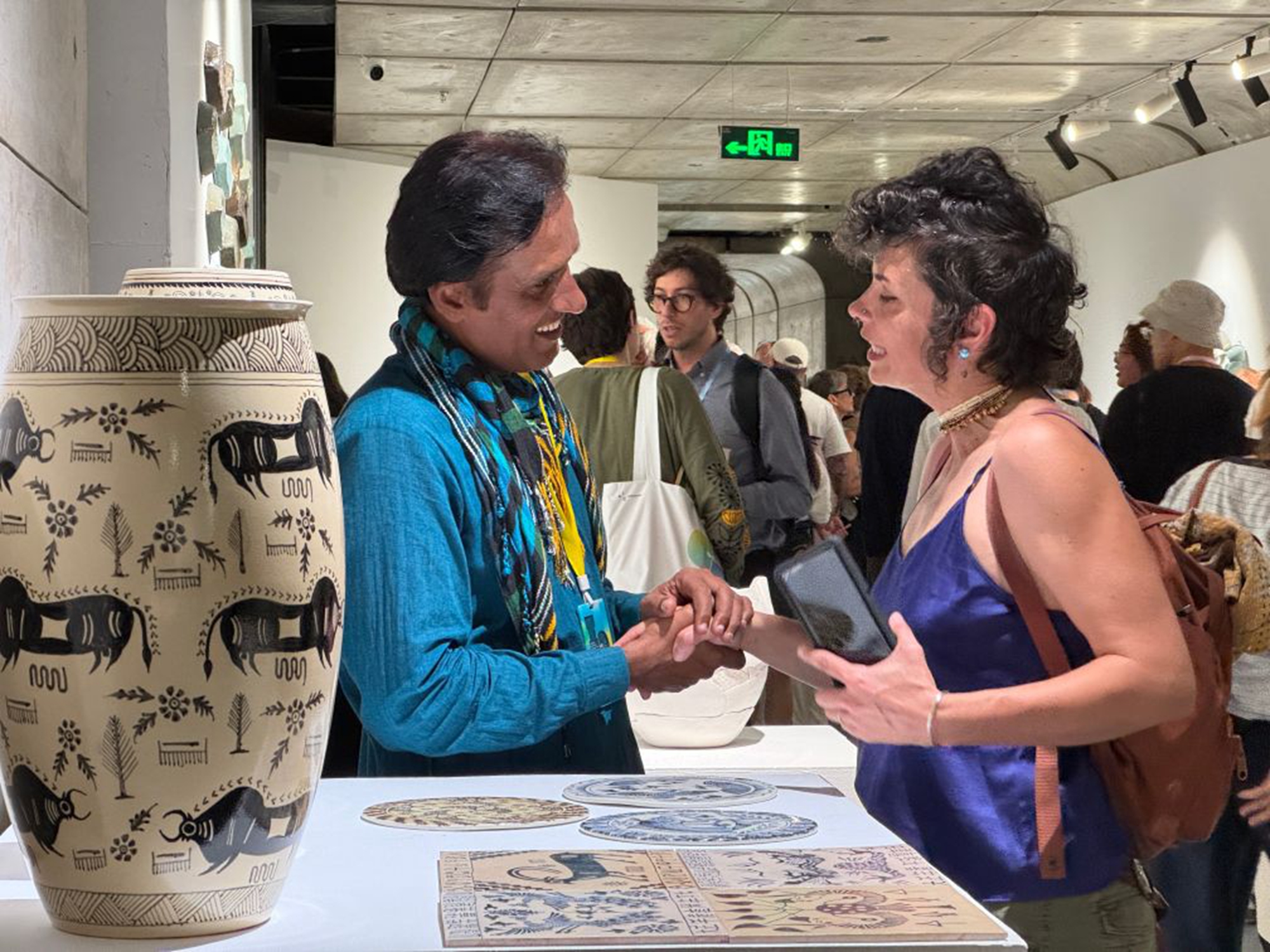
Foreign artists are seen during the 2026 Congress of the International Academy of Ceramics in Jingdezhen, east China's Jiangxi Province. (Photo by Liu Bin/Xinhua)
Jingdezhen is an exceptional testimony of the development of the handicraft porcelain industry in China from the 10th to 19th centuries and reflects the fusion of porcelain-making techniques, culture and art from China and other parts of the world.
The technologies, industrial production arrangements and artistic styles that emerged at Jingdezhen have had wide global influence, demonstrating an interchange of human values in porcelain production, particularly through the "binary formula" technology and the blue-and-white and famille-rose porcelain.
Meanwhile, Jingdezhen was the world porcelain production center from the 16th to 18th centuries, and presents the spatial and social organization of production during this period, including the extraction and transportation of natural resources and the production and sales of the porcelain.
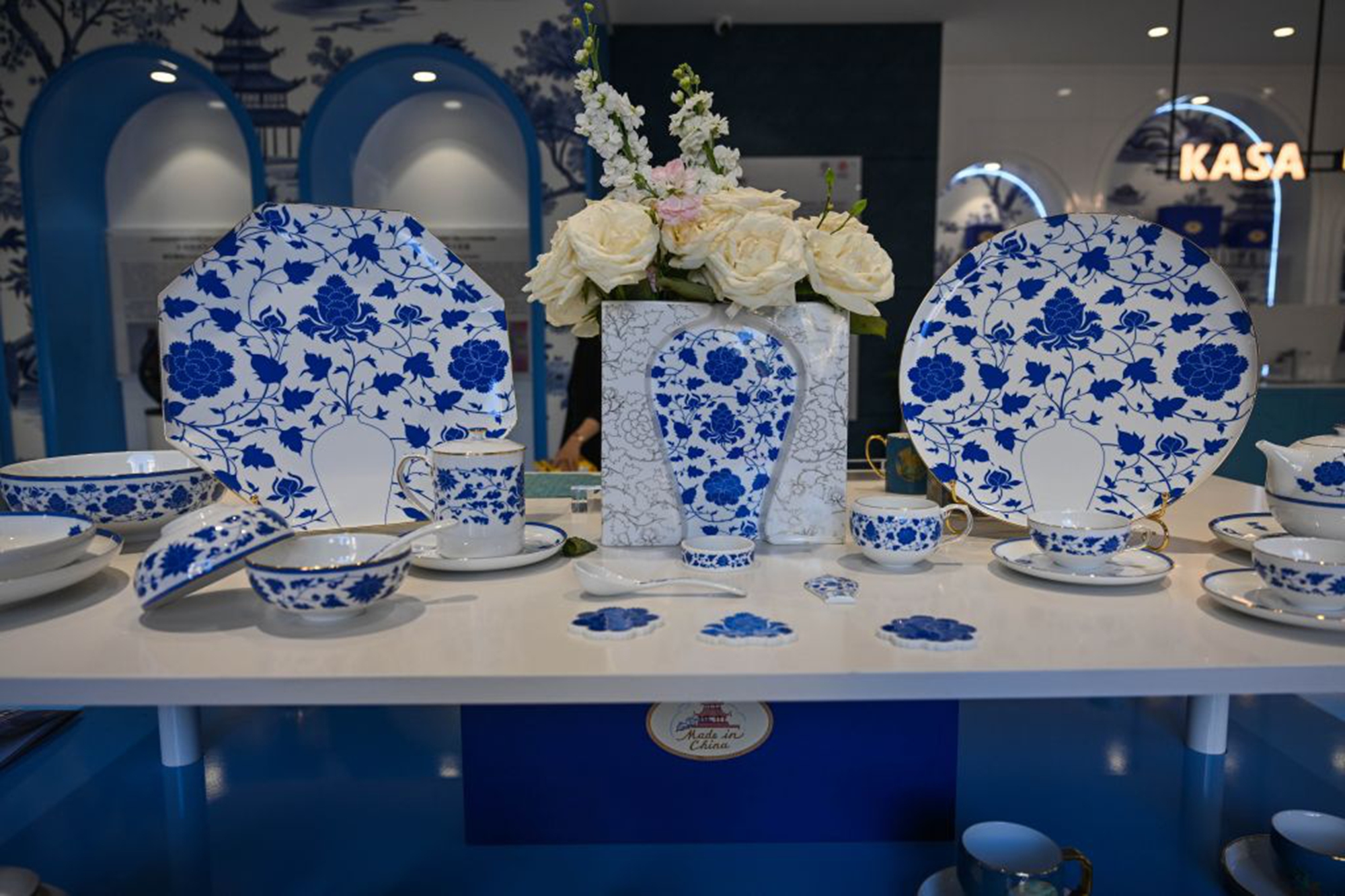
Chinese porcelain wares are seen at the official Jingdezhen porcelain flagship store in Istanbul, Türkiye, May 31, 2025. (Xinhua/Liu Lei)
The porcelain hub is associated with changes in Chinese porcelain techniques and art, and the cultural customs and aesthetic tastes of China, with the blue-and-white porcelain being an important symbol of Oriental art and a vehicle of Chinese culture with direct influences on European "chinoiserie" that was popular from the 17th to 18th centuries.
Globally, and within China and the East Asia region, Jingdezhen stands out because of the scale and sustained period of production of porcelain of high commercial and symbolic value, according to the International Council on Monuments and Sites, one of the advisory bodies for the World Heritage Committee.
