China is not root cause of EU's economic and trade problems, but partner that help solve them: MOFCOM official
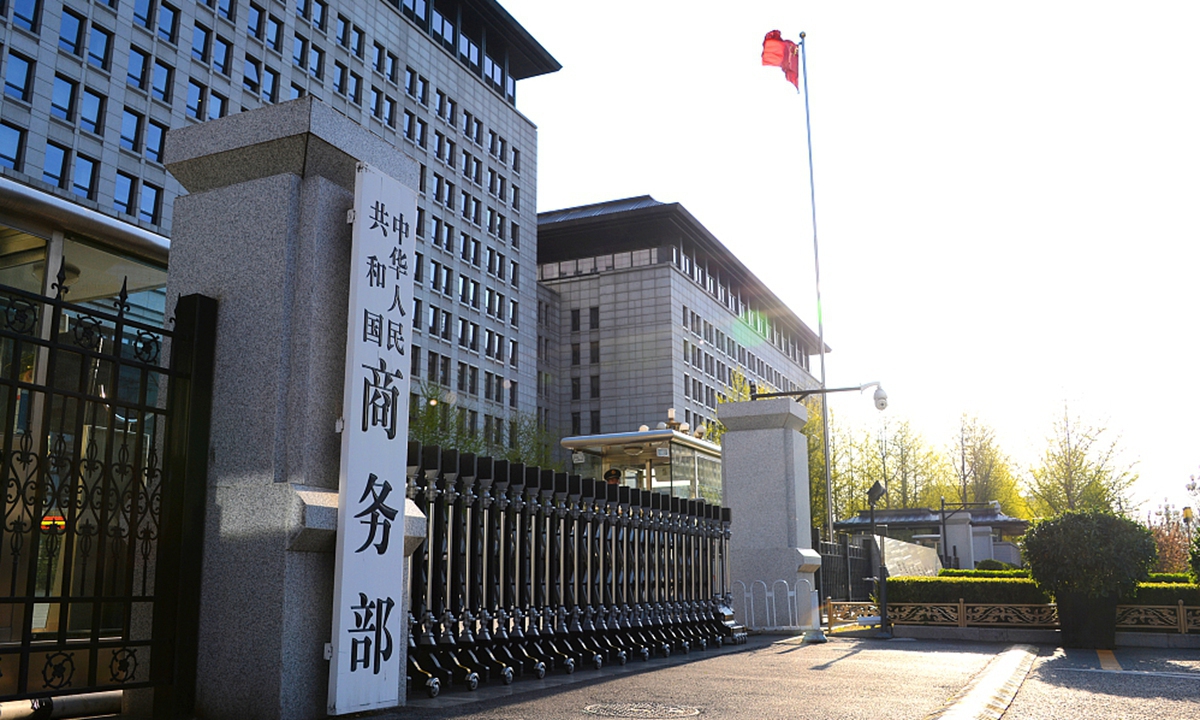
The Ministry of Commerce Photo: VCG
"China is not the root cause of Europe's economic and trade problems, but a partner that can help solve them. Protectionism leads nowhere; win-win cooperation is the right path," Lin Weilong, an official of the Ministry of Commerce (MOFCOM), said on Tuesday at a press conference briefing the newly published China's position paper on so-called excess capacity issue.
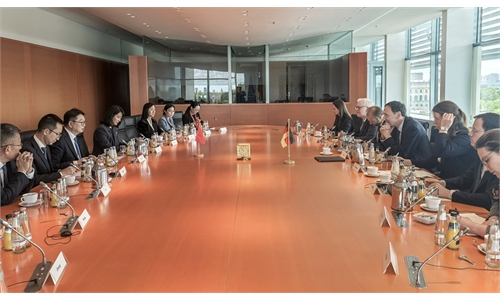
Lin pointed out that at the end of last month, Commerce Minister Wang Wentao and European Commissioner for Trade and Economic Security and Interinstitutional Relations and Transparency Maros Šefčovič co-chaired the first meeting of the China-EU Trade and Investment Consultation Mechanism, reaching consensus on positioning each other as "stable and balanced key trade partners."
"China is ready to strengthen dialogue and consultation with the EU through this mechanism, properly manage differences, promote practical cooperation, and advance balanced and upward development of China-EU trade, injecting more certainty and positive momentum into global economic growth," said Lin.
The remarks were made in response to a question claiming that recently, some leaders from EU countries and institutions have expressed concerns that China's currency is undervalued, giving Chinese exporters an unfair advantage. The question sought MOFCOM's comment and its prospects for China-EU trade in the second half of the year.
Lin noted that "we have noted the relevant comments. In recent years, under the strategic guidance of leaders from both sides, China-EU economic and trade relations have maintained sound overall development. In the first half of this year, bilateral goods trade reached $447.88 billion, up 14.2 percent year-on-year. The two sides have enormous cooperation potential in services trade, scientific and technological innovation, and the green economy. This stems from the deep integration and complementarity of our industrial and supply chains, and aligns with the global trend of digital and green transformation."
At the same time, the EU has recently introduced multiple trade restriction measures against China and hyped up the so-called yuan exchange rate issue. These claims lack factual basis and are not conducive to the stable development of China-EU economic and trade relations, Lin noted.
"China adheres to the principle that the market plays a decisive role in exchange rate formation and keeps the yuan exchange rate basically stable at a reasonable and balanced level. As a responsible major country, China will not pursue competitive advantages through currency devaluation. Chinese manufacturing is internationally competitive and has no need to rely on an undervalued exchange rate to boost exports," said the official.
Global Times
RELATED ARTICLES