China’s AI rules hold developers accountable as ‘undressing’ tool misuse sparks alarm
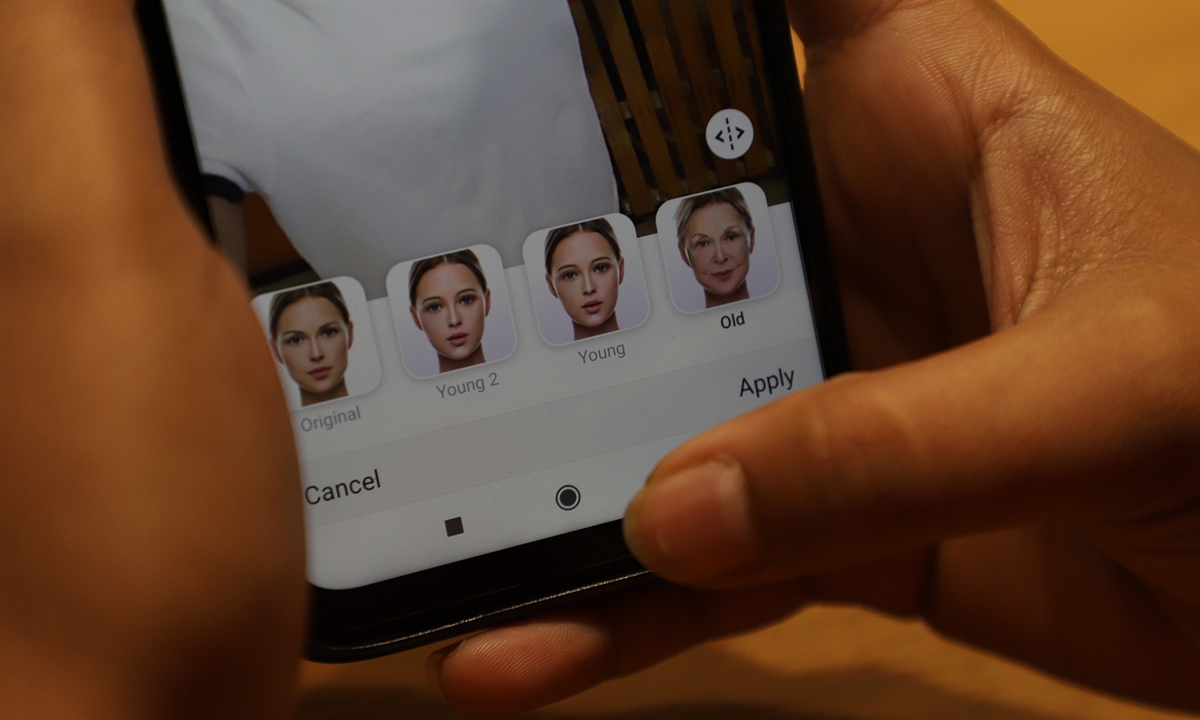
A user tries to edit a photo using an AI face-swapping application on a smartphone. Photo: VCG
Ordinary personal photos, from casual selfies and everyday snapshots to group pictures with colleagues, can now be manipulated by AI tools into fake nude images, with some services charging as little as 1.5 yuan ($0.22) per image, as the rapid spread of "AI undressing" technology has created a complete underground industry chain, ranging from software sales and image processing services to further criminal activities, CCTV News reported.China has already introduced an interim regulation on the management of generative AI services, which sets clear responsibilities for providers, developers, and users of AI technologies. Experts say developers must establish ethical safeguards at the source and prevent their technologies from being abused.
A recent case disclosed by the Haidian District People's Procuratorate in Beijing has laid bare how easily such tools can be commercialized. In the case, a suspect surnamed Zhang operated multiple online groups on overseas platforms, where he sold "one-click AI undressing" software along with tutorials, sample materials and prompt guides. His first group attracted more than 27,000 members, while several thousand people joined his so-called premium groups.
The prices of the software increased from more than 60 yuan in 2023 to 168 yuan in 2025, yet thousands of users still paid for access. Zhang was not the original developer of the technology. Instead, he modified existing AI systems, trained models with specific keywords, packaged the finished tools, and sold them online. From August 2023 to June 2025, he earned more than 100,000 yuan in illegal profits.
In May, the Beijing Haidian District People's Court sentenced Zhang to one year and six months in prison and fined him 20,000 yuan for illegally using information networks.
Zhang Tao, a prosecutor from the Haidian District People's Procuratorate, explained that these tools do not actually "remove clothes." Instead, they rely on AI-generated image manipulation technology that reconstructs and redraws parts of a person's body to create fake nude images. Although the pictures appear realistic, they are fabricated digital content.
The availability of such tools has also encouraged a wider black market. Some individuals advertise AI-generated nude image services online, processing photos sent by customers for a small fee. In one case, a technology worker surnamed Bai created nearly 7,000 fake nude images involving students, teachers, and female colleagues, selling them to 351 people for profit. He was later sentenced to three years in prison.
These AI-generated fake images have also been linked to harassment, extortion, and reputational damage. In one widely reported incident, a woman's ordinary subway photo was altered into a fake nude image and spread online, causing serious personal harm. In another case, a criminal group used AI-generated fake intimate images to blackmail bank employees by mailing threatening letters containing the fabricated images.
Authorities warn that while technology itself is neutral, its misuse can turn innovative tools into instruments of crime. Achieving "technology for good" requires both developers and users to respect ethical and legal boundaries, CCTV News reported.
Ordinary users must understand and comply with the law, and cannot use "technological neutrality" as an excuse for illegal activities, Li noted.
Global Times
RELATED ARTICLES