Shanghai Port's single-day container throughput hits record high of 203,881 TEUs despite typhoon impact
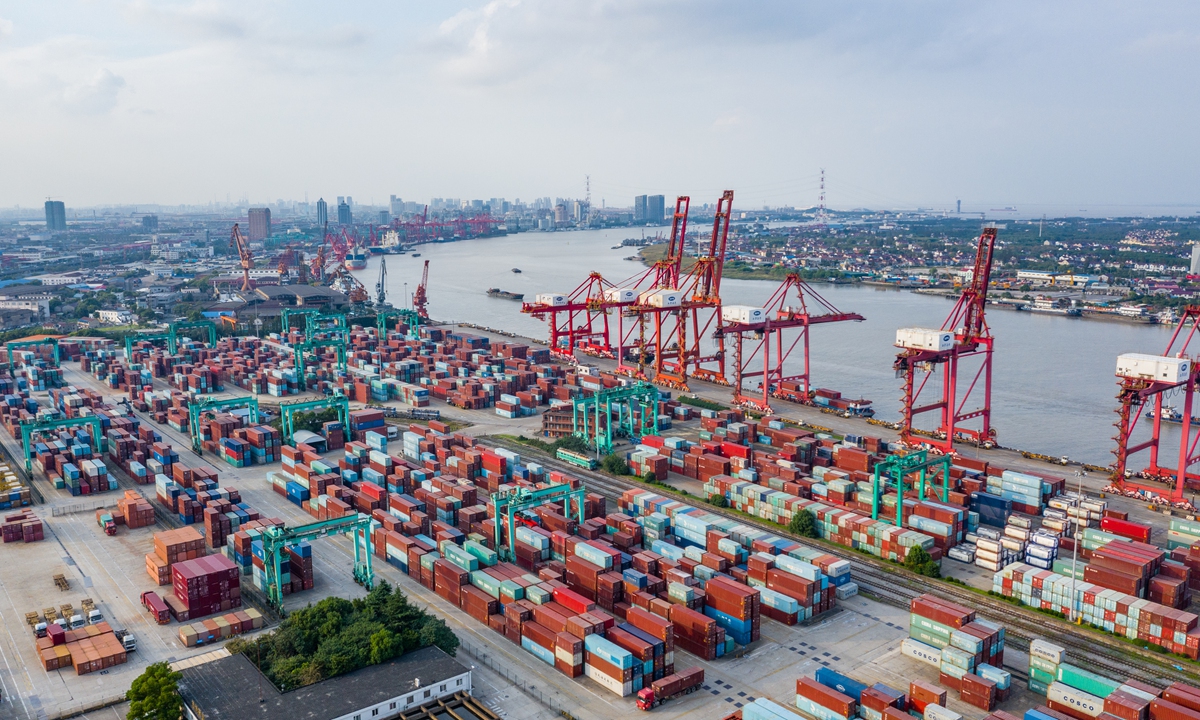
Aerial view of Shanghai Port in Baoshan district, Shanghai Photo: VCG
Shanghai Port's single-day container throughput surpassed 200,000 20-foot equivalent units (TEUs) on Saturday, reaching a record high of 203,881 TEUs, according to the Shanghai International Port (Group) on Sunday.
The record shows the strong resilience and coordination capabilities of the Chinese major port in dealing with unexpected disruptions such as typhoons, an industry analyst said.
In mid-July, Typhoon Bavi disrupted vessel operations at Shanghai Port for about four days. A large number of trunk and feeder vessels that had been waiting offshore for shelter arrived at the port at the same time, leading to tighter berth availability and a temporary buildup of container volumes, posing challenges for terminal operations, vessel clearance and yard turnover, according to the official WeChat account of the Shanghai port group.
In response, Shanghai International Port (Group) coordinated resources and adopted proactive measures, enabling the port to quickly clear the backlog of vessels and restore terminal capacity.
During the recovery phase, Shanghai Port's daily container throughput remained stable at 172,000 TEUs, with operational efficiency continuing to improve before the port set a new single-day throughput record on Saturday.
The record demonstrates the strong operational resilience and resource allocation capabilities of China's ports in the face of unexpected disruptions, Zhao Nan, an expert at the Shanghai International Shipping Research Center, told the Global Times on Sunday.
Despite Typhoon Bavi causing a surge in vessel arrivals and temporary cargo backlogs, Shanghai Port quickly restored operations and improved handling efficiency, reflecting its strong capabilities in intelligent management, coordinated scheduling and infrastructure support, said Zhao.
In 2025, Shanghai Port's container throughput exceeded 55.06 million TEUs, reaching a record high and retaining its position as the world's busiest container port for the 16th consecutive year, the Xinhua News Agency reported.
According to the recently released Shanghai 15th Five-Year Plan (2026-30) for Accelerating the Development of the International Shipping Center, Shanghai Port will play a leading role among ports in the Yangtze River Delta port cluster, with its annual container throughput targeted to exceed 58 million TEUs by 2030.
As the world's largest container port, Shanghai Port's continued throughput growth reflects the vitality of foreign trade in the Yangtze River Delta region and the resilience of regional industrial and supply chains, Zhao said.
The industry analyst said that with further improvements in international transshipment capacity and continued progress in digitalization and green development, Shanghai Port is expected to play a more important role in supporting China's domestic and international economic circulation and strengthening its position in the global shipping network.
RELATED ARTICLES