Official documentary reveals PLA Air Force intelligent strike-planning system; experts say it sharpens coordinated combat, shortens strike cycle
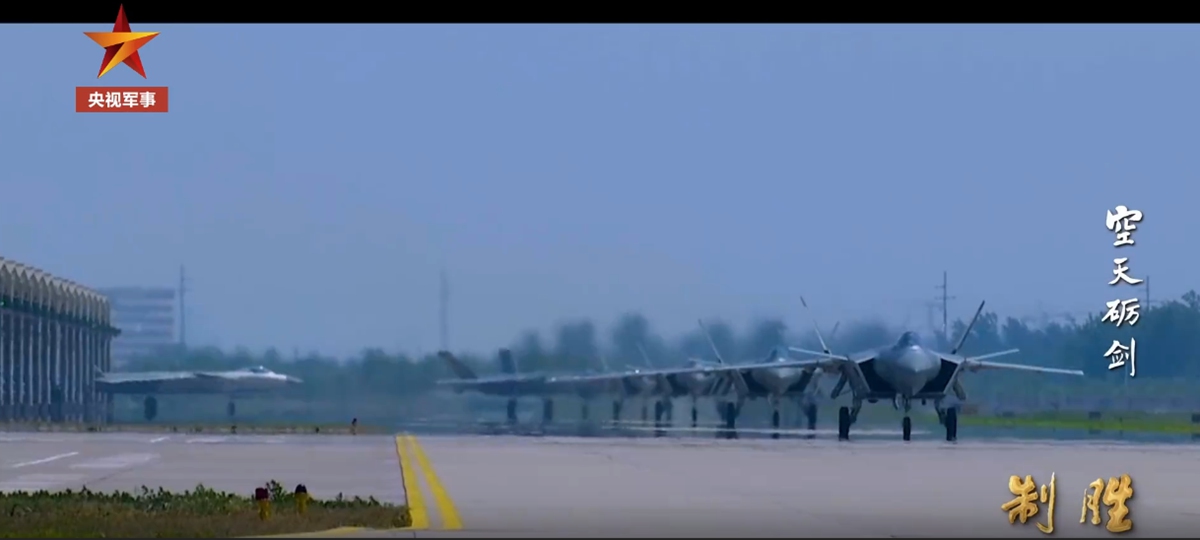
The screenshot depicts warplanes integrated with the PLA Air Force's intelligent strike-planning system. Photo: CCTV News
China's state broadcaster has aired footage of the People's Liberation Army (PLA) Air Force's intelligent strike-planning system, showing more than 100 tactical units conducting coordinated strikes with split-second precision after it passed its final live-fire test. Chinese military experts said the technology reflects the PLA's accelerating shift from platform-centered operations toward AI-enabled, system-of-systems warfare.The system was featured on Sunday in Zhisheng (Victory) - an ongoing documentary series highlighting the PLA's latest developments. According to CCTV News, a team led by Deng Jianping at a PLA Air Force base developed the system to address the growing complexity of large-scale, multi-domain exercises.
As large formations become increasingly common, commanders may need to select targets from hundreds of possibilities, coordinate dozens of formations, allocate firepower and arrange successive waves of attack — calculations that conventional planning methods cannot perform quickly enough, the report said.
After sustained research and development, the system underwent its final live-fire test, during which the missiles and bombs successfully struck their designated targets. It was later used in a large-scale Air Force exercise, enabling more than 100 tactical units to carry out precisely synchronized strikes. The system has now been put into use in multiple Air Force missions, according to CCTV.
The intelligent strike-planning system reflects the PLA's operational need to speed up its transition toward system-based, intelligent and unmanned warfare, Zhang Junshe, a Chinese military affairs expert, told the Global Times on Sunday.
By deeply integrating AI with battlefield logic, the system can turn advanced individual weapons into coordinated combat power, marking a shift from calculations performed primarily by personnel to AI-assisted computation and planning, Zhang said.
AI can assist decision-making by calculating battlefield developments in real time, assigning the most suitable targets to different weapons and determining when and in what order munitions should be used, Zhang noted. This can increase strike precision, maximize the effectiveness of available weapons and reduce unnecessary resource consumption.
The system can also combine real-time situational awareness with intelligent force allocation, shortening the process from target detection and decision-making to strike execution, Zhang said. Compressing this sensor-to-strike cycle could translate a technological advantage into an operational advantage at the campaign level, he added.
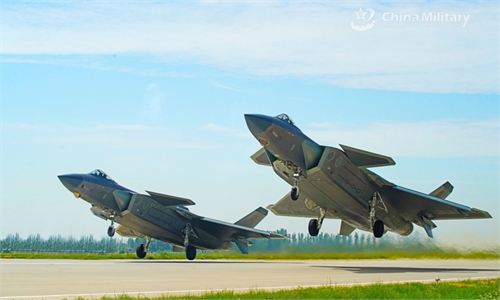
The CCTV footage showed several major types of aircraft and weapons currently in PLA Air Force service, including J-20 stealth fighter jets, J-16 and J-10C fighter jets, H-6K bombers and multiple missile systems.
"These hardware platforms can realize their full potential in coordinated operations only when they are brought together under an intelligent planning system, rather than operating independently," Zhang said.
The program also features an airborne early-warning aircraft independently directing and controlling a system-of-systems engagement. In the exercise, the aircraft operated amid a complicated low-altitude environment involving both real and decoy targets, as well as intermittent, intense electromagnetic interference.
The early-warning aircraft identified the enemy's intentions and guided friendly aircraft in an attack on a command node, according to the footage. The exercise demonstrated the central role of airborne early-warning platforms in collecting, processing and distributing battlefield information.
Intelligent Air Force operations depend on the rapid acquisition and processing of information, and China's airborne early-warning system serves as a key command and information hub in this process, Song Zhongping, another Chinese military affairs expert, told the Global Times on Sunday.
As the PLA advances toward its centenary goals in 2027, the integration of mechanization, informatization and intelligentization will become increasingly important, Song said. The capabilities shown in the program suggest that an intelligent command system could not only provide accurate early warning and coordinate strikes, but also help commanders make faster decisions in a high-intensity conflict, he noted.
The Zhisheng documentary series, released around China's Army Day, which falls on August 1, has featured equipment from the PLA Army, Navy and Air Force since Thursday. Previously aired footage has included Type 191 long-range rocket artillery, the Type 076 amphibious assault ship, new reconnaissance-strike drones and robotic "wolves." The series is continuing to present recent developments across the PLA.
RELATED ARTICLES