ARTS / CULTURE & LEISURE
‘Wandering Earth 3’ script keeps being revised amid China’s rapid tech progress: director
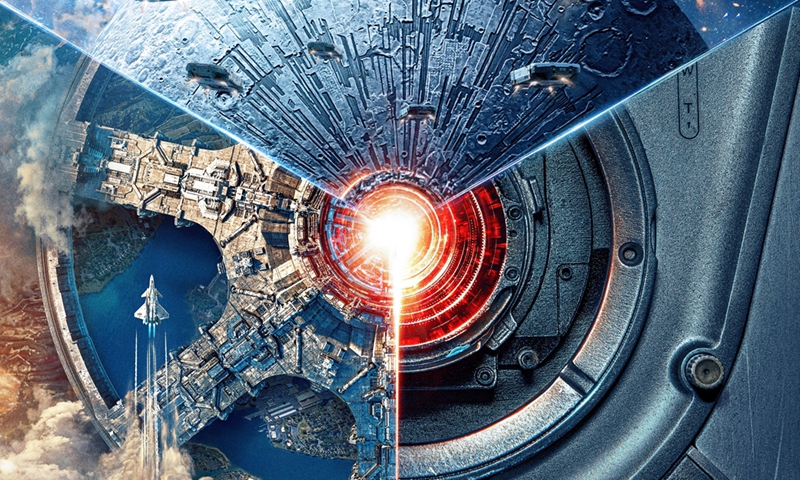
Promotional material for The Wandering Earth II Photo: Courtesy of Maoyan
Chinese director Guo Fan recently revealed in an interview with CCTV News that the script for the third installment of The Wandering Earth trilogy is still being revised despite two and a half years of polishing since "China's technological development has been advancing too rapidly.""We have a kind of desperate pride because our technology is developing so fast," Guo wrote on Sina Weibo, a Chinese social media platform similar to X, describing the challenge of keeping the film's sci-fi imagination ahead of today's rapidly advancing reality.
Adapted from The Wandering Earth by Hugo Award-winning writer Liu Cixin, the first film of the series debuted in 2019, earning 4.687 billion yuan ($694 million) at the box office and marking a milestone for Chinese sci-fi cinema. Its sequel, released in 2023, generated 4.043 billion yuan in ticket sales.
"People have been waiting so long for the last one in The Wandering Earth trilogy. The trilogy has become China's major sci-fi universe franchise. It's not just about record-breaking box-office numbers, it has won the hearts of moviegoers," Sun Jiashan, an associate researcher at the Central Academy of Culture and Tourism Administration, told the Global Times.
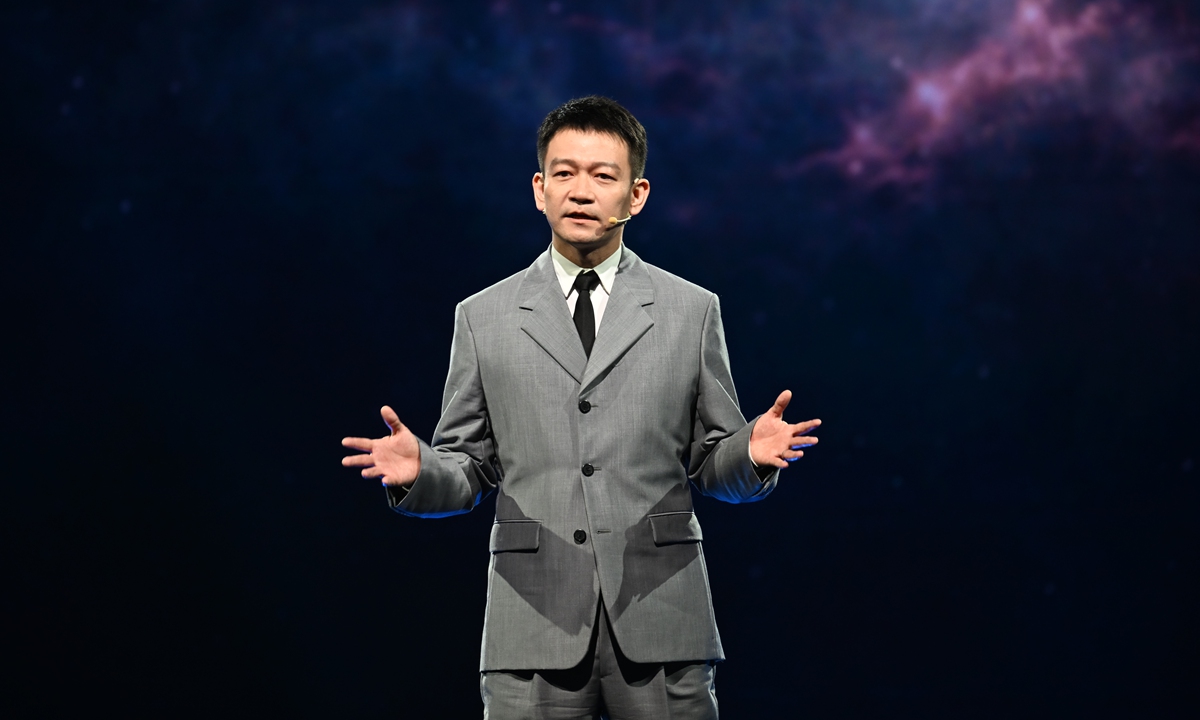
Chinese director Guo Fan speaks at the WE Summit in Chengdu, Southwest China's Sichuan Province on November 3, 2024. Photo: VCG
Yet the challenge facing The Wandering Earth 3 is no longer simply how to create a more imaginative future, but how to keep pace with the rapidly changing present.In the previous films, futuristic concepts such as space elevators and planetary engines amazed audiences with their bold imagination. Now, China's technological progress has brought some of these once-fictional ideas closer to reality, forcing the production team to continuously update and refine the script, according to CCTV News.
In July, China completed the world's first sea-based net recovery test of a space launch vehicle, the breakthrough was a major step forward in China's reusable rocket technology.
According to China's Ministry of National Defense, after the rocket lifted off, its first-stage booster separated from the second stage after completing accelerated flight and then began its return journey. Within about six minutes from separation to recovery, the booster completed a series of extreme maneuvers, including attitude adjustment and aerodynamic deceleration, a process described by experts as an "aerial gymnastics routine."
Rocket recovery is far from the only futuristic technology once imagined in the film that is now on the way to becoming reality.
In The Wandering Earth, planetary engines generate energy through nuclear fusion by "burning stones" to push Earth away from a dying sun. Sharing the same basic energy-generation principle as the sun, nuclear fusion is often called an "artificial sun."
In June, the "artificial sun" project at the Hefei Institutes of Physical Science, Chinese Academy of Sciences, achieved new progress, as the superconducting magnets for two domestically developed fusion devices completed technical assessments and full-operation performance tests, according to CCTV News.
Meanwhile, China is also advancing technology related to planetary defense. Wu Weiren, chief designer of China's lunar exploration program, said that the country is planning a kinetic impact demonstration mission targeting an asteroid, with the aim of verifying the feasibility of asteroid defense methods and help prevent potential asteroid impacts on Earth for decades or even up to a century.
"In the past, we were responsible for imagining, and you were responsible for making it happen. Now we are still thinking about which direction to imagine, and then before we finish thinking, it has already been realized," Guo wrote on Weibo last year.
RELATED ARTICLES