Hyrox, rock climbing gain momentum, yet growing rehabilitation challenge lies behind
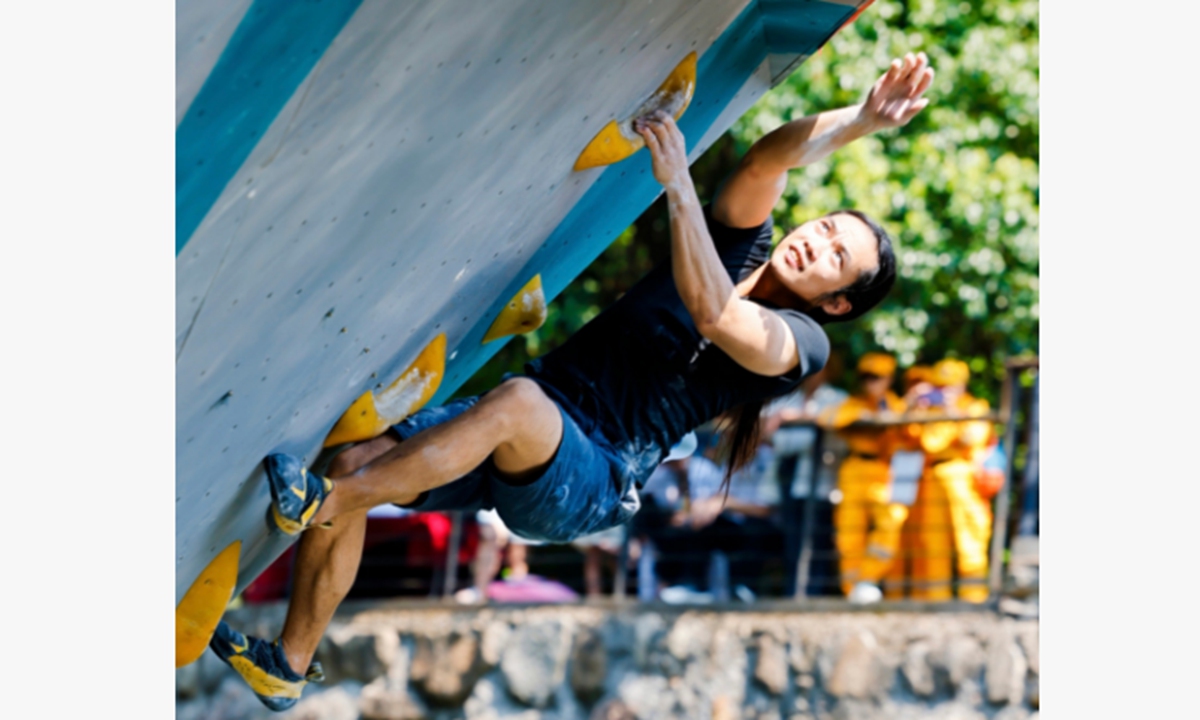
A climbing enthusiast competes in an event in Hangzhou, East China's Zhejiang Province on August 11, 2024. Photo: VCG
A Hyrox indoor fitness competition recently held in Southwest China's Sichuan Province became a social media sensation, with clips showing sweat-soaked, exhausted but determined participants crossing the finish line quickly spreading online. The event also put into spotlight a sport which some netizens jokingly describe as "1 kilometer is merely a comma."Dubbed the "marathon of the fitness world," Hyrox is an indoor fitness race combining 8 kilometers of running with 8 functional workout stations - SkiErg, sled push, sled pull, burpee broad jumps, row, farmer's carry, sandbag lunges and wall balls. Unlike some professional competitions, it has relatively low entry barriers.
In recent years, young people's approaches to exercise have become increasingly diverse. From outdoor climbing and marathons to emerging hybrid fitness competitions such as Hyrox, sports have evolved from simple physical activities into lifestyle choices and social identities for many.
Yet behind the wave of social media check-ins, race photos and inspirational videos lies another reality: the growing risk of sports-related injuries.
The abundance of online content showcasing successful finishes can sometimes obscure the physical demands of these events, creating the impression among some fitness enthusiasts that regular gym workouts and casual running are enough preparation.
'Extreme' sports for ordinary people
Although activities such as Hyrox appear accessible to the public, the physical pressure they place on participants can be far greater than expected.
"Videos circulating online looked really cool. Several of my fitness buddies had signed up, and we decided to join mainly to experience the atmosphere. We thought we would register first and figure out the rest later," Oliver, who recently participated in a Hyrox competition, told the Global Times.
Oliver, who has maintained strength training and running routines for two years, said he was initially attracted by the energetic images and intense competition scenes shared on short-video platforms.
"The experience was exciting, but during some intervals between stations, my average heart rate often climbed to around 160 bpm, which really made me worry about the risks," he said.
"I usually train at the gym. When I run, I focus on running; when I lift weights, I take enough rest between sets. I rarely practice switching directly from running into heavy lifting under fatigue," he added.
Oliver's experience reflects that of many other participants.
Beyond Hyrox, climbing, marathons and other emerging sports have also gained huge popularity, with many people who previously only participated in casual workouts or recreational running now becoming part of these new sports communities — often inspired by what they see on social media.
On lifestyle platform Xiaohongshu, or RedNote, the Hyrox hashtag has attracted more than 1.5 million posts and 290 million views, while content under the rock climbing hashtag has generated an even higher 2.05 billion views.
However, the rapid rise of these activities has also brought safety concerns, including cases of participants being diagnosed with rhabdomyolysis after Hyrox events, climbing accidents resulting in fractures, and marathon events being suspended due to safety issues.
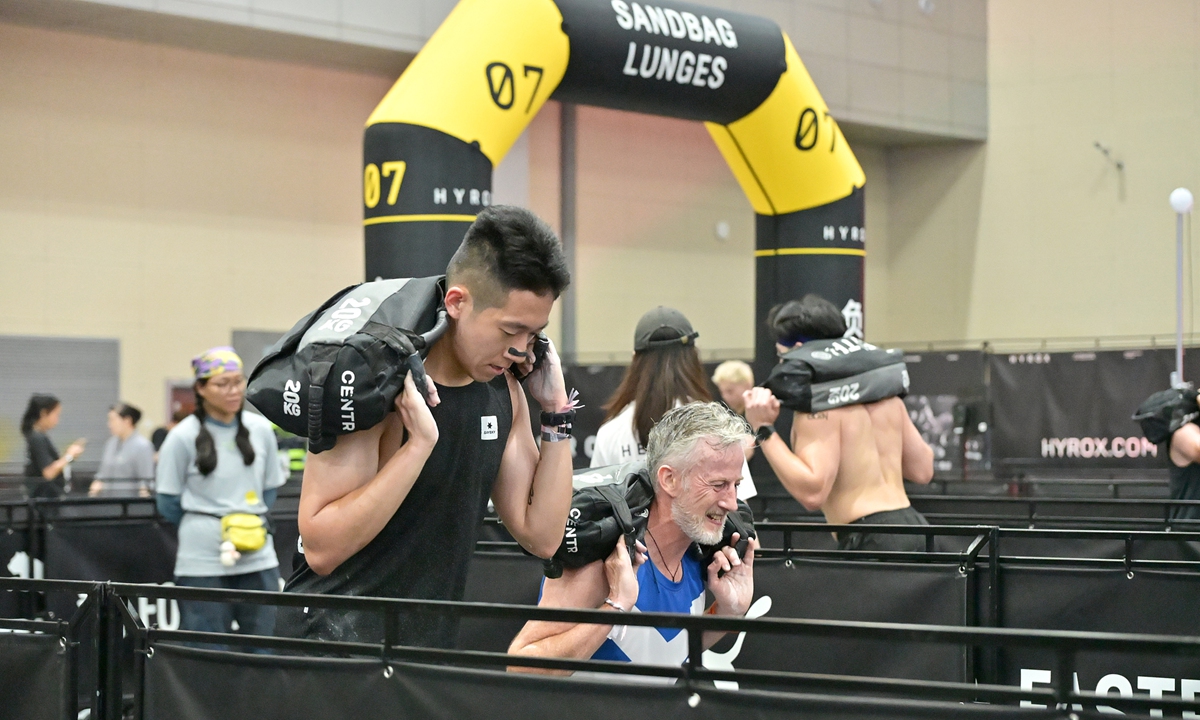
Hyrox participants do sandbag lunges during an event in Hangzhou, East China's Zhejiang Province on July 4, 2026. Photo: VCG
"Encouraging people to exercise is absolutely positive. But everyone should also remain rational and understand their own limits," Xu Fuli, a professional athlete who has competed in Hyrox and Spartan races and achieved strong results in women's categories, told the Global Times.Xu said she was happy to see growing interest in emerging sports, but she also worried after witnessing participants collapse or compete despite obvious signs that they could no longer continue safely.
Having trained professionally in these events for years, Xu follows a detailed long-term plan and adjusts her competition schedule or withdraws when her physical condition is not suitable.
"Whether it is a marathon, climbing or Hyrox, these activities may look like sports that ordinary people can easily participate in, but they still place extreme demands on the body. People need professional assessment and training, and should always exercise within their limits," Xu said.
The trap of fitness culture
For Oliver and many other participants, social connection is another important factor driving them into these sports.
"Especially for people working away from their hometowns, many have made friends simply because they joined a sports group and signed up for competitions together," Oliver said.
Experts believe that the social appeal and identity attached to these sports have, to some extent, transformed exercise from a personal activity into a form of social event, creating some peer pressure.
"You can see that many participants in these sports come from urban middle-class and higher-income groups. Their identities are shaped by these sports, while these sports themselves are increasingly defined by training cultures and commercial competition brands," a sports psychology expert surnamed Lü told the Global Times.
"Once a complete training culture is branded, exercise is no longer just public knowledge, but becomes a form of consumption and identity-building," Lü said.
"Such a culture may encourage people to ignore their actual physical conditions and push themselves into excessive training, increasing the risk of injury."
Doctors have also warned that beginners who rapidly increase exercise intensity are particularly vulnerable to overuse injuries.
Li Xiaoyan, deputy dean of the School of Sports Medicine and Rehabilitation at North Sichuan Medical College, said Hyrox is fundamentally different from marathons and ordinary gym workouts, according to a report by Sichuan local media.
Li explained that marathons mainly focus on continuous aerobic endurance, challenging cardiovascular capacity and joints such as the knees.
Hyrox, by contrast, combines aerobic exercise, anaerobic training and weighted strength exercises. During much of the competition, participants' heart rates remain close to their limits, placing continuous stress on the cardiovascular system, lower back, knees and shoulder muscles.
Many participants also struggle to distinguish between normal post-exercise soreness and injury-related pain.
"Feeling sore throughout the body after exercise, with symptoms improving after one or two days of rest, is usually a normal response caused by muscle fatigue. But sharp joint pain or sudden lower-back pain are warning signs of injury. In such cases, people should stop immediately rather than force themselves to continue," Li said.
"The key is to progress step by step and, whenever possible, train under professional guidance. If your body feels uncomfortable, reduce the intensity and rest. If you are in good condition, increase the workload gradually," Lü said.
"For ordinary people, exercise requires patience. There is no need to approach it with the mindset of preparing for the Olympics. The purpose of exercise is simply to make life more enjoyable and to challenge the body in a healthy way."
RELATED ARTICLES