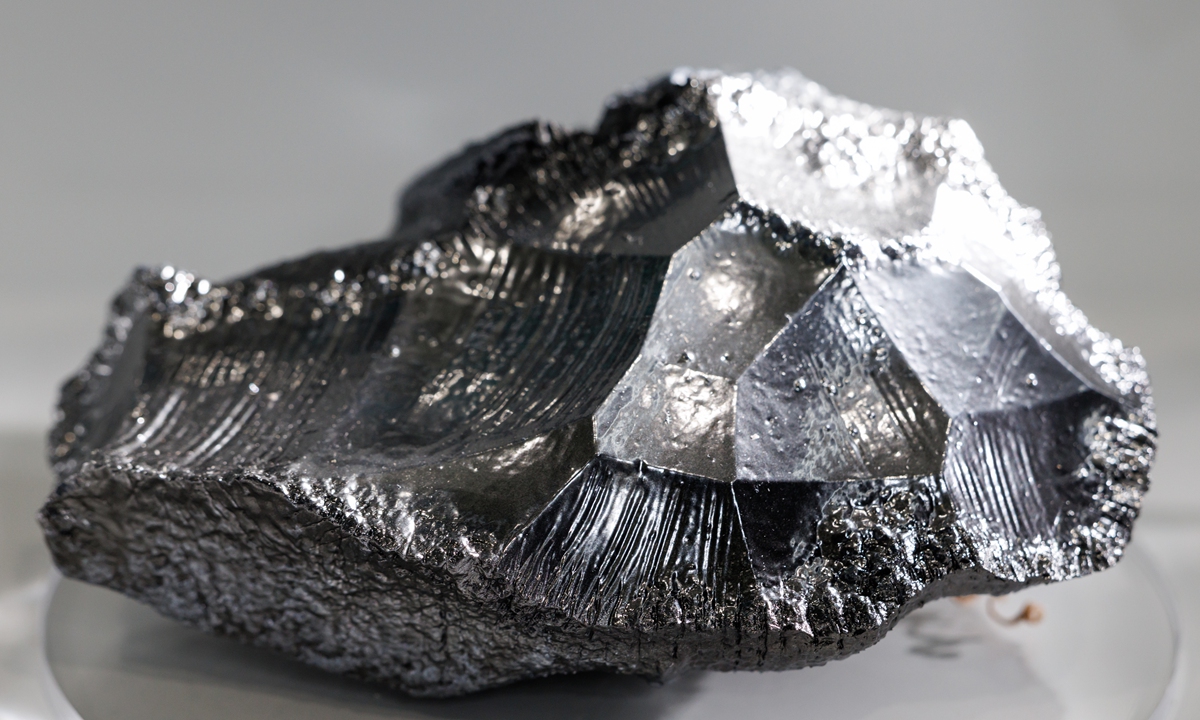
A piece of germanium Photo: VCG
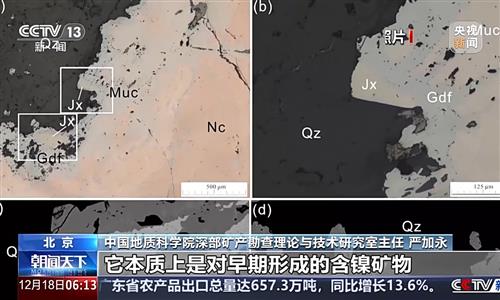
The Science and Technology Daily reported on Sunday that China has discovered and named a new mineral, Wusihe germanium ore, with an average germanium oxide content of up to 72 percent, second only to germanite. It is the first independently occurring germanate mineral discovered in China.
A Chinese expert highlighted the significance of the discovery in advancing mineral crystal analysis technologies and guiding future mineral exploration. As emerging industries continue to expand, germanium, as a critical resource, is expected to play an increasingly important role in supporting high-tech development.
The mineral was jointly discovered, named, and submitted for approval by multiple Chinese research teams, and has officially been approved by the Commission on New Minerals, Nomenclature and Classification of the International Mineralogical Association.
As a scarce strategic critical metal, germanium is indispensable in high-tech fields including modern semiconductors, fiber-optic communications, infrared optics, solar cells, and aerospace measurement and control systems. Due to its low abundance in the Earth's crust and difficulty in forming independent deposits, germanium has long been mainly produced as an associated element from lead-zinc ores and coal deposits, according to the report.
The mineral is the third germanium-rich mineral discovered in the mining area, the report said.
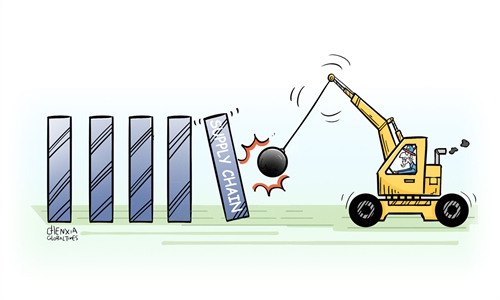
The strategic importance of germanium has drawn growing attention amid global competition over critical mineral supply chains, as countries seek to strengthen access to resources essential for advanced manufacturing and emerging technologies, Wu Chenhui, an independent analyst who closely follows the critical minerals industry, told the Global Times on Monday.
Germanium is also a key material for AI-related technologies, with applications that can help boost computing speeds, improve energy efficiency and enhance radiation resistance, Wu said.
Wu added that the significance of the Wusihe germanium deposit lies in its occurrence as an independent germanium ore body. Previously known germanium resources were largely recovered as by-products from coal or other mineral deposits. The discovery shows that germanium can form economically significant standalone deposits, opening up a new source of germanium resources for China.
According to an industry report, the global germanium market faces an unprecedented supply-demand imbalance.
Global primary germanium production is expected to reach only 190-210 metric tons in 2026, while total demand is projected to rise to 230-250 metric tons, leaving a supply gap of 40-50 metric tons, or more than 20 percent of demand. This structural imbalance is not a short-term disruption, but the inevitable result of surging demand growth combined with rigid supply constraints.
The discovery provides a "road map" for future exploration, a Chinese expert noted. By identifying the geological indicators of germanium enrichment, it could help guide the search for more independent germanium deposits in the surrounding area and the broader Sichuan-Yunnan-Guizhou region, one of the world's major germanium-rich lead-zinc metallogenic belts, the expert noted.
China has been strengthening geological exploration and strategic mineral resource management as part of efforts to improve resource security and support high-tech industrial development.
According to data released by China's Ministry of Natural Resources on April 29, China ranks first globally in reserves of 14 minerals, including germanium.
RELATED ARTICLES