ARTS / MUSIC
Ju Xiaofu, a Chinese pianist who treats every note like a line of poetry
By Published: Aug 10, 2026 10:24 PM

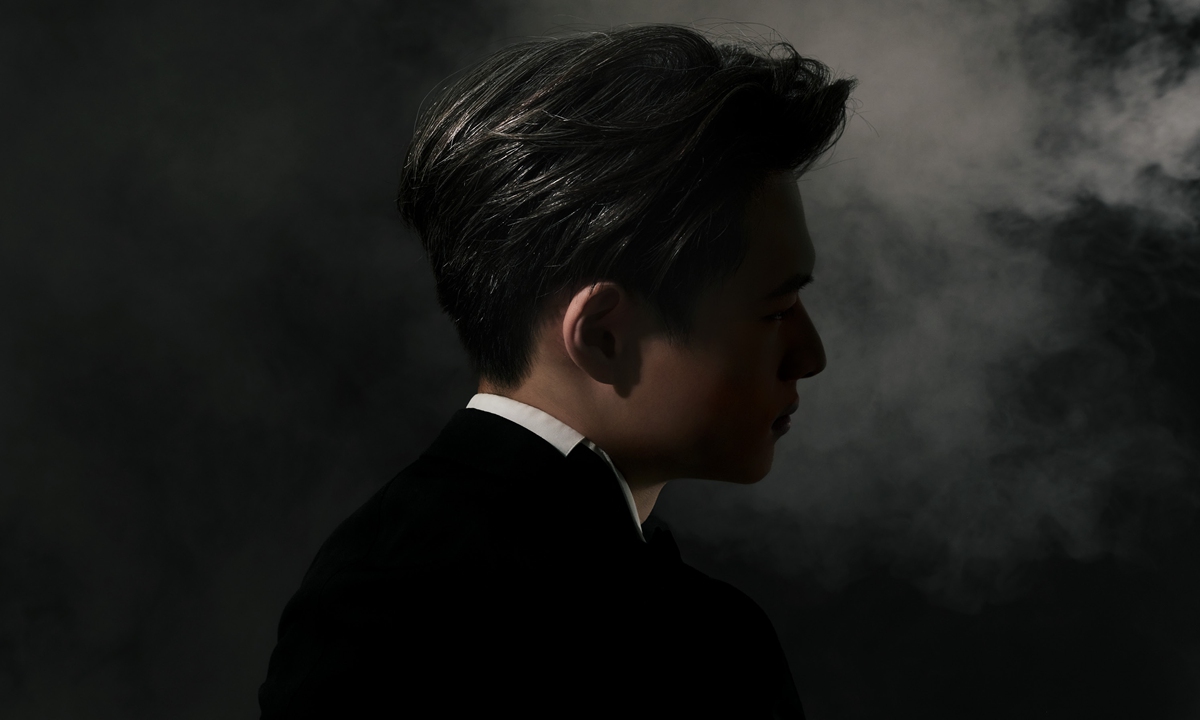
Photo: Courtesy of Ju Xiaofu
Chinese pianist Ju Xiaofu has released his debut album Mist Without on Deutsche Grammophon, one of classical music's most respected labels. The recording, which came out in July, marks an important moment for a new generation of Chinese artists.Deutsche Grammophon signed Ju earlier this year. The label has previously worked with well-known Chinese pianists including Li Yundi, Lang Lang and Yuja Wang. Ju's arrival raises a different question: What will younger musicians, trained both in China and the West, bring to classical music?
The album features works by Leoš Janácek, Maurice Ravel and Alexander Scriabin. The physical edition also includes three of Ju's own poems.
The title Mist Without draws on the German idea of Weltschmerz, a feeling of world-weariness, and the Chinese tradition of misty, suggestive poetry. Ju uses wu, the Chinese character for mist, to create a quieter and more reflective mood. The centerpiece of the album is Janácek's piano suite In the Mists.
"Poetry and piano are equal parts of my experiences," Ju said in a recent interview with the Global Times. "When I work on a single note or a phrase at the keyboard, it feels exactly like shaping a sentence - counting the syllables, weighing the rhythm, choosing the words."
For Ju, playing the piano is less a profession than a form of daily discipline. "It is stricter than many formal religions," he said.
Now in his mid-20s, Ju previously studied at the Juilliard School in New York before continuing his training in Germany. His approach, rooted in China yet open to the world, reflects a generation of Chinese musicians increasingly comfortable moving between cultures. For Ju, that movement between cultures is not necessarily something that needs to be explained.
"Culture can be learned," Ju said. He hears a deep kinship between turn-of-the-century France and ancient China: "To me, so much of [Claude] Debussy's late work feels like Tang Dynasty (618-907) poetry."
Western critics have already taken notice of Ju's distinctive style. In a 2024 review of his Carnegie Hall recital, New York Concert Review wrote that he "shines in the magic of the understated, pulling us into his psychological stillness." British critic Jed Distler, writing in Gramophone, praised his sensitive understanding of Janácek's music.
Having grown up navigating multiple languages and later pursuing training abroad, Ju sees cultural boundaries less as barriers than as things to move through.
"Unlike before, we can now present Eastern ideas not as a deliberate statement, but as something entirely natural and self-assured," he said.
Ju does not present Mist Without as a grand statement. "It is simply the first step in creating recordings that carry personal thought rather than polished display," he said.
Asked what AI might bring to classical music, Ju was unequivocal.
"If what you care about is the relationship between music and people, AI cannot provide that," he said. "AI represents the perfection of human intelligence. Art shows human nature - its desires, its light and its darkness. Music is about human imperfection."
RELATED ARTICLES