ARTS / CULTURE & LEISURE
Rare dragon-phoenix clay relics found in 4,300-year-old tomb in Inner Mongolia
By Published: Aug 13, 2026 12:18 AM

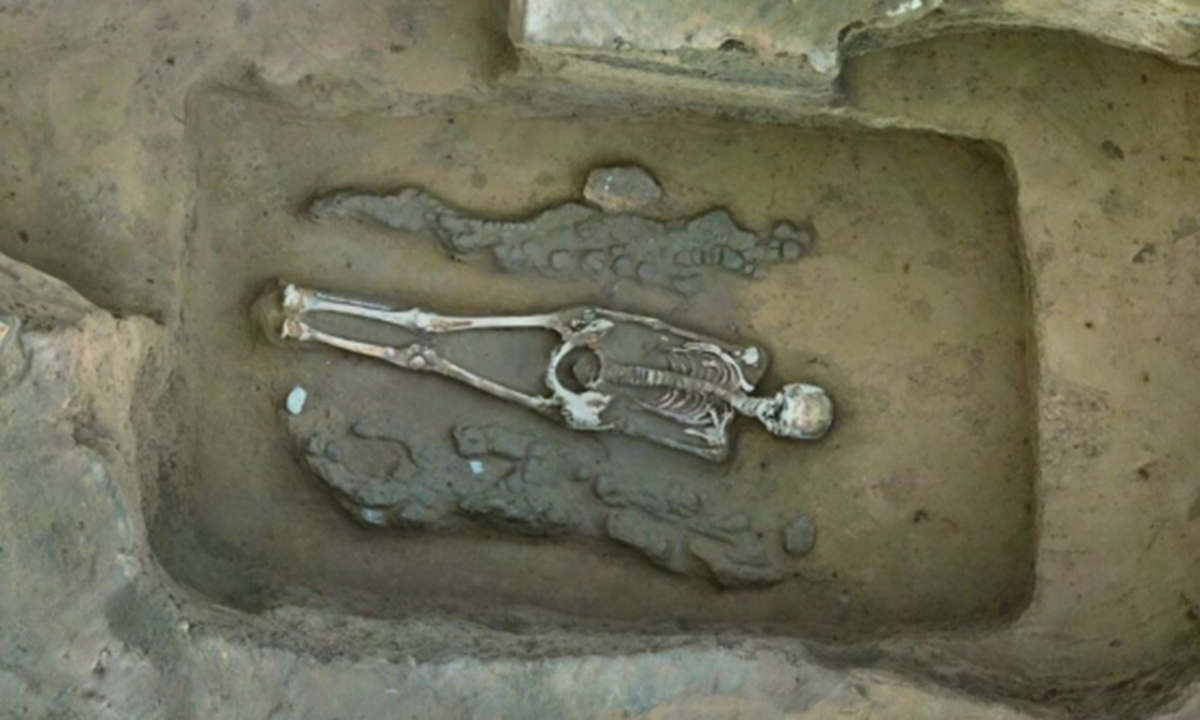
Tomb M38 at the Zhaizita stone-walled site in North China's Inner Mongolia Auton omous Region Photo: Xinhua News Agency
Chinese archaeologists have discovered the earliest known pairing of dragon and phoenix clay sculptures in northern China, unearthed from a 4,300-year-old tomb in the Inner Mongolia Autonomous Region, offering fresh insight into the ritual beliefs of the Longshan culture (3000 to 1900 BC), the Xinhua News Agency reported on Wednesday.The two figurines were placed symmetrically on either side of a skeleton in a rectangular earth-pit tomb at the Zhaizita stone-walled site, a major Longshan culture settlement spanning 420,000 square meters in Inner Mongolia's Jungar Banner, Ordos City.
Radiocarbon dating places the burial at approximately 2300 BC, during the late Neolithic Longshan culture, per Xinhua.
Sun Jinsong, head of the Inner Mongolia Institute of Cultural Relics and Archaeology, told the Global Times that the tomb owner was buried lying face-up with limbs extended and head pointing northeast.
A turquoise-inlaid jade disc rested near the right side of the body's neck. The dragon-shaped clay piece was positioned on the right side of the body, aligned with the head, while the phoenix-shaped piece on the left was rendered as if soaring upward.
Stable isotope analysis of dental enamel collagen revealed a diet based on millet agriculture but with an unusually high intake of animal protein or special food resources.
"The findings indicate the tomb owner possessed prominent social status and privileged material resources during their lifetime," Sun said.
Sun emphasized the discovery rewrites the timeline of tangible dragon-phoenix symbolism in northern China.
"This is the earliest and most clearly defined dragon-phoenix combination found in northern China so far. It pushes back the materialized representation of dragon and phoenix to the Longshan era," Sun said. "The find provides precious material for studying the spiritual beliefs and funeral concepts of the Longshan people."
Sun added that the discovery underscores the unique contributions of the Hetao region - the great bend of the Yellow River - to early spiritual and cultural creativity in China, supporting the view that Chinese civilization developed through a pattern of unity in diversity.
According to media reports, the Longshan culture is renowned for advanced stone city construction, sophisticated handicraft techniques and mature ritual systems across the Yellow River basin.
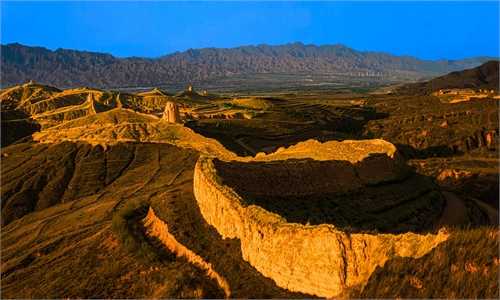
Perched along the Yellow River basin, the Zhaizita stone-walled site ranks among the earliest known stone-enclosed fortress and ceremonial sites in northern China.
RELATED ARTICLES