China releases first ecological assessment of Xisha, Zhongsha, Nansha Qundao islands and reefs
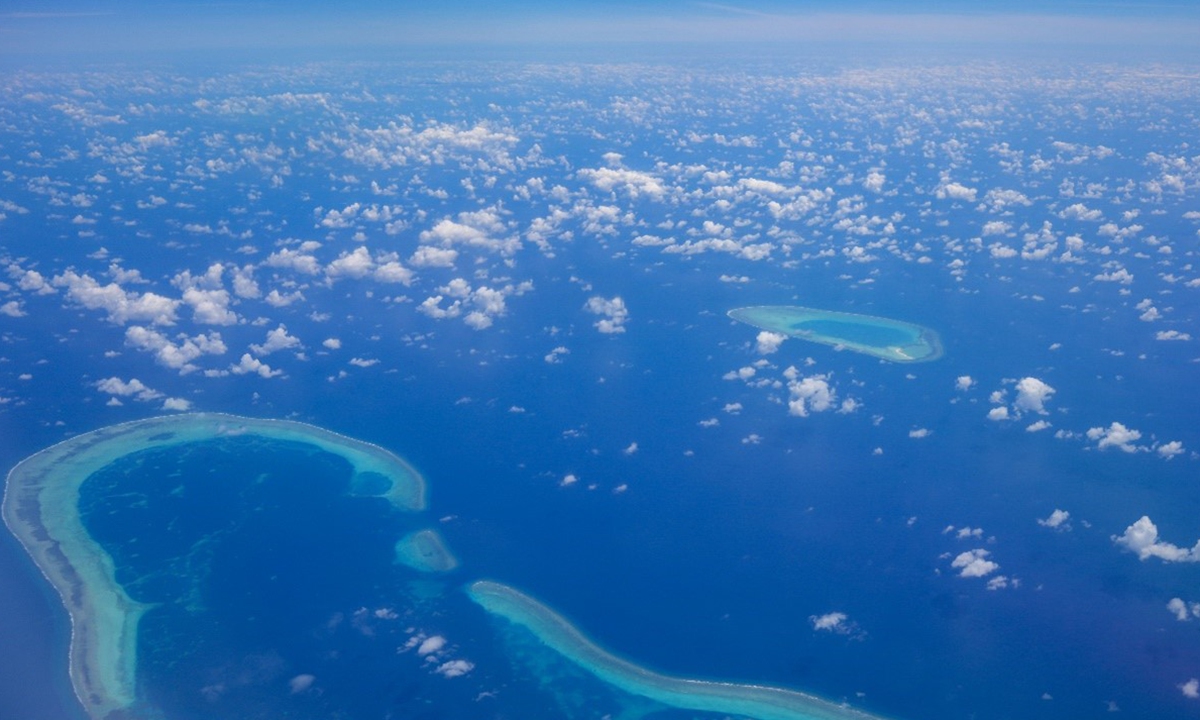
An aerial view of the Xisha Qundao Photo: VCG
China's Ministry of Natural Resources on Friday for the first time released a concentrated assessment of the ecological conditions of islands and reefs in the Xisha, Zhongsha and Nansha Qundao island groups, presenting a detailed picture of nine representative islands and reefs ahead of China's 2026 National Ecology Day, which falls on August 15, China Central Television (CCTV) News reported Friday.The assessment showed that the nine islands and reefs are generally in good ecological condition, although their ecosystems vary significantly from one location to another. The findings are expected to provide a scientific basis for more targeted conservation and management of different types of island and reef ecosystems.
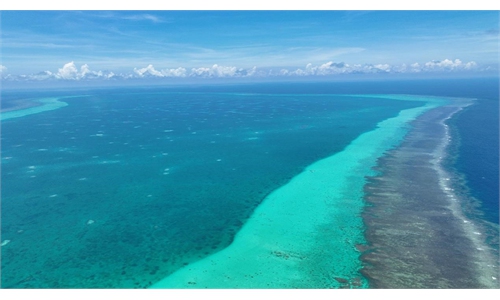
Coral reef ecosystems in the Xisha Qundao have shown encouraging signs of recovery. The overall ecological conditions of four atolls, including the Beijiao, the Yongle Atoll, Yuzhuo Jiao and Langhua Jiao, of the Xisha Qundao, were rated as good.
Although live coral cover remains relatively low as a result of the large-scale coral bleaching event in 2020 and outbreaks of crown-of-thorns starfish since 2018, the reefs have recorded a high level of hard-coral recruitment, indicating strong and continued recovery, CCTV reported.
Coral reefs are one of the best natural indicators of seawater quality, and are also a key foundation for marine biodiversity, Chen Xiangmiao, director of the World Navy Research Center at the National Institute for South China Sea Studies, told the Global Times on Friday.
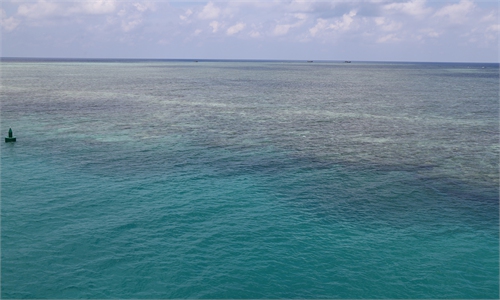
Huangyan Dao, meanwhile, stands out as a rare "biological gene bank" in the central South China Sea. Surveys recorded 135 species of reef-building corals around Huangyan Dao. Seagrass beds covering about 1.85 square kilometers were found distributed across its lagoon, with an average coverage of 19.2 percent. Live coral cover within the protected area has reached 38.8 percent.
The waters are also home to a range of rare and protected species, including green sea turtles, hawksbill turtles, giant clams and trumpet tritons, according to the assessment.
Chen said Huangyan Dao's coral reef ecosystem provides stable and diverse habitats for a wide range of marine species. With relatively limited development, its coral reefs function much like an underwater forest, offering feeding, shelter and breeding grounds for rare species such as sea turtles and giant clams. Its shallow lagoon and seagrass beds further enrich the variety of habitats, allowing different species to coexist and supporting a high level of biodiversity.
Ecological conditions among the Nansha Islands and reefs showed greater differences. While the overall condition remained good, some individual reef ecosystems have suffered serious degradation, according to CCTV News.
Xianbin Jiao and Niu'e Jiao were assessed as being in good ecological condition, with live coral coverage reaching 24.7 percent and 37.7 percent, respectively.
By contrast, the ecosystems of Tiexian Jiao and Ren'ai Jiao have deteriorated significantly.
At Tiexian Jiao, outbreaks of crown-of-thorns starfish, tropical cyclones and foreign human activities, particularly continued construction by the Philippines on Zhongye Dao, have contributed to ecological damage. The area covered by live corals has fallen by nearly 70 percent compared with 2016.
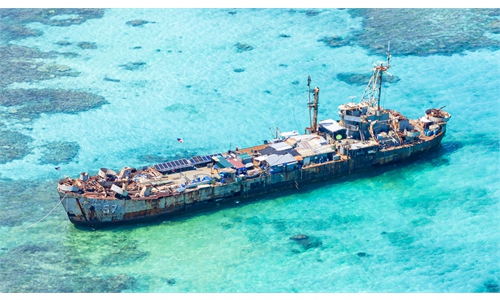
At Ren'ai Jiao, the long-term presence of a foreign military vessel illegally grounded there has caused pollution discharge, waste accumulation and fishing-net entanglement, according to the assessment. Live coral coverage has declined sharply, while both coral growth and natural recovery have been inhibited, according to CCTV.
China has also continued to increase investment in marine ecological conservation and restoration in the South China Sea.
According to one of the released reports on ecological protection and restoration, natural resources, marine and forestry authorities at various levels in the South China Sea region implemented 66 marine ecological restoration projects in 2025, with total investment approaching 5 billion yuan ($741.5 million).
China has long made the protection of the South China Sea's marine environment a priority, with particular attention to coral reefs, fishery resources and water quality, Chen said, adding that the good ecological conditions found at these islands under China's management show that conservation and restoration efforts have produced tangible results.
During the 14th Five-Year Plan period (2021-25), a total of 262 marine ecological protection and restoration projects were carried out, involving more than 21.3 billion yuan in investment.
By the end of 2025, approximately 2.66 million hectares of marine ecological conservation redline areas and about 7 million hectares of marine nature reserves had been designated in the South China Sea region.
RELATED ARTICLES