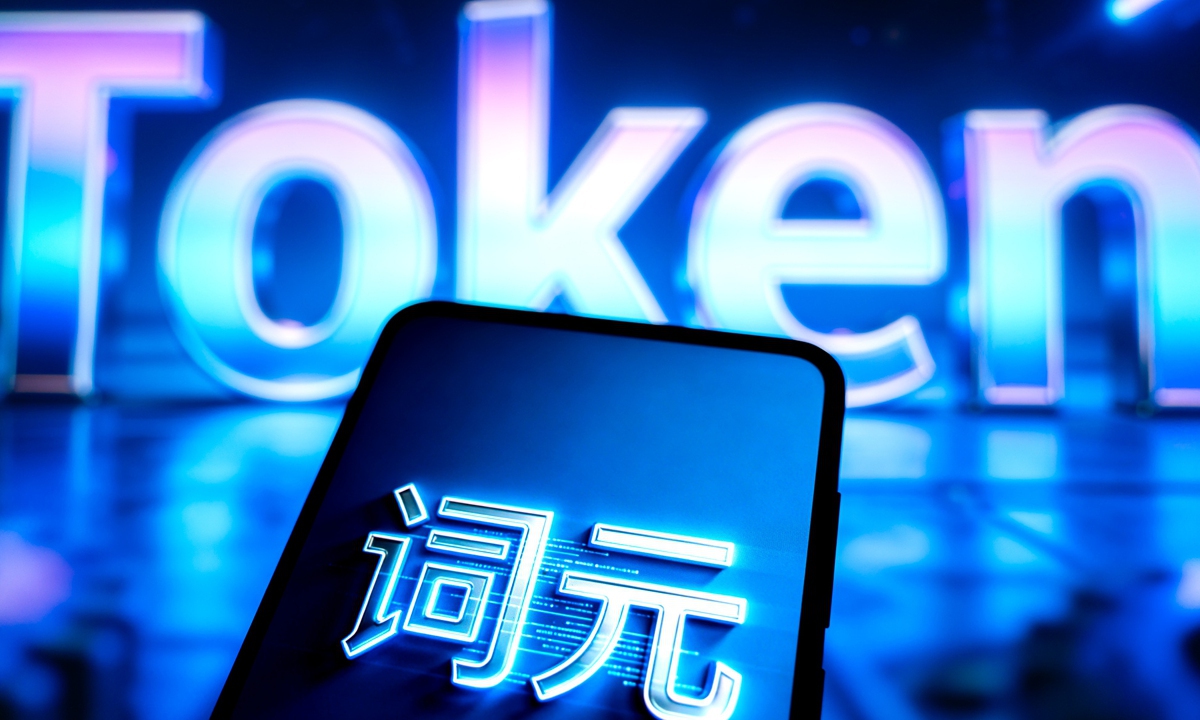
Token Photo: VCG
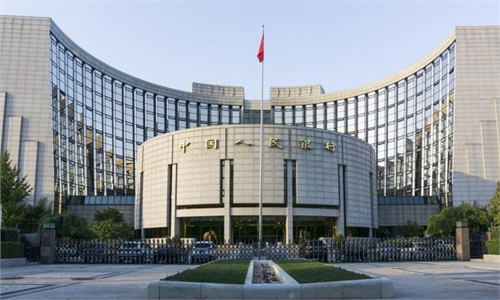
The Bank of China's Guangzhou branch in South China's Guangdong Province recently launched the BOC Computing Power Token Loan in the city's Haizhu district, describing it as the province's first credit product built around the token economy, working across the supply, circulation and application of tokens to channel funds to companies developing AI models.
The loan focuses on three business scenarios — computing supply, application and service — with three sub-products: a token supply loan, a token application loan and a token service loan, covering firms of every size in the computing sector, according to a post seen on the branch's WeChat account.
The product assesses a borrower by how many tokens it produces and consumes, the value of its computing service contracts, receivables from its computing business and commissions settled on token volumes. Credit lines run up to 30 million yuan ($4.45 million) for terms as long as three years.
China Securities Journal reported on Saturday that five companies have been approved for combined 28 million yuan of loans, of which three have drawn down 8 million yuan, mostly to pay for computing power, and contracts covering a further 20 million yuan are being finalized.
On how the data is verified, the report said the bank currently reviews the token consumption statements which companies settle with their computing platforms, combined with on-site checks in which the borrower logs in and displays its usage in real time. The bank hopes that it could deepen cooperation with the platforms in the future, so that the companies a platform recommend will open a query ID in the bank, allowing the bank to check and monitor token consumption data directly, the report said.
Ma Jihua, a veteran industry analyst, called the move a genuine financial innovation. "With AI agents taking off, we're seeing one-person and two-person companies," he said. "They're financially weak but they often grow very fast, and they need financing support."
Traditional credit assessment does not fit these firms, as a bank can look at how much a small company uses and produces in tokens, said Ma.
AI startups are typically asset-light, with thin balance sheets and irregular cash flow, which banks' loan officers will turn down. Haizhu district alone hosts more than 8,000 AI-related firms, according to media reports.
Ma cautioned that the model is exploratory. "Building a new business model is going to take time," he said. Token consumption is not the same as revenue: "There has to be money going out and money coming in."
Computing power finance is heating up. As of the end of June 2026, BOC said it had worked with more than 5,200 companies across the AI supply chain, channeling over 660 billion yuan in financing.
The Securities Journal report said that Bank of Jiangsu offers a computing power loan. And, SPD Bank's Beijing branch has tied lending to a green computing index for data centers, pricing the loan against the borrower's performance on it. China Construction Bank's Shanghai branch runs a loan for Xuhui district's large-model cluster that counts government computing subsidies, incentive schemes and intellectual property toward a borrower's credit.
"When we got industrialized, everyone looked at how much electricity a plant used. Then it was logistics. Now it's tokens — that's a fresh form of productivity too, and a way of judging a company," Ma said. He pointed to lenders now using satellite remote-sensing data to assess corporate borrowers: "A bank always needs something it can actually measure [a startup's development prospect]."
For lenders, this is not optional, Ma added. Startups have to borrow long before they are big enough. "From the point of view of supporting the growth of the industry, banks have to do this. And they have to explore new business — if they don't, they'll be the ones left behind."
RELATED ARTICLES