Japanese right-wing forces’ stubborn course will inevitably face reckoning: Global Times editorial
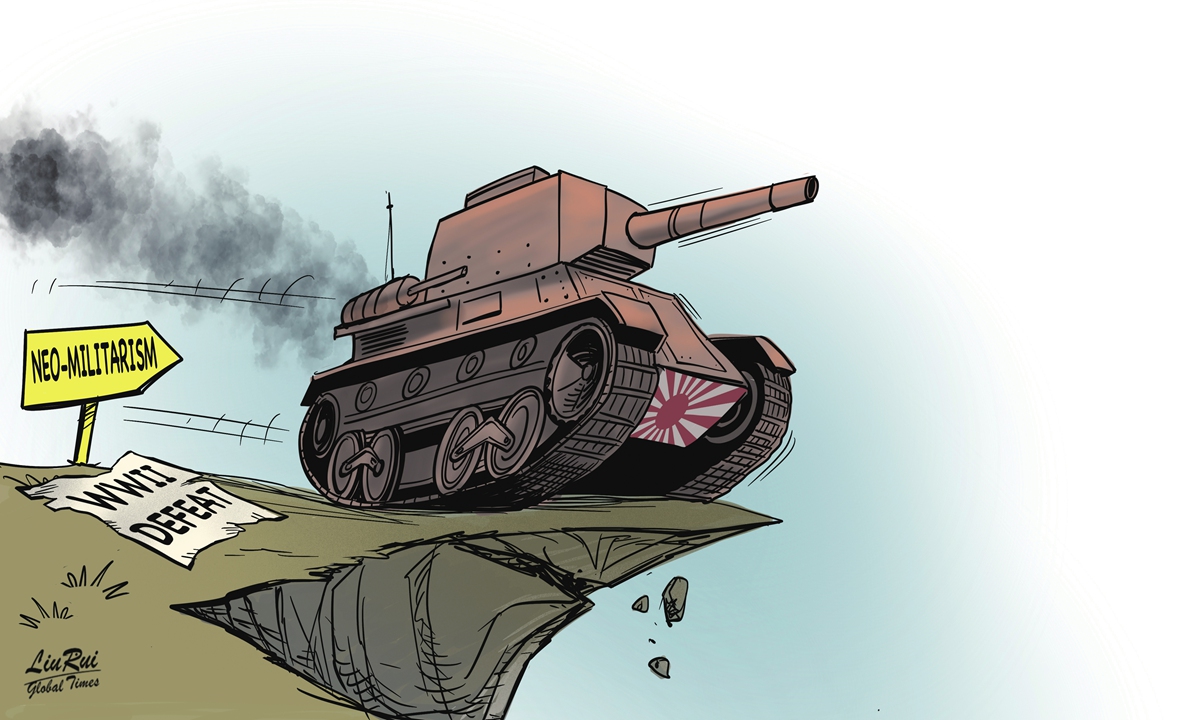
Illustration: Liu Rui/GT
The "homage to the ghosts" by some Japanese politicians is a direct affront to the Tokyo Trials' rulings and the postwar international order. China's resolve and strength for peaceful development are unshakable, and the region's collective capacity to maintain stability has never been stronger. We call on the Japanese politicians to abandon their political posturing. Should they obstinately push forward a "neo-militarism" and become a root of trouble and source of chaos that endangers regional peace, they will once again be held accountable - by both justice and history.
On August 15, the anniversary of Japan's defeat and surrender, Japanese Prime Minister Sanae Takaichi sent a ritual offering to the infamous Yasukuni Shrine, while Japanese Defense Minister Shinjiro Koizumi and a number of other Cabinet members and Liberal Democratic Party leaders paid their respects. After the visit, Koizumi claimed he was mourning the "heroic spirits" and reaffirming "the pledge never to wage war again." The whole world knows that the Yasukuni Shrine is a spiritual instrument and symbol of Japanese militarism. The 14 Class-A WWII war criminals enshrined there were the chief culprits who launched wars of aggression - it is, in effect, a "shrine to war criminals." For Koizumi to bow to these historical sinners whose hands are stained with blood, and then turn around and proclaim "peace," is the height of absurdity, hypocrisy, and shamelessness.
Confronted by reporters' questions that same day, Koizumi remained silent and fled the scene in haste, only to post at length on social media about "mourning" and "pledges." Silence offline, high-profile statements online - this split behavior itself reveals a guilty conscience. His actions have drawn criticism in Japan. For a sitting defense minister to pay homage to Class-A war criminals who launched wars of aggression, and then, without batting an eye, pose as a champion of "peace" and solemnly swear "never again to wage war," fully exposes the complete collapse of his political integrity and moral bottom line. An editorial in the Asahi Shimbun pointed out that the defense minister's duty is to prevent the Self-Defense Forces from going against the tide of history; far from fulfilling that duty, Koizumi's words and deeds risk undermining the constitutional order and the value foundations long established in the postwar period.
If visits to the Yasukuni Shrine reveal the severe distortion of Koizumi's historical outlook, then his actions since taking office as defense minister have translated that distortion into a real threat to regional peace. On nuclear policy, he floated the claim of "not ruling out any options" last October to test the waters, boarded a US Navy Seawolf-class nuclear submarine in December, and openly called for setting aside taboos to discuss nuclear weapons in July this year. On military deployment, he has frequently inspected outlying islands and reefs, checked combat readiness, taken part in joint exercises, observed live-fire training, and energetically promoted Japanese warships to other countries. Koizumi is personally dragging Japan's Self-Defense Forces off the track of "exclusively defense-oriented" policy and into the abyss of offensive military power. In a sense, every time he shouts "peace," Japan moves one step closer to war.
Looking at Koizumi's political record, his "homage to the ghosts" is nothing new. Since first being elected to the House of Representatives in 2009, whether as environment minister or agriculture, forestry and fisheries minister, he has almost every year on August 15 visited the Yasukuni Shrine. Especially after becoming defense minister, his various words and deeds have thoroughly exposed his lack of reverence for history and his complete absence of any sense of national responsibility. The outside world cannot but be highly vigilant about the direction of Japan's defense policy under his leadership.
Yet the greatest danger does not lie in one Koizumi alone. What he has done is a microcosm of the accelerating rightward shift of Japan's right-wing forces in recent years. Faced with difficulties both at home and abroad, Japanese right-wing politicians are attempting to manipulate historical issues and fan nationalist sentiments in order to divert domestic contradictions and harvest political capital. In recent years Japan has sharply increased its defense budget, broken through the principle of "exclusively defense-oriented" policy, accelerated the development of offensive military capabilities, relaxed restrictions on arms exports, and even repeatedly tested the limits of international justice on the question of "possessing nuclear weapons." Japan's erroneous view of WWII history and its radical defense policy are two sides of the same coin; together they are heightening serious concerns among neighboring countries and the international community about Japan's future direction, and posing a severe potential threat to peace and stability in East Asia.
This reverse trend bears a striking resemblance to the situation in Japan before it launched its war of aggression.
Yet today's world is no longer the world of those years. Today the great rejuvenation of the Chinese nation is unstoppable; China's resolve and strength for peaceful development are unshakable, and the region's collective capacity to maintain stability has never been stronger. Any ambition to revive militarism will be crushed to pieces before the forces of fairness and justice.
This year marks the 80th anniversary of the opening of the Tokyo Trials. Eighty years ago, the international tribunal nailed Hideki Tojo and other Class-A war criminals to the pillar of historical shame and laid the legal foundation for the postwar order of peace in Asia. Eighty years later, Koizumi and some other Japanese politicians' "homage to the ghosts" at the Yasukuni Shrine constitutes an open challenge to the verdicts of the Tokyo Trials and the postwar international order. We call on the Japanese politicians to abandon their political posturing. Should they obstinately push forward a "neo-militarism" and become a root of trouble and source of chaos that endangers regional peace, they will once again be held accountable - by both justice and history.
RELATED ARTICLES