US soybean export council highlights China market’s key role, projects at least 25m tons of US soybean purchases by China for 2026/27
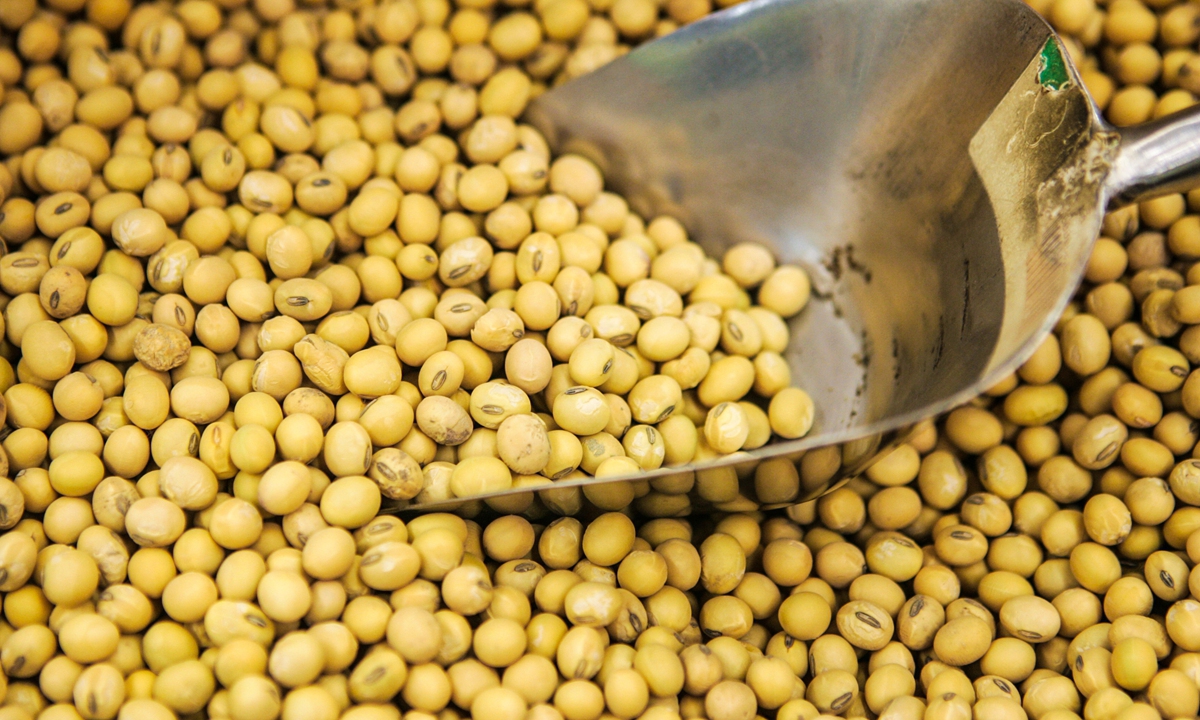
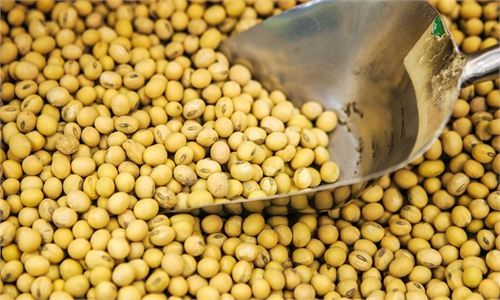
Soybean Photo: VCG
China is expected to remain a key market for US soybeans in the coming years and is set to import at least 25 million metric tons of soybeans from the US during the US 2026/27 market year, which would be part of the 115 million metric tons that the US Department of Agriculture (USDA) projected China would import from all sources, an executive from the US Soybean Export Council (USSEC) told the Global Times.
In a recent exclusive written interview with the Global Times, Jim Sutter, CEO of the USSEC, hailed agricultural trade - and soy in particular - as serving as a ballast in the broader US-China relationship, and said the council is seeing a relationship resetting to full strength - good news for both Chinese buyers and US farmers.
The USSEC's projected gains came after the year-on-year decline in total US global soy exports during marketing year 2025/26, driven by US-China trade tensions. "As China gets to this 25 million metric tons number, that is expected to get purchases back in line with what we saw in market year 2024/25, at 24.2 million metric tons," Sutter said.
"We are seeing re-engagement between our two countries, built on the reliability, quality and value that US Soy consistently delivers," said the USSEC head.
China is the world's largest soybean importer and consumer market. China sources soybeans from a broad range of markets, with Brazil, the US, Argentina and Canada among its major suppliers.
The USSEC CEO has reiterated on several occasions, including in interviews with the Global Times, the importance of the Chinese market to US soybean farmers, while describing China-US soybean trade as highly complementary.
"This is a relationship built for the long term, and I expect China to remain a key market for US soy in the coming years and well beyond," he said in the latest interview.
"For 44 years, US soy has worked alongside partners in China, building relationships grounded in mutual benefit, trust and shared values. We have weathered difficult periods before, and through them all, agricultural trade - and soy in particular - has served as a ballast in the broader US-China relationship," Sutter said, noting that this fundamental role has not changed.
In a previous interview, Sutter told the Global Times that "China is, quite simply, our largest and, in many ways, our most irreplaceable customer for US soybeans," noting that from the US soybean industry's perspective, stable and predictable US-China economic and trade relations are essential.
The projected imports once again underscore the importance the US soybean industry attaches to the Chinese market as a major export destination, Huo Jianguo, former head of the Chinese Academy of International Trade and Economic Cooperation under the Ministry of Commerce, told the Global Times on Monday.
The projection could also be reasonable, as the bulk of US soybean exports typically takes place in the months following September, Huo said, citing industry data.
According to the American Soybean Association, the prime US soybean export sale window to China typically spans from the fall harvest in September and October through February and in some years, early March.
"Soybeans are an important product in China-US trade and an area of great concern to both the US government and American soybean farmers. Meanwhile, China has significant import potential and strong market demand," Huo said, noting the high complementarity between the two sides in soybean trade.
However, the key is particularly for the US to show sincerity in maintaining stable and predictable economic and trade relations, refrain from creating new frictions, and foster a favorable environment for cooperation, including in soybean trade, said Huo.
China's demand for soybeans remains strong, mainly driven by domestic demand for soybean meal used in animal feed and restocking in the livestock sector, according to the China Soybean Industry Association. While the US remains an important global soybean supplier, China has continued to diversify its import sources in recent years, increasing the importance of South American suppliers including Brazil and Argentina, said the association.
RELATED ARTICLES