Illustration: Liu Xiangya/GT
South Korea's push to expand investment in the US raises a difficult question: can investment commitments bring greater certainty for its exporters? During a visit to the US, South Korea's industry minister Kim Jung-kwan said that Seoul and Washington needed to resolve outstanding issues over a $200 billion investment plan, according to the Yonhap News Agency. The remarks came as investment issues have become increasingly linked with broader bilateral trade concerns.
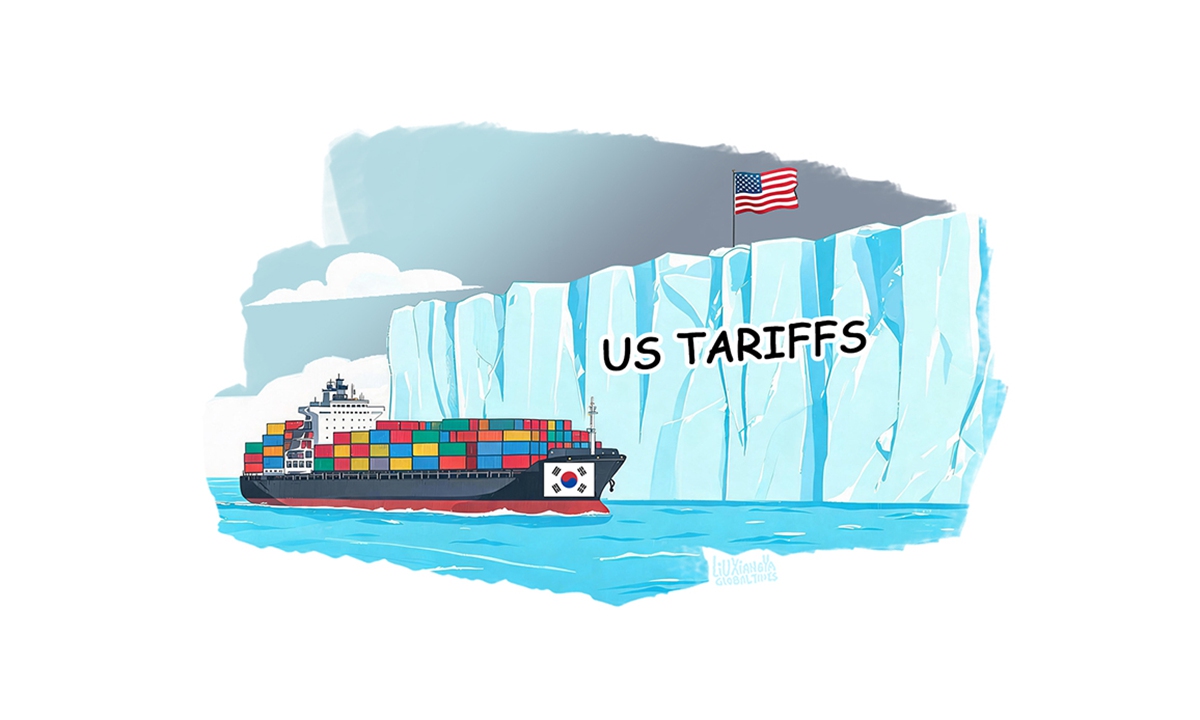
The Chosun Daily reported that Washington recently urged Seoul to accelerate investment projects, warning that delays could lead to higher tariffs. The US imposed a 12.5 percent tariff on South Korea last month under Section 301 of the Trade Act. However, additional processes remain, raising concerns that the rate could exceed 15 percent.
Regardless of the outcome of Kim's visit, the broader challenges facing South Korean exporters in the US market are likely to persist. Washington's recent trade measures suggest that access to the US market is becoming more complex, involving not only tariffs but also other considerations such as investment commitments, leaving the outlook for South Korean exports to the US less certain.
Multiple signs suggest that the US market is becoming less open for South Korean goods and more of a market with rising barriers. Since 2025, the US has imposed tariffs affecting most exports from South Korea. Against this backdrop, South Korea's exports to the US fell 3.8 percent in 2025, reflecting declines in automobiles, general machinery and auto parts.
These pressures are expected to persist in the near term. Whether they take the form of tariffs or investment-related requirements, the broader effect is that they impose additional costs on South Korea's economy. Adding to the complexity, South Korea's exports to the US rose 69 percent in July. As South Korean goods continue to gain ground in the US market, the possibility cannot be ruled out that pressure from Washington could increase further.
Even if South Korea meets Washington's investment requirements, it may not change the broader reality that access to the US market increasingly comes with a cost. Whether through tariffs or investment-related demands, the broader trend suggests that greater access to the US market may require greater concessions from Seoul.
For South Korea, the way forward may not lie solely in the US market. Diversifying export destinations could provide greater flexibility as trade conditions continue to evolve. The US market will remain important for South Korean exports, but a more diversified export base could help the economy better navigate external pressures.
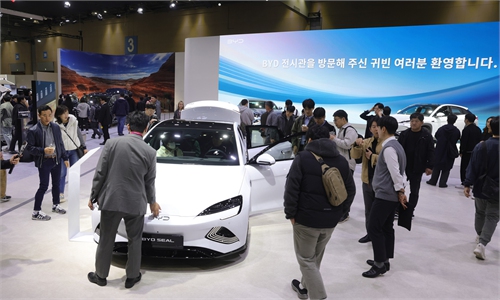
A closer look at South Korea's export performance reveals where growth opportunities are emerging. According to the Korea Herald, South Korean exports to China nearly doubled to $21.68 billion in July, driven by strong shipments of chips, nonferrous metal products and petroleum goods. Exports to Southeast Asian countries rose 73.7 percent to $18.8 billion, supported by strong shipments of semiconductors, displays and ships.
These trends point to a broader contrast with the uncertainty surrounding the US market. China has continued to expand market access, while Asia's regional supply chains are creating new opportunities for trade and investment. For South Korea, closer cooperation with economies across these supply networks could provide further support for export growth and industrial development.
The underlying driver is the complementarity of Asian supply chains. Deeper integration into regional production networks reflects mutually beneficial cooperation rather than an exchange of investment for market access, creating more opportunities for South Korea to sustain export growth.
The US will remain an important trading partner for South Korea. But deeper regional cooperation could give the South Korean economy greater flexibility and more options. For an export-oriented economy, stronger trade links and industrial connections across Asia may prove increasingly valuable as the global economic landscape continues to evolve.
The author is a reporter with the Global Times. bizopinion@globaltimes.com.cn
RELATED ARTICLES