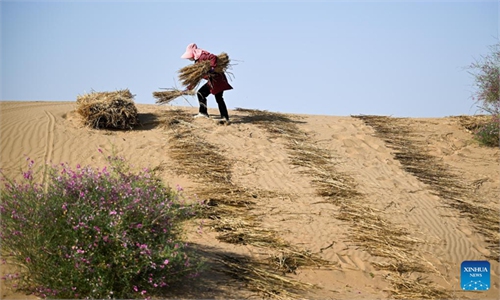
China, Arab states launch a five-year action plan to combat drought, desertification and land degradation
By Published: Aug 23, 2026 05:14 PM

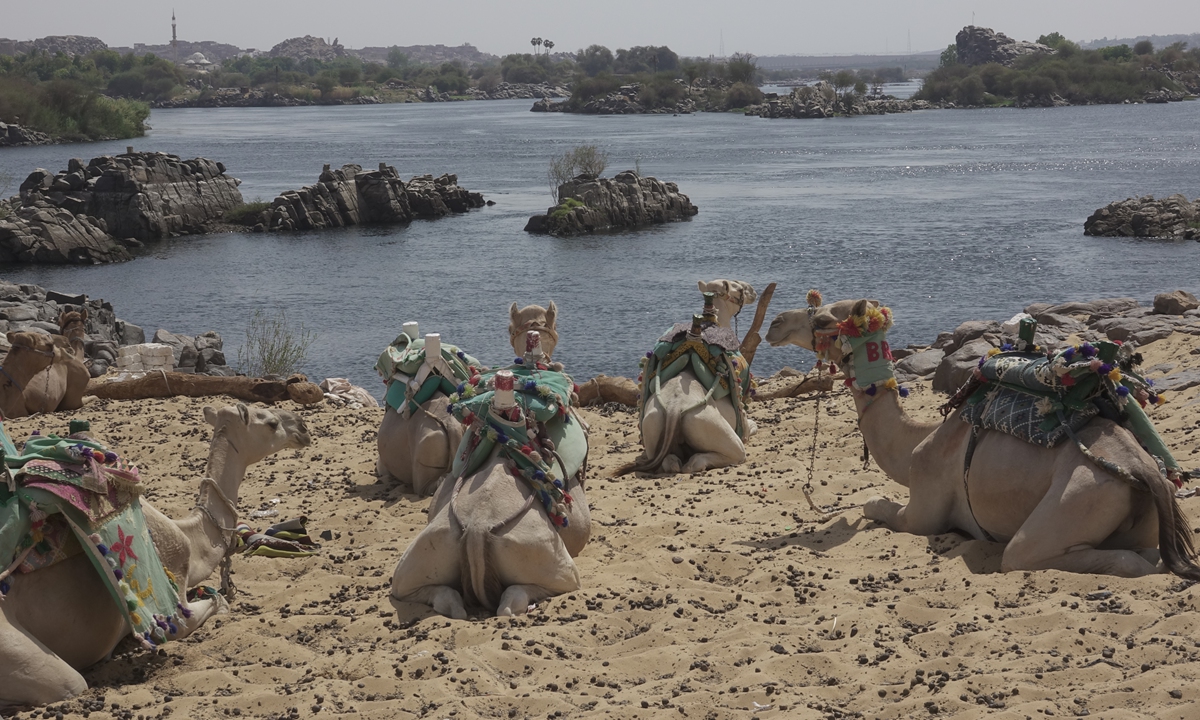
Picture of desert in Aswan, Egypt: VCG
China and Arab states have launched a five-year action plan to combat drought, desertification and land degradation, which expand their cooperation beyond traditional desertification control to technological innovation in areas such as grassland conservation, watershed management and wetland protection, during a UN conference in combating desertification, the Global Times learned from China's National Forestry and Grassland Administration (NFGA) on Sunday.
The plan was launched at a meeting on the sidelines of the 17th session of the Conference of the Parties to the United Nations Convention to Combat Desertification (COP17), now underway in Ulan Bator, Mongolia.
Under the action plan, China and Arab states will deepen practical cooperation over the next five years in key areas including desertification and degraded land restoration, sand and dust storm monitoring and early warning, grassland management, biodiversity conservation, and wetland protection and restoration, according to a press release sent to the Global Times by the NFGA.
The two sides will step up technological innovation and the application of research outcomes by developing platforms for sharing technologies, data and research results, conducting interdisciplinary research, and developing technologies such as remote sensing and intelligent assessment of land degradation. The plan also calls for establishing demonstration bases supporting the implementation of the UN Convention to Combat Desertification.
The plan also calls for strengthening China-Arab cooperation networks on desertification control, improving mechanisms for sharing policies, technologies and research outcomes, and expanding partnerships under the China-proposed Belt and Road Initiative. Governments, research institutions, businesses, social organizations and local communities will be encouraged to participate.
Cooperation on capacity building will also be expanded through exchanges among young experts, joint research, field demonstrations and technical training.
The meeting was jointly hosted by China's NFGA and the Secretariat of the League of Arab States, and organized by the Chinese Academy of Forestry and the China-Arab States International Research Center for Drought, Desertification and Land Degradation.
Cui Lijuan, vice president of the Chinese Academy of Forestry noted that some initiatives are already taking shape. China and Egypt, for example, are exploring a comparative study of the basins of Yellow River and Nile River, with the aim of exchanging experience in ecological protection and integrated watershed management.
The initiative, according to Cui, has received support from the Chinese Academy of Forestry and attracted interest from international non-governmental organizations.
Future cooperation between China and Arab states will also focus on desertification monitoring and early warning, ecological technologies, and exchanges and training for young professionals.
The two sides also aim to broaden participation by bringing businesses, social organizations and international institutions into a cooperation framework currently led primarily by government agencies, Cui said.
In 2023, the China-Arab International Research Center on Drought, Desertification and Land Degradation was inaugurated during an international forum on desert control, showcasing China's commitment to sharing its expertise gained from the Kubuqi desert control, per Xinhua.
Over the past three years, the center has steadily strengthened regular cooperation mechanisms between China and Arab states. The two sides have jointly developed Earth observation and intelligent decision-support tools for land degradation, while China has compiled 30 practical desertification-control technologies across six categories suitable for application in Arab states, according to NFGA.
The center has also established regular channels of exchange with countries including Saudi Arabia and Egypt, while building an initial China-Arab desertification-control network and expert pool to support continued technical cooperation and professional training across Arab states.
RELATED ARTICLES