China, Indonesia agree to set more ambitious bilateral trade target, expand AI cooperation: FM on Wang Yi’s visit
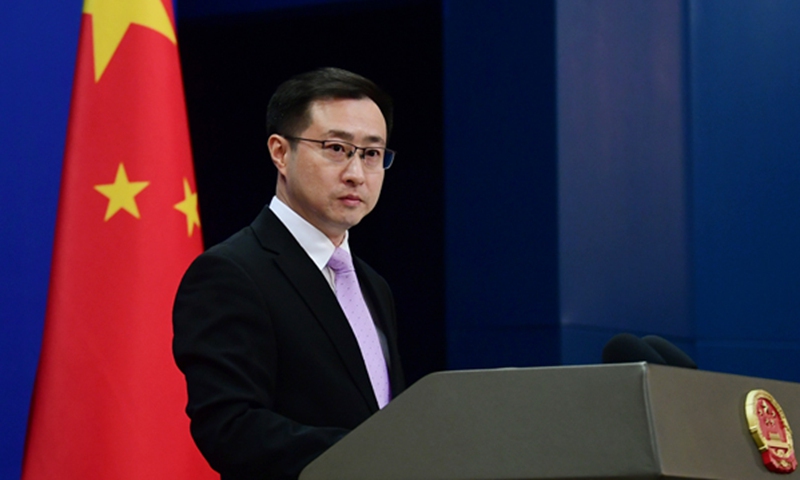
Chinese Foreign Ministry spokesperson Lin Jian at a regular press conference Photo: Ministry of Foreign Affairs
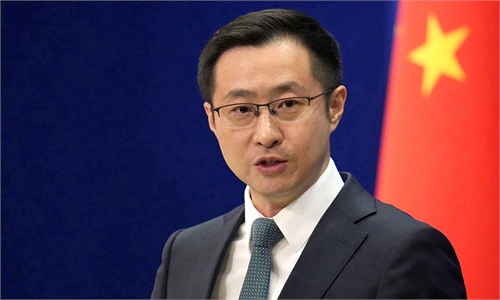
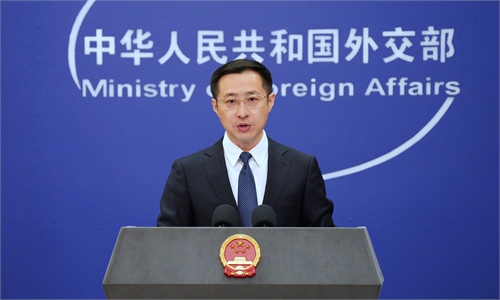
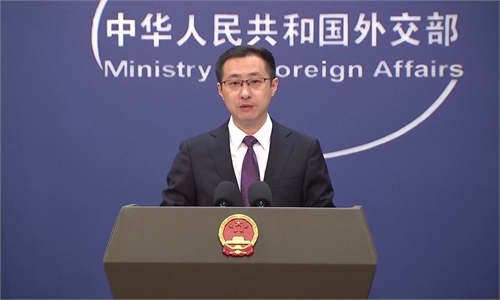
China's Foreign Minister Wang Yi and his Indonesian counterpart held a successful first conference. They spoke highly of the progress in cooperation across various fields, and agreed to deepen the alignment of development strategies and launch the formulation of a new five-year action plan for bilateral ties, Chinese Foreign Ministry (FM) spokesperson Lin Jian said at a regular press conference on Monday.
The remarks were made in response to a media request for comment regarding Wang's successful visit to Indonesia, where the first Conference of the China-Indonesia Comprehensive Strategic Dialogue Mechanism and the Second Ministerial Meeting of the China-Indonesia Joint Foreign and Defense Dialogue were held.
The Comprehensive Strategic Dialogue Mechanism is a new mechanism established between China and Indonesia. It provides vital institutional support for deepening bilateral cooperation across the "five pillars" under new circumstances, according to Lin.
The two sides agreed to set more ambitious bilateral trade targets and vigorously expand cooperation in new-quality productive forces such as artificial intelligence. The two sides reached an agreement to restart cooperation in fishing, accelerate maritime cooperation and push forward joint development, Lin said.
The FM spokesperson said that both sides agreed that deepening cooperation in energy and mineral resources serves their common interests, and expressed readiness to jointly build a comprehensive, open and green partnership in this area. China stands ready to better assist Indonesia in transforming its resource advantages into momentum for development, accelerating the country's industrialization process and benefiting the Indonesian people, Lin said.
Indonesia spoke highly of the contributions made by Chinese companies in Indonesia to local development, noting that the success of Chinese companies is also a success for Indonesia. It expressed readiness to provide Chinese companies with a fair, transparent and friendly business environment, Lin said.
The China-Indonesia Joint Foreign and Defense Dialogue is the first ministerial-level "2+2" mechanism China has established globally, and this marks the second meeting of the mechanism.
Lin said that the two sides agreed on the need to coordinate the two major tasks of development and security, foster a sense of security partnership, support each other's core interests, jointly oppose external interference, and strive for greater progress in political security and defense cooperation.
Both will safeguard the overall momentum of regional cooperation and maintain peace and stability in the South China Sea, strengthen policy coordination on multilateral platforms, oppose unilateral bullying and power politics, and safeguard international fairness, justice and the legitimate rights and interests of developing countries, according to the spokesperson.
The world is currently at a crossroads between unity and division, and between cooperation and confrontation. As major developing countries and key members of the Global South, China and Indonesia's efforts to strengthen strategic coordination and deepen solidarity and cooperation bears great significance far beyond the bilateral dimension. The success of China-Indonesia cooperation is also a success for the Global South, said the FM spokesperson.
Guided by the strategic common understandings reached by the two heads of state, China stands ready to work with Indonesia to effectively translate consensus from the mechanism meetings into outcomes, expand and deepen all-round strategic cooperation, address risks and challenges, bolster respective modernization, and contribute more to stability and prosperity in the region and beyond, said Lin.
The agreement between China and Indonesia to set a more ambitious bilateral trade target reflects both sides' confidence in the potential for deeper economic and trade cooperation, Hu Qimu, a professor at the Maritime Silk Road Institute of Huaqiao University, told the Global Times on Monday.
Indonesia has abundant mineral and energy resources and a large labor force, and is advancing its industrialization, while China has strengths in manufacturing, infrastructure, the digital economy and new energy, making the two economies highly complementary, Hu said.
Notably, China-Indonesia cooperation is expanding beyond traditional areas such as trade, infrastructure and resources into emerging sectors such as AI. China has extensive experience in AI applications, digital infrastructure, smart manufacturing, smart cities and e-commerce, while Indonesia, with a population of more than 280 million and a large digital economy, has growing demand for digital transformation and AI applications, Hu said, noting the high complementarity between the two countries.
At the same press conference, in response to another question regarding China-Indonesia cooperation and flagship projects such as the Jakarta-Bandung High-Speed Railway, Lin said that the China‑Indonesia Comprehensive Strategic Dialogue is an important joint measure implementing the consensus between the two heads of state. It aims to deepen practical cooperation across the fields, advance the building of a community with a shared future, and deliver tangible benefits to both peoples.
The Jakarta‑Bandung High‑Speed Railway has served over 16 million passengers with safe and smooth operation since its opening. It has improved local transport conditions and made travel easier for residents along the route, and continues to provide momentum for Indonesia's economic and social development and regional connectivity.
China stands ready to work with Indonesia to make full use of the Comprehensive Strategic Dialogue mechanism, advance high‑quality Belt and Road cooperation, produce more cooperation outcomes in infrastructure and other fields, and inject fresh impetus into our respective modernization.
Amid rising global trade protectionism, deeper China-Indonesia cooperation in trade, investment and emerging industries will benefit not only both economies and but also China-ASEAN and Global South cooperation, said Hu.
Global Times
RELATED ARTICLES