ARTS / CULTURE & LEISURE
Paddleboarding past imperial towers: Beijing opens historic moats to the public
Beijing opens two historic waterways at heart of capital for greener, vibrant city life
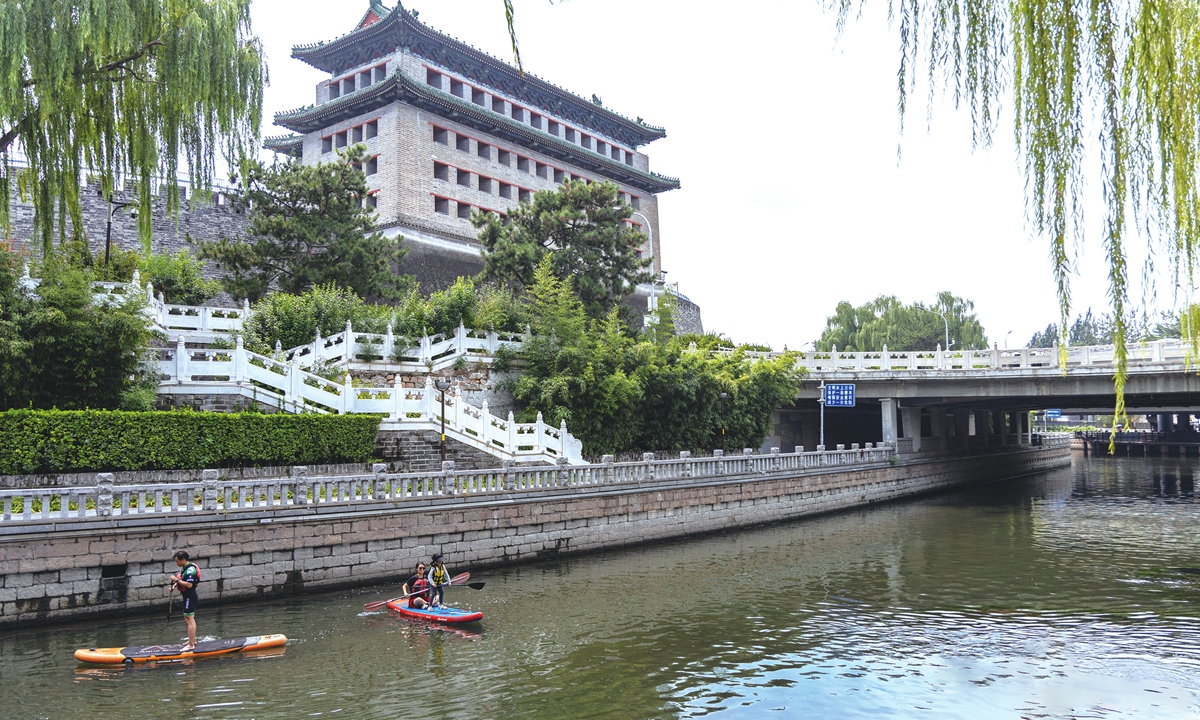
People are having fun with recreational sports along the North Moat near Deshengmen in Beijing. Photos: Li Hao/GT
Paddleboard enthusiast Shen Dan recently took part in a fun competition along the North Moat near Deshengmen, one of Beijing's old gate towers in the city's heart. Being able to enjoy something like rafting in downtown Beijing is quite rare.The competition on Saturday marked the opening of two water sports areas off the capital's ancient city center: one along the North Moat and the other on the Zhuanhe River.
The North Moat was once an important section of the Grand Canal transport system during the Yuan Dynasty (1279-1368) and a bustling waterway.
The first half of the competition was a race against the current, but after reaching the finish line at Deshengmen, participants could simply let the water carry them downstream, Shen noted. "We lay back on our paddleboards and drifted with the current. It was a really wonderful and unique experience."
Li Shan, the manager in charge of the Beijing Tourism Group's North Moat project, told the Global Times that the appeal of the newly opened water sports areas lies in the distinctly different experiences offered by the two sections of the capital waterways.
The stretch from Deshengmen to Gulou (Drum Tower) highlights the blending of the city's historic character with water sports. Participants can catch views of the Deshengmen Archery Tower, with the Drum Tower and the Lama Temple visible in the distance, as ancient city walls blend with modern office buildings, creating a striking juxtaposition of historic and contemporary Beijing, Li noted.
The Zhuanhe River area, which starts from the Beijing Exhibition Center, offers a different experience with its shaded greenery, waterside scenery and winding waterways creating a more natural outdoor setting.
The two areas have a total of four docks, where residents can launch their paddleboards or kayaks and return the equipment after their activities. For nighttime paddling, participants can also choose illuminated boats. The facilities are currently open from 10 am to 9 pm.
"When selecting the areas to open, we took into account factors such as transportation accessibility, scenery and hydrological conditions," Li said. "From the docks, visitors can quickly access nearby subway stations."
The newly opened spaces marked two new additions to the capital's public water sports areas, which include the Liangma River, Chaoyang Park, Shunyi Olympic Rowing-Canoeing Park and the Grand Canal in Tongzhou district.
Downtown oasis
Unlike water sports areas in the city's wider water bodies, both of the newly opened areas are lined with shady trees on either side. This is especially valuable in summer, when finding a cool, shaded spot while enjoying water activities can be a rare luxury, Sun Yechuan, a staff member with the Dobu Water Sports Club, told the Global Times on Tuesday.
Beijing-based travel photographer Qingye explored the 3.7-kilometer Zhuanhe route over the weekend by paddleboard and found that the lush vegetation lining both banks creates an immersive woodland atmosphere, making it an ideal setting for capturing striking photos while paddling along the water.
"The moment I headed out onto the water, it felt like entering an oasis hidden within the bustling city. With clear water, blooming lotus flowers and a gentle but steady current, the route is better suited to paddleboarders with some prior experience," she told the Global Times.
It's rare to be able to enjoy a "city boat" experience right in the heart of Beijing, beneath the roots of the imperial buildings, Qingye said. "You can escape the hustle and bustle without leaving downtown, finding a moment of tranquility amid the city. It really helps you unwind."
Responding to Shen's rafting experience, Li noted that paddling from east to west along the North Moat means going against the current, requiring more effort.
By contrast, those traveling from west to east can go with the current, allowing them to drift downstream with the flow without having to paddle.
Li also reminded enthusiasts to keep an eye on weather conditions. With rain forecast for this week, water activities have been suspended in response to flood-control alerts and will only resume once the weather improves.
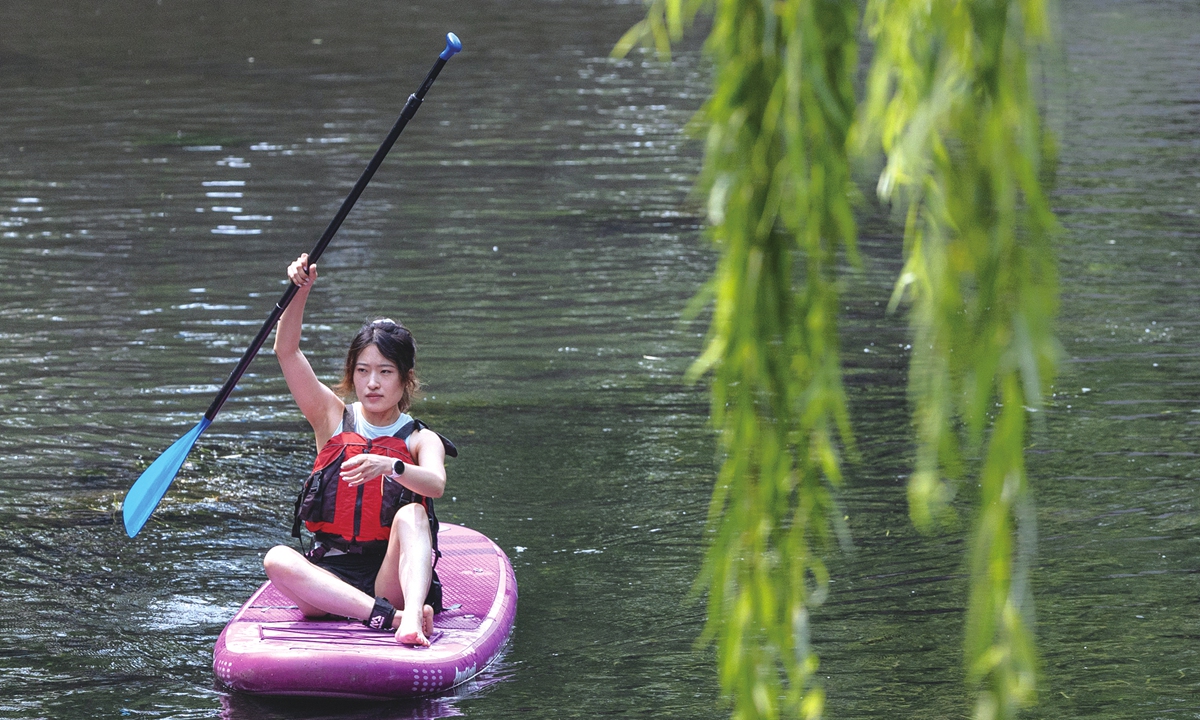
A woman paddleboards down a river in Beijing. Photos: Li Hao/GT
More activitiesThe newly opened areas are part of Beijing authorities' efforts to improve waterway management and open up more waterfront spaces to the public.
Beyond rivers and lakeside waterfronts, an increasing number of water conservancy facilities in Beijing are also opening their doors to the public. Another 40 waterfront spaces around water conservancy facilities will be open to the public this year, Zhang Song, an official with the Beijing Water Authority, told the Beijing News.
Li said in September, the areas around Drum Tower and Lama Temple along the North Moat will host waterfront fairs, with photo spots set up along the banks to recreate the lively appearance of the waterway in ancient times. This Mid-Autumn Festival, the North Moat will also host a paddleboard festival.
From paddleboarding, kayaking to sightseeing cruises and waterfront markets, Beijing is gradually giving its waterways new roles in the life of the city.
As more sections of rivers and canals become accessible to the public, these historic waterways offer residents and visitors a different way to experience the ancient capital.
This autumn, an intelligent sightseeing boat service is also expected to begin trial operations along the 4.6-kilometer route from Deshengmen to Dongzhimen. Passengers will be able to take a leisurely ride along the water while exploring the charm of the Beijing ancient city, according to Li.
RELATED ARTICLES