While rescuers rush to save lives, disinformation spreads in Taiwan region – Where is their sense of humanity?: Hai Feng
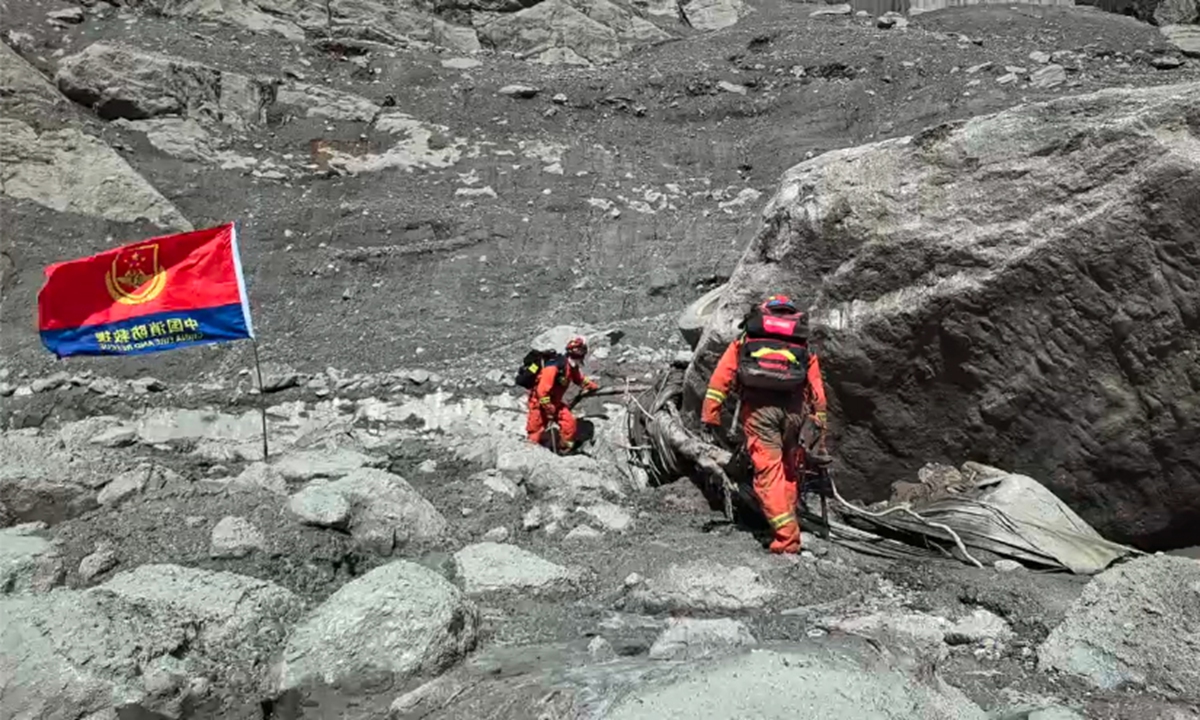
The first team of six members from the Xizang Fire and Rescue Corps and the first group of 15 members with a search dog from the Sichuan Fire and Rescue Corps arrive at the disaster-hit area of the Gyirong Port in Xigaze, Southwest China's Xizang Autonomous Region, at about 4:30 pm, on August 28, 2026. They were the first professional rescue teams to reach the core rescue area, the National Fire and Rescue Administration said. Photo: Xinhua
Major disaster‑relief efforts along the China‑Nepal border continue to capture attention.
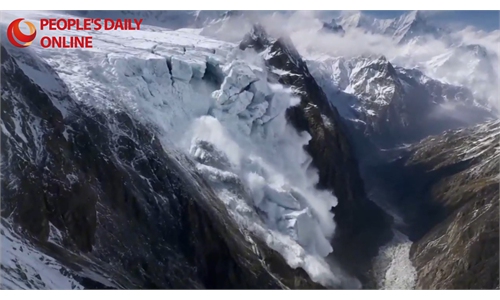
According to the latest figures released by Nepal's National Disaster Risk Reduction and Management Authority, as of 10:00 local time on August 29, flash floods in northern Nepal have killed 626 people, with 2,426 people still missing. Since the disaster struck on August 26, the Nepali government has legally designated certain areas as disaster‑emergency zones for a three‑month period. This enables the centralized deployment of rescue resources, strengthened personnel management, and advancement of post‑disaster recovery work.
Faced with such a catastrophic disaster, the priority should be saving lives, racing against the clock to pull survivors from the rubble and mudslides by every possible means. Yet at this very hour, certain pro-DPP green politicians and media outlets in Taiwan region have turned their eyes away from the rescue sites and resorted to political manipulation.
While rescue teams are battling every second for survivors, these actors waste no time fabricating rumors, weaponizing issues and exploiting this human tragedy for political gains. This goes far beyond ordinary differences over political stances. They are exploiting other people's suffering and instrumentalizing the grief of victims. It is nothing short of "profiting from others' misfortune," and it shatters the shared baseline of respect for life.
Immediately after the disaster struck, China launched concrete rescue operations. At the request of the Nepalese government, on August 29, China's Ministry of Emergency Management urgently dispatched five tunnel experts, who flew by helicopter from Gyirong, Southwest China's Xizang Autonomous Region, and arrived at the disaster area in Nepal at 16:58 Beijing Time, where they immediately began rescue operations in the tunnel of the Nepalese hydropower station. In response to the need, China urgently dispatched an additional four tunnel experts to Nepal to provide full support for the Nepalese side's tunnel rescue efforts.
This was not lip service or symbolic support, but professional personnel arriving directly at the front lines, with personnel on-site and helicopters in the disaster area, to immediately begin rescue operations.
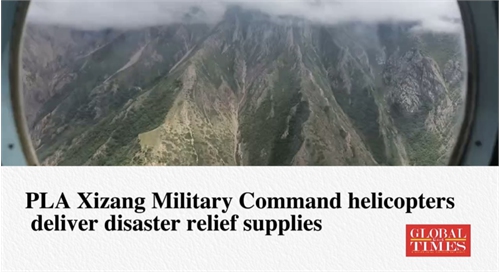
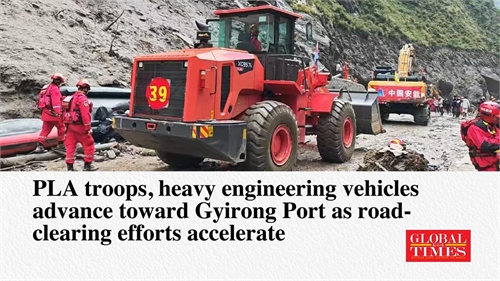
Meanwhile, rescue efforts at the front lines of Xizang's Gyirong Port were also in their most difficult and urgent phase. As of 1:00 am on August 29, the mudslide at Gyirong Port had claimed 7 lives and left 554 people missing, while 2 people had been rescued in Resuo Village. Rescue teams trekked over mountains for nine hours to reach the core area; rubber boats pushed against the raging currents; helicopters conducted aerial drops; and search-and-rescue personnel rappelled down mudslides with inclines of nearly 60 degrees. Amid the mud, debris, and raging waters, they repeatedly tapped, searched, and called out: "Is anyone there?"
These words were the most heart-wrenching sound at the rescue site, and the loudest rebuke to those spreading rumors. For while some were risking their lives to search for people, rescue victims, and deliver supplies, others were sitting in air-conditioned rooms, typing away at their keyboards to fabricate stories, stir up public opinion, and manipulate the narrative. The public can see very clearly who is safeguarding lives and who has lost all sense of humanity.
In fact, just as China and Nepal were making every effort to carry out emergency rescue operations, certain green media outlets and politicians within Taiwan showed no sign of restraint. According to Taiwan media reports, a Taiwan‑based scholar claimed that "after learning about the disaster, the Chinese mainland failed to issue early‑warning notifications and share relevant hydrological disaster data with downstream Nepal." Shortly afterwards, some green media outlets quickly jumped on the bandwagon to sensationalize the story, maliciously distorting a severe natural disaster into a so-called "man-made disaster caused by Chinese mainland." Worse still, they seized on the incident to smuggle in separatist "Xizang independence" narratives, fabricate conspiracy theories and spread disinformation.
Such behavior goes beyond mere prejudice; it constitutes a trampling of conscience in the face of a major natural disaster. Some netizens put it bluntly: The disaster took merely seven minutes to travel from its point of origin to Nepalese villages. How could any early‑warning possibly be issued? How would such a warning even work? To peddle disinformation, certain actors have thrown basic common sense out the window!
In the face of major disasters, the most basic bottom line should be to uphold objectivity, truth, and compassion and reverence for human life. Yet certain individuals on the island have chosen to abandon even this bottom line. It's not that they don't understand the cruelty of disasters, nor that they're unaware rescue efforts are still underway, nor that they fail to grasp how dangerous it is to spread unverified information at such a critical moment.
There is only one reason they continue to do so: In their eyes, natural disasters are political opportunities to be exploited, and human lives are raw material to be harvested for public opinion. Born of the same roots, yet they turn their blades against their own compatriots. How despicable, how tragic!
They slander natural disasters as "man-made disasters caused by Chinese mainland," distort life-and-death rescue efforts into "cover-ups, dereliction of duty, and conspiracies," and turn a moment that should foster sympathy and aid into a battlefield for inciting hatred and division. This is not only spreading poison and rumors but also rubbing salt into the wound, exploiting the suffering of disaster victims for online traffic and manipulating the grief of the bereaved for political gain.
At the end of the day, what makes these figures most reprehensible is not their stubborn rhetoric, but their malicious intent. They cloak vicious political manipulation under the guise of "seeking the truth." Yet they couldn't care less about the truth or human lives. They care about only one thing: whether they can use this disaster to smear the Chinese mainland once again, and whether they can use this tragedy to peddle their ideology once more.
Natural disasters also serve as a mirror. They reflect what it means to look out for one another, and they also reveal what it means to lose one's humanity.
The Hong Kong Special Administrative Region Government has set aside HK$50 million for emergency disaster relief; the Macao Special Administrative Region Government has donated 30 million yuan, stating, "We are in the same boat, and blood is thicker than water"; and Kuomintang Chairwoman Cheng Li-wen also issued a public statement mourning the victims at Xizang's Gyirong Port and donated 2 million New Taiwan dollars in her personal capacity to support the disaster-stricken areas.
In the face of casualties, we express our condolences; when we see suffering, we extend a helping hand - doing whatever we can to help. This is the response expected of a family.
In contrast, certain figures and media outlets in the green camp grow eager at the sight of disaster and casualties, rushing to cobble together smear narratives. They fan flames from afar, spread conspiracy theories, and exploit deaths for political ends. This is no longer a matter of differences in perception or political disagreements; it is a moral collapse and a breakdown of humanity.
Some things cannot be let slide. In the face of a major disaster, those who continue to fabricate lies, push their own agendas, and incite division must be exposed, severely criticized, and firmly held accountable. Because if they can exploit the disaster on the China-Nepal border today, they can use any tragedy as a tool tomorrow.
Such people have not merely spoken wrongly; they have extinguished their consciences. Such media outlets have not merely reported inaccurately; they have sunk into moral depravity.
What the disaster-stricken areas need is relief, not rumors; what the victims need is respect, not exploitation. At a time like this, the most despicable are those demons hiding behind their screens, feasting on "buns dipped in human blood."
A major disaster has laid bare the true nature of all these demons.
According to the latest figures released by Nepal's National Disaster Risk Reduction and Management Authority, as of 10:00 local time on August 29, flash floods in northern Nepal have killed 626 people, with 2,426 people still missing. Since the disaster struck on August 26, the Nepali government has legally designated certain areas as disaster‑emergency zones for a three‑month period. This enables the centralized deployment of rescue resources, strengthened personnel management, and advancement of post‑disaster recovery work.
Faced with such a catastrophic disaster, the priority should be saving lives, racing against the clock to pull survivors from the rubble and mudslides by every possible means. Yet at this very hour, certain pro-DPP green politicians and media outlets in Taiwan region have turned their eyes away from the rescue sites and resorted to political manipulation.
While rescue teams are battling every second for survivors, these actors waste no time fabricating rumors, weaponizing issues and exploiting this human tragedy for political gains. This goes far beyond ordinary differences over political stances. They are exploiting other people's suffering and instrumentalizing the grief of victims. It is nothing short of "profiting from others' misfortune," and it shatters the shared baseline of respect for life.
Immediately after the disaster struck, China launched concrete rescue operations. At the request of the Nepalese government, on August 29, China's Ministry of Emergency Management urgently dispatched five tunnel experts, who flew by helicopter from Gyirong, Southwest China's Xizang Autonomous Region, and arrived at the disaster area in Nepal at 16:58 Beijing Time, where they immediately began rescue operations in the tunnel of the Nepalese hydropower station. In response to the need, China urgently dispatched an additional four tunnel experts to Nepal to provide full support for the Nepalese side's tunnel rescue efforts.
This was not lip service or symbolic support, but professional personnel arriving directly at the front lines, with personnel on-site and helicopters in the disaster area, to immediately begin rescue operations.
Meanwhile, rescue efforts at the front lines of Xizang's Gyirong Port were also in their most difficult and urgent phase. As of 1:00 am on August 29, the mudslide at Gyirong Port had claimed 7 lives and left 554 people missing, while 2 people had been rescued in Resuo Village. Rescue teams trekked over mountains for nine hours to reach the core area; rubber boats pushed against the raging currents; helicopters conducted aerial drops; and search-and-rescue personnel rappelled down mudslides with inclines of nearly 60 degrees. Amid the mud, debris, and raging waters, they repeatedly tapped, searched, and called out: "Is anyone there?"
These words were the most heart-wrenching sound at the rescue site, and the loudest rebuke to those spreading rumors. For while some were risking their lives to search for people, rescue victims, and deliver supplies, others were sitting in air-conditioned rooms, typing away at their keyboards to fabricate stories, stir up public opinion, and manipulate the narrative. The public can see very clearly who is safeguarding lives and who has lost all sense of humanity.
In fact, just as China and Nepal were making every effort to carry out emergency rescue operations, certain green media outlets and politicians within Taiwan showed no sign of restraint. According to Taiwan media reports, a Taiwan‑based scholar claimed that "after learning about the disaster, the Chinese mainland failed to issue early‑warning notifications and share relevant hydrological disaster data with downstream Nepal." Shortly afterwards, some green media outlets quickly jumped on the bandwagon to sensationalize the story, maliciously distorting a severe natural disaster into a so-called "man-made disaster caused by Chinese mainland." Worse still, they seized on the incident to smuggle in separatist "Xizang independence" narratives, fabricate conspiracy theories and spread disinformation.
Such behavior goes beyond mere prejudice; it constitutes a trampling of conscience in the face of a major natural disaster. Some netizens put it bluntly: The disaster took merely seven minutes to travel from its point of origin to Nepalese villages. How could any early‑warning possibly be issued? How would such a warning even work? To peddle disinformation, certain actors have thrown basic common sense out the window!
In the face of major disasters, the most basic bottom line should be to uphold objectivity, truth, and compassion and reverence for human life. Yet certain individuals on the island have chosen to abandon even this bottom line. It's not that they don't understand the cruelty of disasters, nor that they're unaware rescue efforts are still underway, nor that they fail to grasp how dangerous it is to spread unverified information at such a critical moment.
There is only one reason they continue to do so: In their eyes, natural disasters are political opportunities to be exploited, and human lives are raw material to be harvested for public opinion. Born of the same roots, yet they turn their blades against their own compatriots. How despicable, how tragic!
They slander natural disasters as "man-made disasters caused by Chinese mainland," distort life-and-death rescue efforts into "cover-ups, dereliction of duty, and conspiracies," and turn a moment that should foster sympathy and aid into a battlefield for inciting hatred and division. This is not only spreading poison and rumors but also rubbing salt into the wound, exploiting the suffering of disaster victims for online traffic and manipulating the grief of the bereaved for political gain.
At the end of the day, what makes these figures most reprehensible is not their stubborn rhetoric, but their malicious intent. They cloak vicious political manipulation under the guise of "seeking the truth." Yet they couldn't care less about the truth or human lives. They care about only one thing: whether they can use this disaster to smear the Chinese mainland once again, and whether they can use this tragedy to peddle their ideology once more.
Natural disasters also serve as a mirror. They reflect what it means to look out for one another, and they also reveal what it means to lose one's humanity.
The Hong Kong Special Administrative Region Government has set aside HK$50 million for emergency disaster relief; the Macao Special Administrative Region Government has donated 30 million yuan, stating, "We are in the same boat, and blood is thicker than water"; and Kuomintang Chairwoman Cheng Li-wen also issued a public statement mourning the victims at Xizang's Gyirong Port and donated 2 million New Taiwan dollars in her personal capacity to support the disaster-stricken areas.
In the face of casualties, we express our condolences; when we see suffering, we extend a helping hand - doing whatever we can to help. This is the response expected of a family.
In contrast, certain figures and media outlets in the green camp grow eager at the sight of disaster and casualties, rushing to cobble together smear narratives. They fan flames from afar, spread conspiracy theories, and exploit deaths for political ends. This is no longer a matter of differences in perception or political disagreements; it is a moral collapse and a breakdown of humanity.
Some things cannot be let slide. In the face of a major disaster, those who continue to fabricate lies, push their own agendas, and incite division must be exposed, severely criticized, and firmly held accountable. Because if they can exploit the disaster on the China-Nepal border today, they can use any tragedy as a tool tomorrow.
Such people have not merely spoken wrongly; they have extinguished their consciences. Such media outlets have not merely reported inaccurately; they have sunk into moral depravity.
What the disaster-stricken areas need is relief, not rumors; what the victims need is respect, not exploitation. At a time like this, the most despicable are those demons hiding behind their screens, feasting on "buns dipped in human blood."
A major disaster has laid bare the true nature of all these demons.
RELATED ARTICLES