From leftover to treasure: Chinese scientists develop bioconversion system to turn kitchen waste into protein and lipids
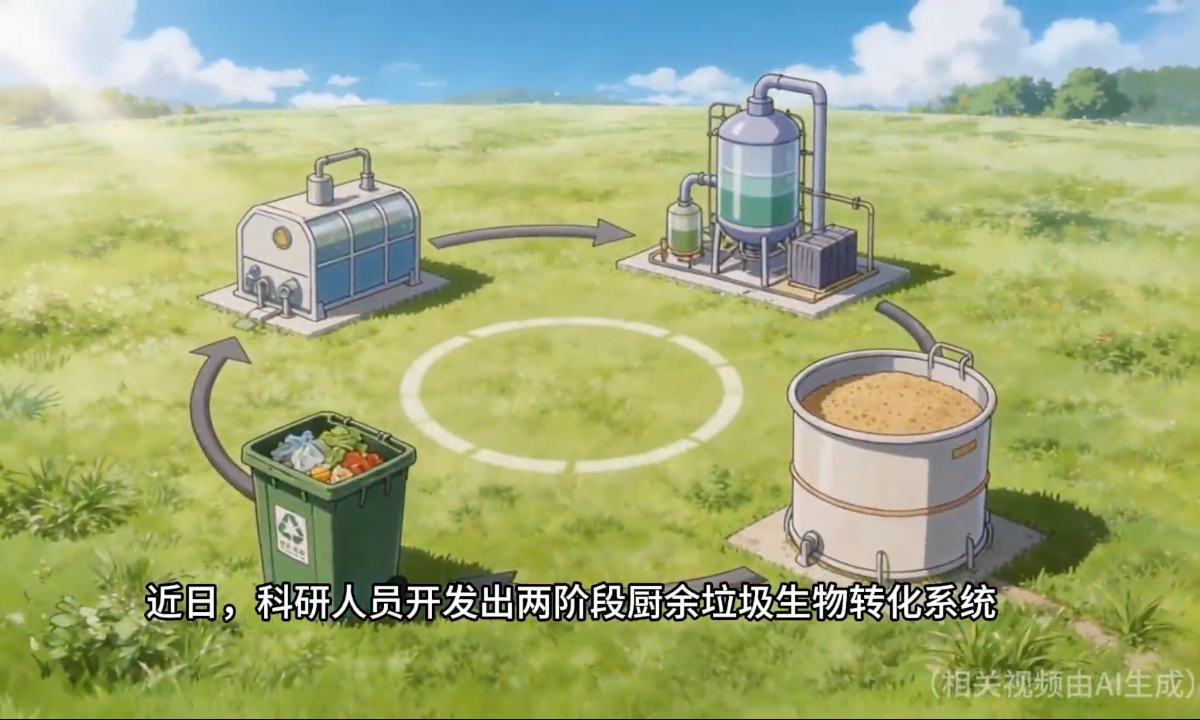
Photo: Screenshot from the WeChat account of the Chinese Academy of Sciences
Chinese scientists have developed a bioconversion system that can turn kitchen waste into protein and fatty acids and lactic acid while reducing greenhouse gas emissions and energy consumption, effectively transforming waste into valuable resources, the Chinese Academy of Sciences (CAS) announced on Monday.
According to an article published by the CAS, as living standards continue to improve, rising demand for high-quality protein in livestock and aquaculture sectors has widened the supply gap. Meanwhile, kitchen waste in cities is growing in volume while traditional disposal methods are associated with high carbon emissions, low resource recovery efficiency and relatively high energy consumption. This underscores the urgent need for an efficient, integrated solution for recycle of resources.
Chinese scientists from the Tianjin Institute of Industrial Biotechnology, CAS, have developed a two-stage food waste bioconversion system that efficiently converts kitchen waste into single-cell protein and lipids.
The research team pretreated kitchen waste using microaeration or thermal pretreatment, fermenting it to produce organic acids, enhancing its biodegradability, before using marine-derived microorganism Schizochytrium to efficiently convert lactic acid in the organic acids into single-cell protein.
Following process optimization, the system is expected to yield 258.23 kilograms of organic acids per ton of kitchen waste.
The study found that Schizochytrium can consume 90 percent of organic acids, such as lactic acid and acetic acid, within 48 hours while converting them into microbial protein and intracellular lipids, the precursor molecules needed to synthesize cellular components. During the process, it simultaneously produces single-cell protein and oils.
Simply put, the core idea behind the technology is to first break down kitchen waste into "food" for microorganisms, and then allow the microorganisms to "feed" on it and synthesize protein, according to the article.
The team assessed that the bioconversion technology can cut greenhouse gas emissions and energy use while turning kitchen waste into high-value protein and lipid products.
The two resulting products have practical applications. The single-cell protein can be used as a high-quality protein ingredient in aquaculture and livestock feed as a substitute for traditional feed proteins such as fishmeal and soybean meal. The lipids synthesized by Schizochytrium are rich in docosahexaenoic acid (DHA) and other polyunsaturated fatty acids, with applications in functional foods, nutritional supplements and feed additives.
In the future, the technology is expected to be deployed in real-world applications, turning hard-to-manage food waste into new value and helping advance a green, sustainable circular economy.
Global Times
RELATED ARTICLES