China’s memory chipmaker CXMT opens over 180 positions in global campus recruitment drive
By Published: Sep 02, 2026 11:32 AM
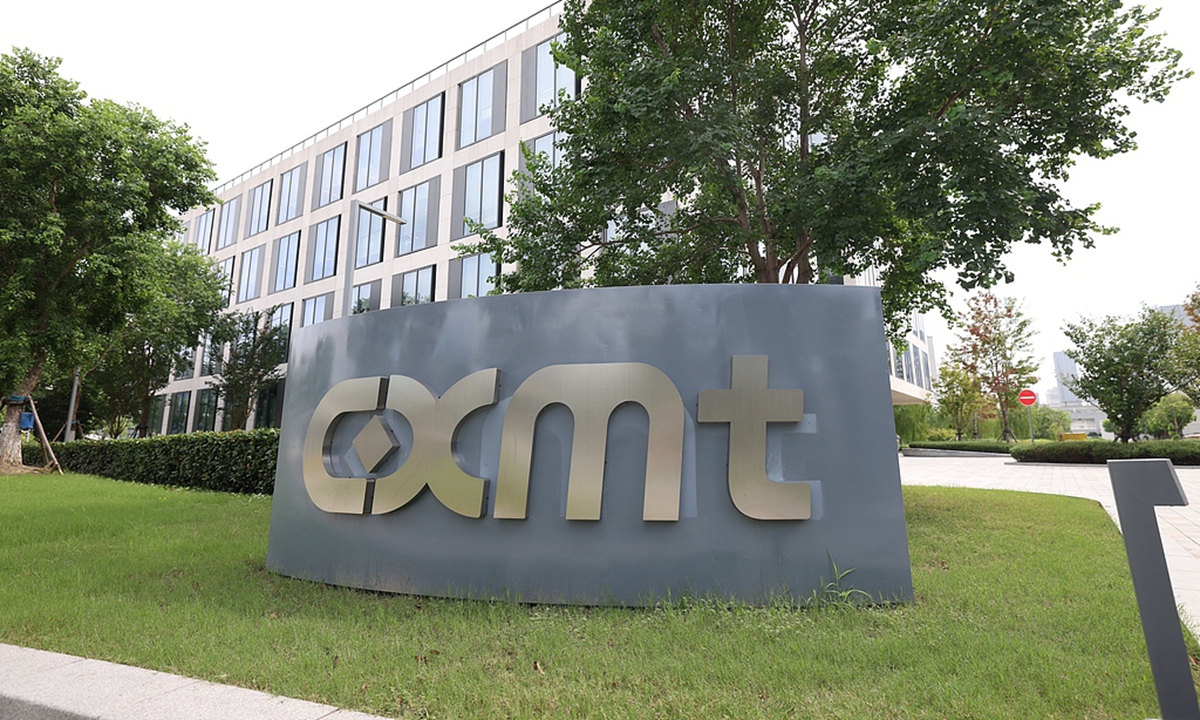
CXMT Photo: VCG
China's major memory chipmaker CXMT is recruiting for more than 180 positions in its latest round of campus recruitment campaign, after announcing days ago that it had begun mass production of LPDDR6, its most advanced mobile dynamic random access memory (DRAM) chips.
The "CXMT Recruitment" official WeChat account announced on September 1 that CXMT's 2027 Global Campus Recruitment had commenced, with available positions including circuit design, R&D technology, mass production technology and production operations, among others, the Global Times learned.
The company has over 180 open positions, with R&D technology roles being the most numerous, followed by production operations. The majority of the positions are based in Hefei in East China where the company is headquartered.
Other work locations include Beijing, Shanghai, Xi'an in Northwest China's Shaanxi Province. For posts of analog circuit, input/output design and integrated circuit layout design, Japan is also a work site.
The recruitment drive is open to students graduating in 2027 from Chinese and overseas universities, with majors covering microelectronics, communications, circuit design, semiconductor design, integrated circuits, mathematics, computer science, electronic engineering, materials, artificial intelligence, and more.
The recruitment drive came as the company said over the weekend that it had begun mass production of LPDDR6, its most advanced DRAM, with the chips equipped with Xiaomi's 18 Fold flagship foldable mobile phone. According to a statement sent to the Global Times, the company said the deployment of the chip marked the first time a Chinese memory maker had brought a leading-edge memory standard to market ahead of overseas DRAM suppliers.
"While the scale of the recruitment is moderate, high-tech companies such as chipmakers rely more on a small number of highly qualified talent to drive growth," Liu Dingding, a veteran industry analyst, told the Global Times on Wednesday. "Talent at overseas work sites will contribute to the company's global competitiveness."
Currently, CXMT benefits from a favorable national environment that boosts the growth of the integrated circuit industry and a robust industrial chain, and it also has a good market capitalization. But for the company to further increase its competitiveness in competing with global giants such as South Korea's Samsung and SK Hynix, a rich talent pool is a prerequisite, Liu said.
Fueled by an AI boom, global memory chip demand and chip prices have soared.
In a half-year report released last Friday, CXMT posted revenue of 150.31 billion yuan ($22.4 billion) from January to June, up 873.64 percent year-on-year, and net profit attributable to shareholders of 77.61 billion yuan ($10.8 billion), compared with a 2.33 billion yuan loss a year earlier.
According to World Semiconductor Trade Statistics, global memory chip revenue is projected to surge 250 percent to $804 billion this year and could exceed $1 trillion in 2027, industry portal statista.com reported.
Meanwhile, memory's share of the overall semiconductor market is forecast to grow from less than 20 percent in 2023 to 55 percent next year, as AI data centers require vast amounts of high-performance memory, tightening supply for other buyers.
According to Bloomberg, US tech giant Apple has been in negotiations to acquire chips from CXMT and YMTC as it grapples with a global squeeze on supplies that's caused memory prices to soar, fueled by unprecedented demand from makers of AI processors including Nvidia.
Tech companies including Dell, HP and Apple have reportedly been testing CXMT memory chips as they look for other sources of supply.
Major Chinese smartphone producers, including Huawei, Xiaomi and Honor, raised prices on selected models on Tuesday by 200 yuan to 1,000 yuan, spanning flagship and mid-range devices, as rising costs for memory chips and mobile processors increasingly drive up prices and feed through to consumers.
RELATED ARTICLES