Chinese side slammed trade protectionism, addressed ‘imbalance’ at G20 meeting, statement shows amid US hype
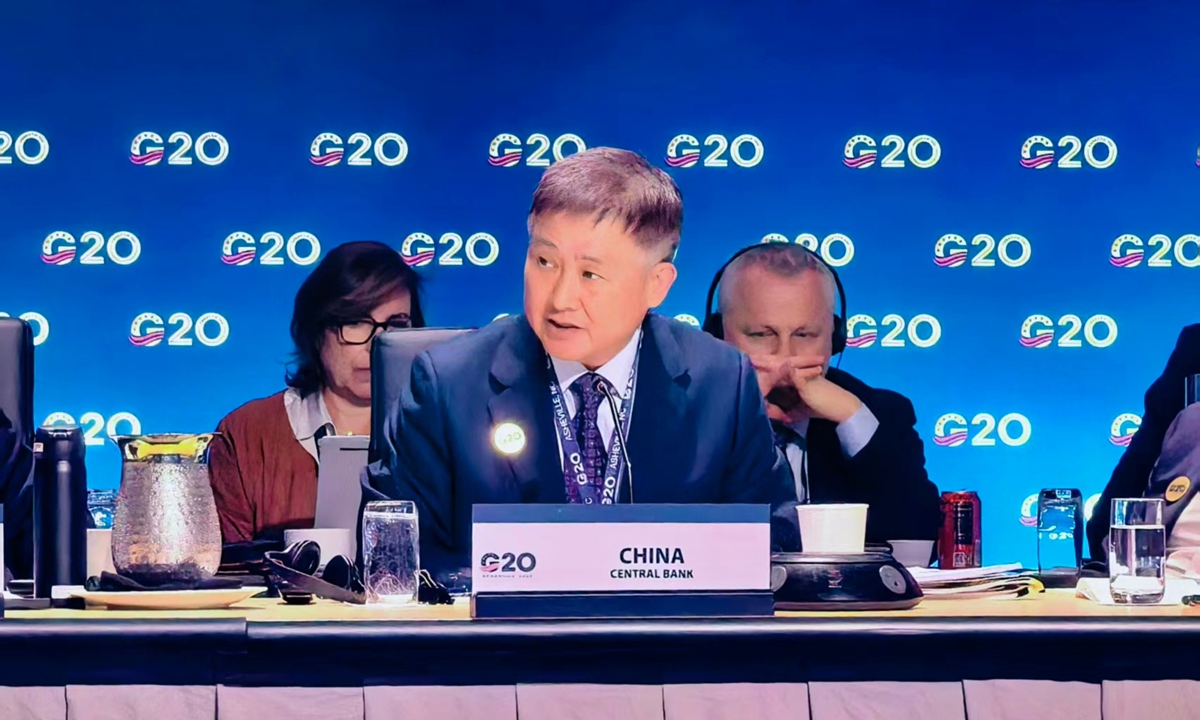
Pan Gongsheng, governor of the People's Bank of China (PBC), the central bank, delivers remarks at the Group of 20 (G20) Finance Ministers and Central Bank Governors Meeting held in Asheville, the US, from August 31 to September 1, 2026. Photo: Courtesy of the People's Bank of China
Trade frictions and protectionism weigh on the global economy by disrupting supply chains, fueling inflation and unsettling market expectations, Pan Gongsheng, governor of the People's Bank of China (PBC), the central bank, said at the Group of 20 (G20) Finance Ministers and Central Bank Governors Meeting held in Asheville, the US, from Monday to Tuesday, the PBC said in a statement on Wednesday.
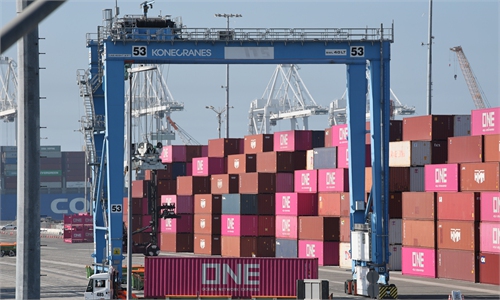
The statement came as US officials have been hyping the so-called "imbalance" issue and claiming that it had won backing from all G20 financial leaders except China's to act against "non-market" policies and distortions that cause over-reliance on exports and hinder growth elsewhere.
According to some foreign media reports, China was targeted by US officials at the meeting, who made claims against China over so-called trade imbalances. At the meeting, however, the Chinese side directly addressed the issue, according to the PBC's statement on Wednesday.
Pan said that addressing global imbalances requires countries to advance their own structural reforms. Countries with trade deficit should reduce fiscal deficits and raise domestic savings rates, while countries with trade surplus should appropriately promote growth in consumption and investment. At the same time, countries should uphold multilateralism and strengthen international cooperation, he said.
In addition, efforts to address global imbalances should focus on medium-term commitments. All countries should formulate medium- and long-term policy plans, make clear commitments and follow through on them consistently, rather than repeatedly reversing course, the PBC governor said.
Regarding claims by certain countries concerning China's trade surplus, Pan noted that China has never deliberately pursued a trade surplus and remains committed to expanding domestic demand and advancing high-level opening-up. China will leverage its vast market to provide new opportunities for all parties and contribute to a new dynamic balance in the global economy, the official said.
At the international level, rising trade protectionism, the expansion of national security concerns into economic and trade issues, and an unpredictable policy environment have been major factors behind the worsening of global imbalances in recent years, said Pan.
When asked to comment on media reports that the Second Meeting of G20 Finance Ministers and Central Bank Governors failed to issue a communiqué due to China's differing views on global imbalances, Guo Jiakun, a spokesperson for China's Ministry of Foreign Affairs, said on Wednesday that China had noted that parties held diverging views on certain issues at the recent meeting.
"We regret that the meeting failed to issue a communiqué," Guo said, noting that the G20, as the premier platform for global economic cooperation, should play its coordinating role on key issues concerning the global economy in an objective, impartial and balanced manner based on the principle of consensus through consultation and equal participation.
"We hope the US in its presidency and other members will abide by this principle, give full respect to all parties' legitimate concerns, and strive for a fruitful Miami Summit," the spokesperson said.
Global Times
RELATED ARTICLES