ARTS / CULTURE & LEISURE
China’s first full-length AI drama hits prime time: Can machines reinvent ‘Journey to the West’?
By Published: Sep 02, 2026 10:35 PM

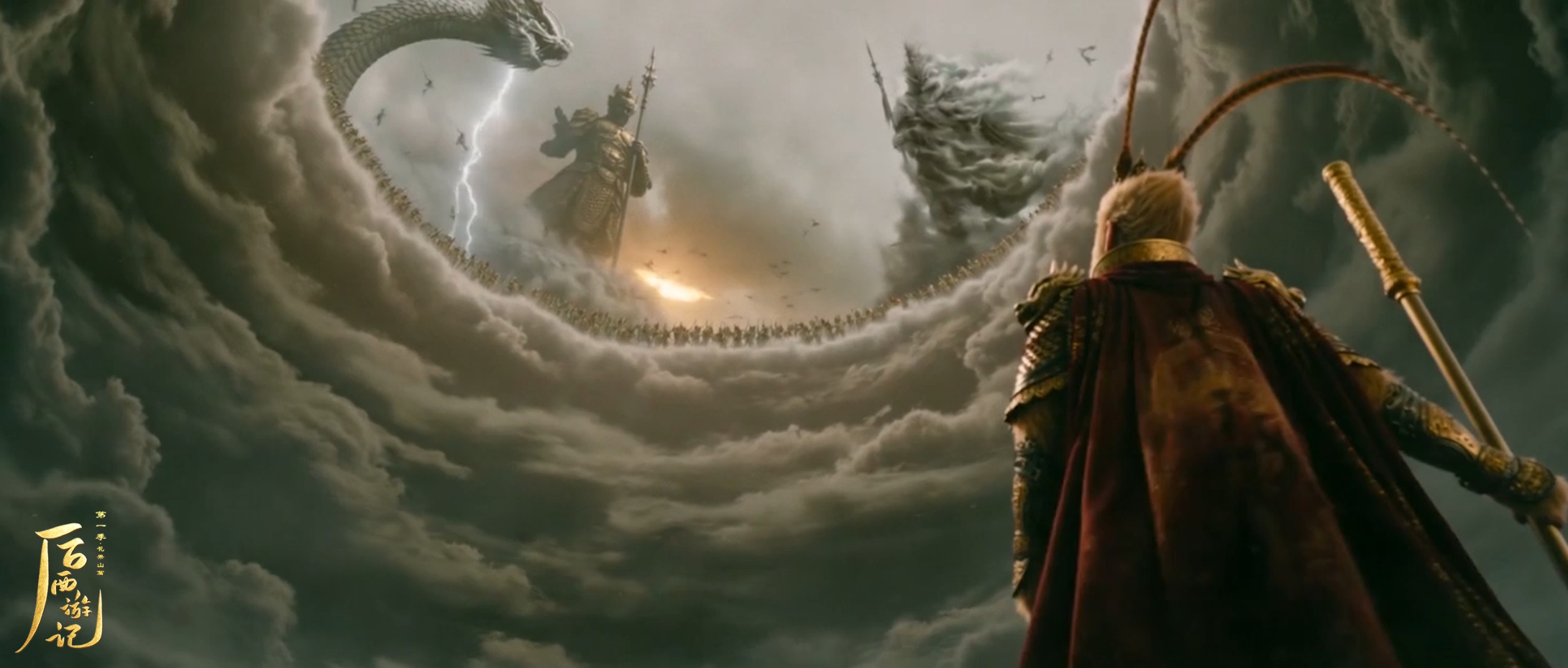
Promotional material for Beyond Wukong Photo: Courtesy of Mango TV
China's first full-length AIGC drama Beyond Wukong aired on prime-time satellite TV recently, igniting heated nationwide debate over whether AI can faithfully revitalize traditional literary classics without sacrificing human artistic depth and creative soul.
Media reported that the drama scored strong debut viewership when it debuted on a provincial satellite channel's prime-time slot on Monday, achieving a peak real-time rating and a market share of over 1.5 percent, first among all provincial satellite TV programs in the same time slot.
Adapted from the iconic Ming Dynasty (1368-1644) mythological novel, Beyond Wukong reimagines a brand-new chapter in the iconic Journey to the West universe. Set a millennium after the triumph of the Monkey King, it follows a young stone monkey named Sun Xiaosheng and his companions on a new pilgrimage to redeem the cosmic order. Breaking conventional remake formulas, the series boasts stunning traditional Chinese painting-style visuals, blending technological innovation with traditional oriental aesthetics.
The mythological series also marks the maiden pilot of China's new regulatory policy dubbed the "21 Broadcasting Guidelines," which introduces a "review-while-broadcasting" model, a pioneering iterative production and approval mechanism for domestic seasonal dramas.
The newly introduced "21 Broadcasting Guidelines" optimize China's television content review system. Abolishing the rigid rule of full pre-broadcast review for completed episodes, the policy allows seasonal and serialized dramas to conduct phased production, segmented review and real-time iteration.
The groundbreaking premiere has triggered heated discussion on Chinese social media platforms.
Many netizens are hailing its innovative worldview and refined digital aesthetics that they say rejuvenate the traditional IP, while critics question whether AI-generated content can deliver profound characterization and carry the profound cultural connotations of classical literature. Industry concerns also linger that the booming AIGC film and television industry may squeeze out human practitioners from jobs and dilute the humanistic warmth of artistic creation.
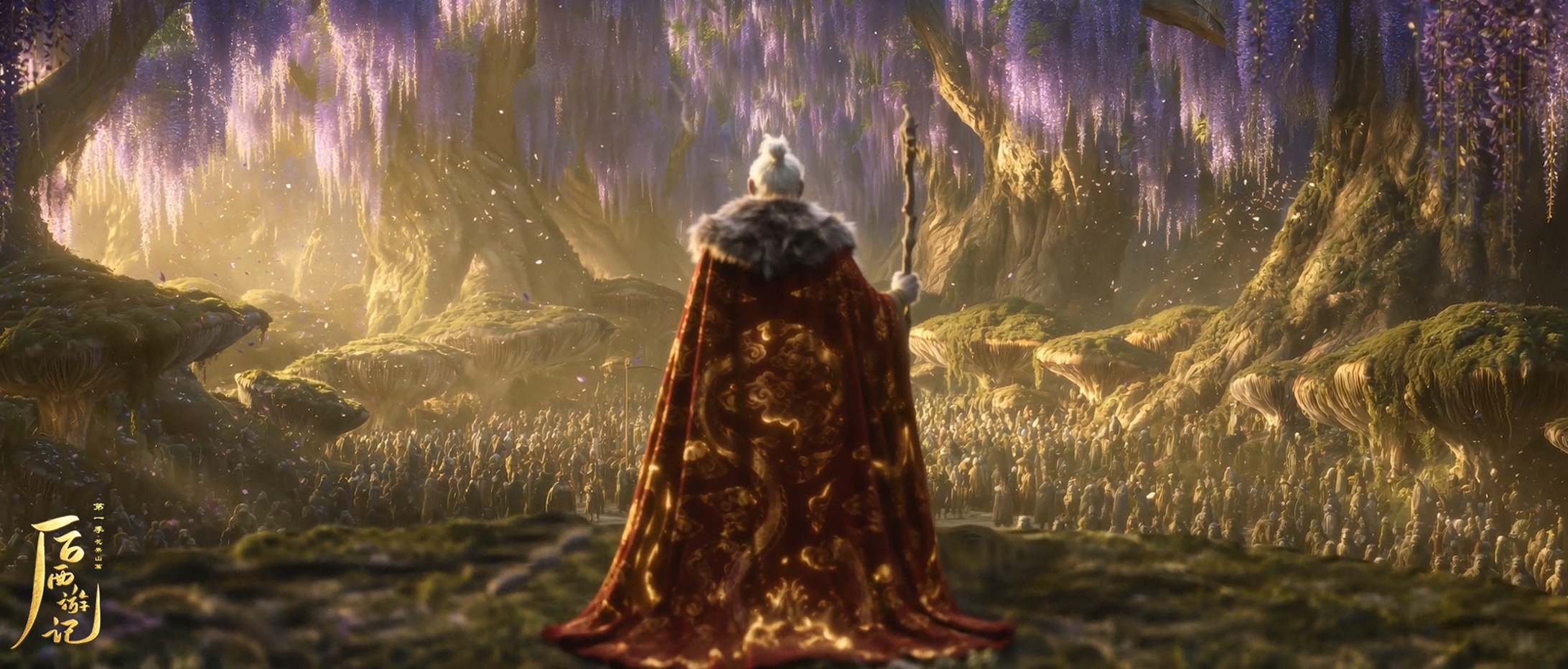
Promotional material for Beyond Wukong Photo: Courtesy of Mango TV
Li Dongshen, the show's chief director, responded by emphasizing a human-centered creative philosophy. He shared at an event that all core storylines, character growth and emotional expressions were fully designed and polished by human screenwriters, with AI only assisting visual creation and plot optimization."No mature AI film and television model can independently undertake screenwriting work. The whole creation is driven and controlled by human thinking and aesthetic judgment," he said.
Li added that AI has fundamentally altered the production workflow. In the traditional film industry, scripts are locked before shooting because revisions are expensive. With AI, he said, "revising the script becomes easy." Creation can start with a motive and evolve along the way.
Such flexibility does not mean the machine is perfect. "The AI model will never say 'no' like a cinematographer would," Li said. "It will force an illogical solution. So creators must rely on aesthetic intuition to detect what feels wrong."
To avoid copyright risks and ensure artistic authenticity, the crew adopted human dubbing instead of AI voice synthesis and reserved core art design work for human teams.
Industry experts recognized the dual milestone of technological and institutional innovation. Zhang Peng, a cultural researcher and associate professor at Nanjing Normal University, told the Global Times that the drama signals AIGC's official entry into mainstream industrial television systems from small-scale online short videos.
"The series shows AI's strengths in rendering grand mythological scenes with digital Chinese aesthetics," Zhang said. "But the micro-expressions are stiff, emotional progression is formulaic, and the characters lack the vital tension of live actors."
For Zhang, the deeper problem is that classic adaptation is not merely narrative reassembly; it requires responding to human dilemmas with real life experience. "AI can build the visual skeleton of a Journey to the West sequel, yet it cannot comprehend the faith, sacrifice and humanistic compassion behind classical literature, which stem from real human life experience," he said.
Zhu Xinmei, director of the Institute of International Communication at the Development Research Center of the National Radio and Television Administration, told the Global Times that "The future of AIGC filmmaking lies in human-led and AI-assisted collaboration. Humans dominate cultural connotation and value orientation, while AI empowers efficiency and visual presentation."
RELATED ARTICLES